




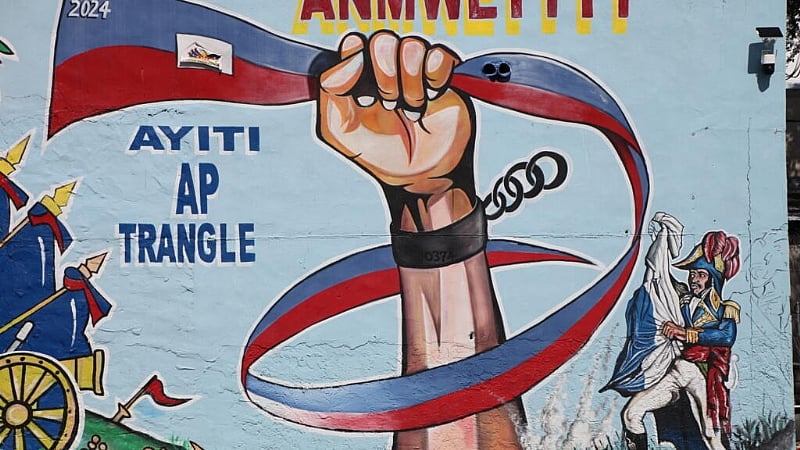
In Little Haiti, Miami, local resident Devante, known by the nickname “Blood,” expressed his support for Donald Trump ahead of the upcoming midterm elections. Blood, who is grappling with personal grief after losing his mother last year, explained that her worries about financial stability and health contributed to a profound upheaval in his life. “I’m always here, on the streets,” he remarked, indicating his struggle to find steady employment.
As the sun begins to set in the neighborhood, the typically vibrant area remains quiet with only a few small shops open, selling tools and spare parts. The local cultural center and Libreri Mapou Creole & French Bookstore are also closed during the late afternoon hours. Blood, an imposing figure at almost two meters tall, commands respect from those who pass by, sharing a perspective shaped by the residency of Haitian migrants who settled in the area during the 1970s.
Historical Context
The migration to Little Haiti was largely driven by displacement and hardship under the regimes of François ‘Papa Doc’ Duvalier and his son Jean-Claude ‘Baby Doc’ Duvalier, following a long history of exploitation and political turmoil that dates back to Haiti’s independence in 1804. The repercussions of the heavy reparations demanded by France in 1825 and the subsequent suffering under dictatorship pushed many Haitians to seek a better life abroad.
Blood’s attitude towards Trump is notable, especially following controversial remarks made by the former president during a debate last year, where he made a false claim about Haitians in Springfield, Ohio, suggesting they were eating pets. These comments sparked anger among Haitian communities and increased efforts to rally Haitian-American voters against Trump. Data from Daniel Smith, chairman of the University of Florida’s political science department, shows that in 2024, 73 percent of approximately 70,000 registered Haitian voters in South Florida aligned with the Democratic Party, while only 4 percent identified as Republicans.
Nevertheless, Blood remains indifferent to these sentiments. He stated, “To me, Trump is like an actor… I feel like that’s just fake news and propaganda.” He believes that Trump’s emphasis on success and hard work resonates with individuals striving for economic opportunities. “You just got to take advantage of the opportunities you’re given,” Blood added, explaining his rationale for considering a vote for Trump or candidates aligned with him.
As election day approaches, the local community in Little Haiti is expected to engage in political activities, with conversations surrounding economic hardship and representation likely to intensify.
