




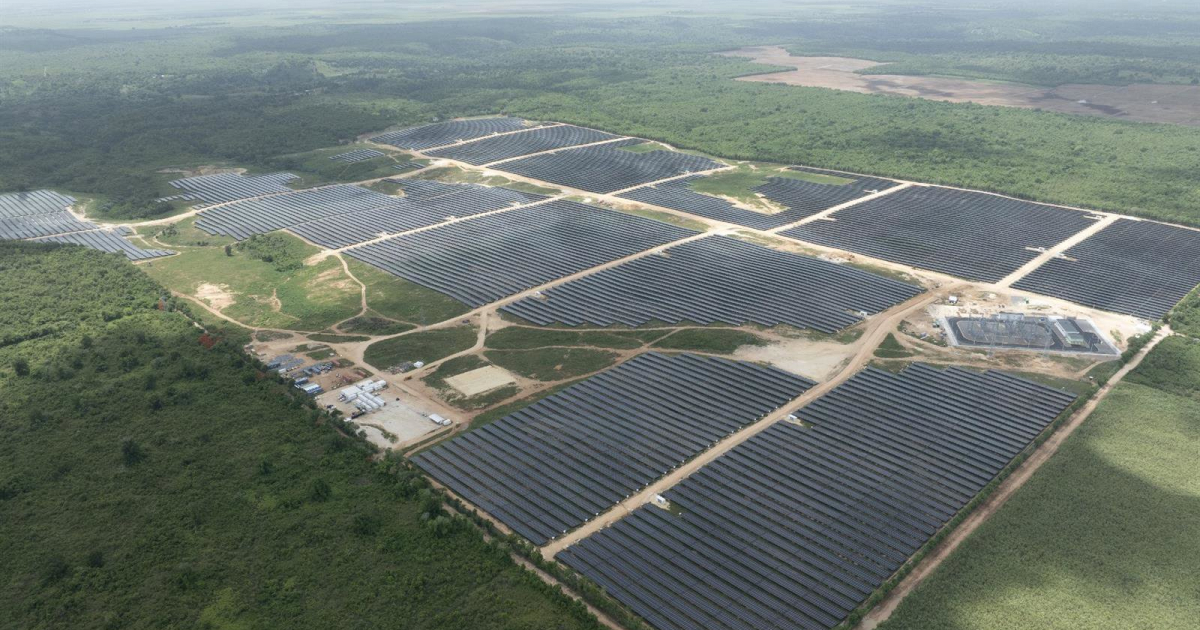
Acciona Energía announced on Tuesday its plans to establish three battery energy storage systems (BESS) in the Dominican Republic, with operations expected to commence in the last quarter of 2027.
The new projects will contribute a total power capacity of 21.2 megawatts (MW) and a storage capacity of 41.7 megawatt-hours (MWh). They will be integrated with the existing Pedro Corto, Calabaza, and Cotoperí solar plants, which will help optimize current infrastructure and reduce both land usage and investment costs, according to the company.
The introduction of these battery systems is intended to enhance the stability of the National Interconnected Electric System (SENI) of the Dominican Republic. Acciona Energía highlighted the “practically instantaneous” response capability of the new systems, which will aid in correcting frequency deviations and support the integration of increased renewable energy resources.
The company pointed out that this initiative aligns with the evolving regulatory framework in the Dominican Republic, which increasingly favors battery implementation for grid stability. It also noted that the decline in battery technology prices makes these systems a more competitive option compared to traditional energy solutions.
By undertaking these projects, Acciona Energía aims to bolster its asset portfolio in the Dominican Republic, where it already operates three photovoltaic plants with a combined capacity of 303.3 MWp. These facilities include Calabaza I (58 MWp), Cotoperí Solar (162.6 MWp), and Pedro Corto (82.7 MWp).
Acciona Energía has partnered with local entities for the development of the Cotoperí Solar and Pedro Corto plants. In the Cotoperí project, Acciona controls 51% of the capital, while Cotosolar Holding, which includes the JMMB Fondo de Energía Sostenible (FES), retains the remaining 49%. For Pedro Corto, the company similarly holds a 51% stake, with 49% owned by the Pioneer II Social Impact Company Development Fund.
