




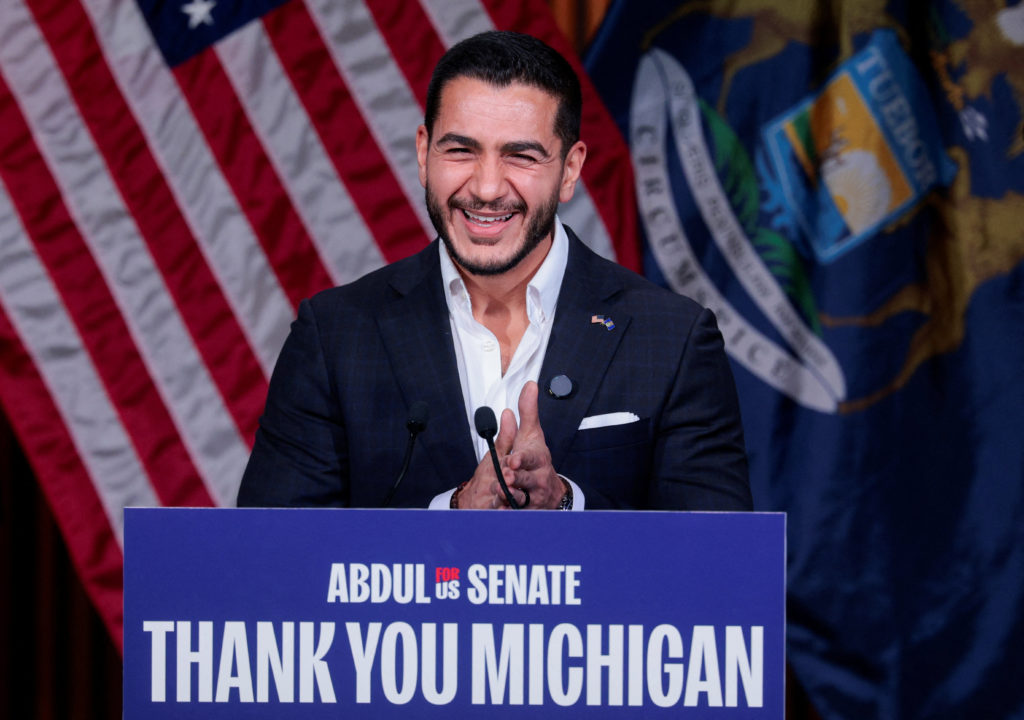
BEIRUT — Arabs across the globe are celebrating the election of Abdul El-Sayed, who is set to become the first Muslim American U.S. senator. His victory speech, which featured Arabic phrases like “habibi” and “inshallah,” has prompted a positive response from Arab communities, delighting supporters from Michigan to the Middle East.
El-Sayed, who has faced Islamophobic attacks during his campaign, addressed U.S. Vice President JD Vance directly in his speech, saying, “JD, habibi,” referencing Vance’s earlier comments that cast doubt on El-Sayed’s character. “There is this delicious irony in the fact that you’re constitutionally obligated to swear me in in January,” he added, mocking his critics as he leaned into his Egyptian heritage and political stance on issues including the Palestinian cause.
‘Habibi’ and Its Meaning
The term “habibi” translates to “my beloved,” often used affectionately among friends and family. Supporters have been wearing shirts that read “Habibi for Abdul,” further integrating El-Sayed’s cultural language into campaigned imagery. In his speech, El-Sayed remarked on how his campaign had turned “inshallah” — meaning “God willing” — into the phrase “hamdulillah,” or “thank God.”
The positive reception of El-Sayed’s speech has resonated widely among Arabs, with many sharing music video clips that celebrate the term “habibi” across social media platforms. This reaction has provided a rare moment of joy amid the strife often portrayed in the region, where humor is frequently used as a coping mechanism.
One social media user posted a lighthearted video of Egyptian singer Shireen Abd El-Wahab, humorously suggesting that El-Sayed’s mention of “habibi” could become a national anthem. Memes referencing an Egyptian film—where humor is juxtaposed with a somber setting—also circulated, reinforcing the culture’s humorous spirit even in challenging times.
Khalil al-Anani, an Egyptian academic, praised El-Sayed on social media, calling “habibi” the “sweetest word” and expressing gratitude for the joy it has brought to Egyptians following the senator-elect’s victory.
Change Amid Prejudice
The recent election marks a significant milestone for Arab and Muslim Americans, who have long faced stereotypes and prejudice. Campaign rhetoric has included derogatory references, such as former President Trump’s comments implying ties to terrorism.
In response, El-Sayed has maintained a spirited approach, indicating humor in his victories. “Donald, look, I know you’ve struggled with my name,” he said, addressing Trump directly in his speech. “So after JD swears me in in January, you can just go on and call me ‘senator.’”
As January approaches, the political landscape is set for a moment of historic significance with El-Sayed’s anticipated swearing-in, marking an evolving narrative for Arab representation in American politics.
