




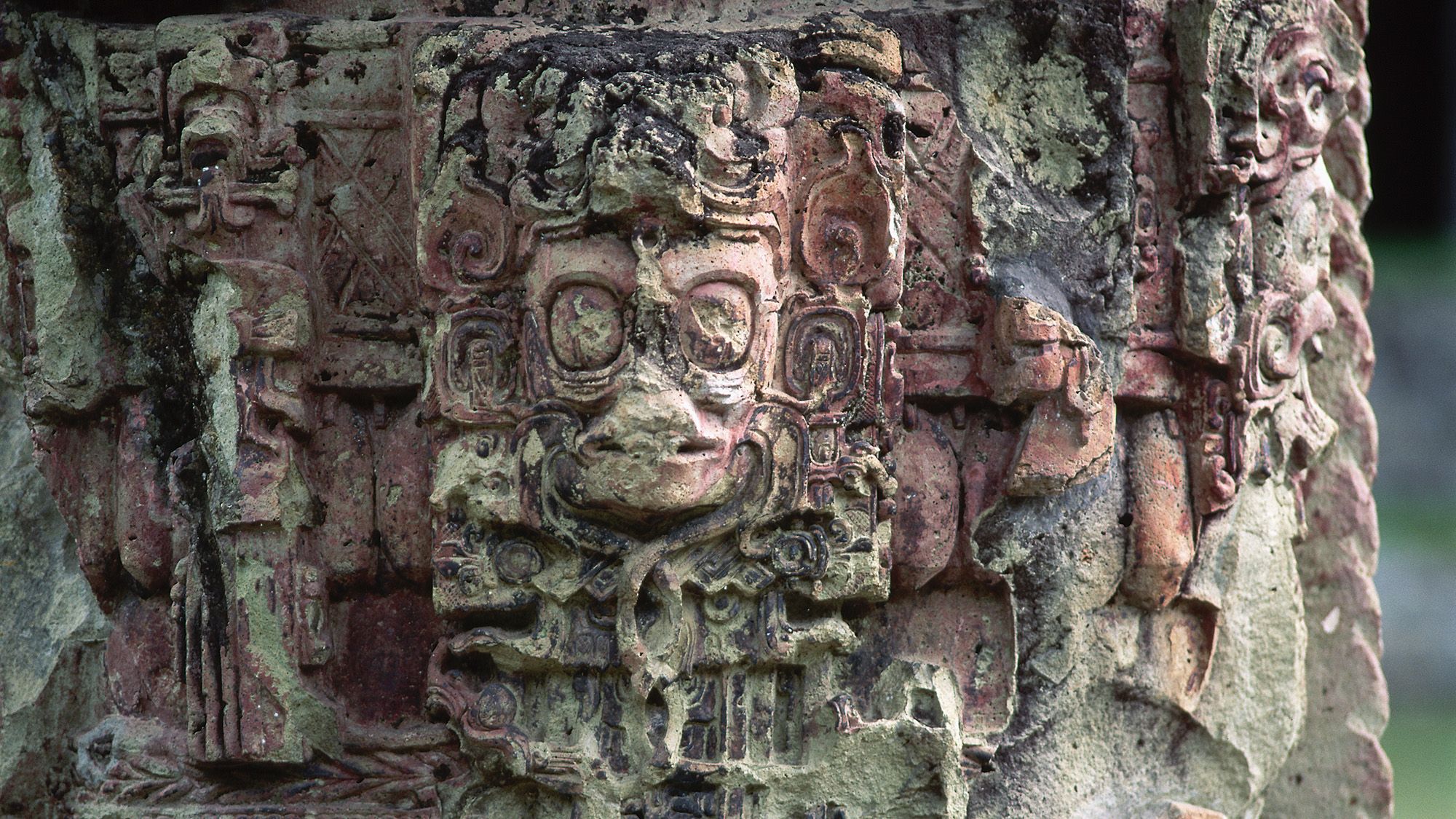
The ancient Maya civilization’s use of red paint has been linked to significant environmental damage due to mercury pollution, a new study has found. Researchers discovered that the widespread application of cinnabar, a mercury-sulfide mineral used to create the vibrant vermilion pigment, led to the contamination of lakes and waterways with toxic levels of mercury.
Waterways were affected by runoff from the paint, where anaerobic bacteria could convert cinnabar into highly toxic methylmercury in lake sediments. Over time, this toxic substance accumulated in the food chain, posing a risk to the surrounding ecosystem.
The study, published on November 4 in the journal Science Advances, examined sediment cores from two significant Maya-era sites: Cobá Lake and Cenote Xcach, a flooded sinkhole in a jungle area. These cores revealed alarming levels of mercury contamination, particularly during the Preclassic and Classic periods of Maya civilization, approximately from A.D. 40 to 820.
Matthew Waters, a paleolimnologist at Auburn University and the study’s first author, stated that the Maya’s extensive use of red paint, which they associated with the sun, blood, and life, inadvertently resulted in environmental degradation. “They would have seen a strange color change in the water … and a drop in its productivity, such as fish for protein,” he noted. The Maya heavily relied on freshwater fisheries for sustenance.
Past studies had already identified elevated mercury levels in the southern highlands and south-central lowlands of the Maya region, but this research provides firsthand evidence of contamination in the Yucatán Peninsula. The findings indicated that the mercury levels in the most polluted areas reached up to 2.3 parts per million, significantly exceeding safety thresholds set by the U.S. Environmental Protection Agency, which considers water unsafe to drink at more than 2 parts per billion of mercury.
In addition to identifying toxic levels in sediments, the researchers noted a stark absence of tiny fossils of freshwater shellfish in the contaminated cores, indicating that marine life was severely impacted by high mercury concentrations. The sediment layers also showed minimal signs of algal blooms, which are typically present, further suggesting that the high mercury levels inhibited aquatic life.
The implications of mercury pollution remain a topic of debate among scholars studying the Maya civilization’s collapse in the eighth and ninth centuries. While other factors, such as climate shifts and drought, have been proposed as potential causes of societal decline, the study suggests that mercury poisoning could have played a role in disrupting food supplies.
Waters mentioned that cinnabar, which does not occur naturally in the Yucatán, was likely imported from present-day Honduras. Although imports ceased by A.D. 520, mercury contamination continued at Cenote Xcach, highlighting ongoing environmental challenges faced by the ancient Maya.
