




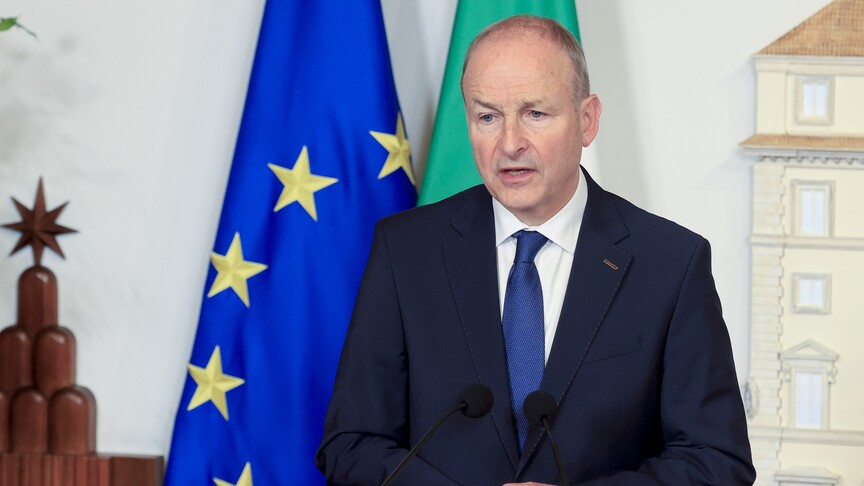
Irish Prime Minister Micheal Martin stated on Thursday that the European Union has affirmed its commitment to European security in the context of the ongoing conflict between Russia and Ukraine, describing the situation as an “existential threat” to the continent.
Speaking to reporters before the European Political Community summit in Dublin, Martin emphasized the EU’s resolute stance against aggression, declaring it has set a “very clear marker” regarding Europe’s security. He noted that many European nations perceive an existential threat stemming from the developments in Ukraine and fear that a potential Russian victory could lead to further aggression across Europe.
In reference to recent peace talks held in Abu Dhabi, Martin stressed the necessity of maintaining open lines of communication. He asserted that Europe should be directly involved in negotiations, especially those impacting its economic and security interests.
Martin also voiced concerns about the humanitarian situation in Gaza, condemning the ongoing restrictions on aid entering the region. He described the extent of aid blockages as “absolutely unacceptable” and criticized the violence perpetrated by settlers against Palestinians in the West Bank. He warned that such actions could hinder the viability of a two-state solution, which he stated is the European Union’s collectively agreed position.
Calls for European Involvement in Peace Negotiations
Finnish Prime Minister Petteri Orpo echoed Martin’s call for more European involvement in peace negotiations, asserting that European nations must be actively represented. “No one else can negotiate for us,” he said, reaffirming that support for Ukraine remains the top priority for Europe.
Meanwhile, Lithuanian President Gitanas Nauseda expressed doubts about the feasibility of an immediate ceasefire, cautioning that Russia may exploit ongoing negotiations to stall for time. He characterized the current phase of discussions as initial and warned that Russia might use the coming winter to further harm the Ukrainian people.
Nauseda indicated that while a ceasefire is critical for peace negotiations, its achievement seems challenging at this point. He reiterated that the European security framework, primarily shaped by NATO, should remain intact, emphasizing the importance of preventing spheres of influence in security matters.
This ongoing dialogue among European leaders reflects a unified concern regarding security and humanitarian issues amidst the ongoing crises in Ukraine and Gaza.
