




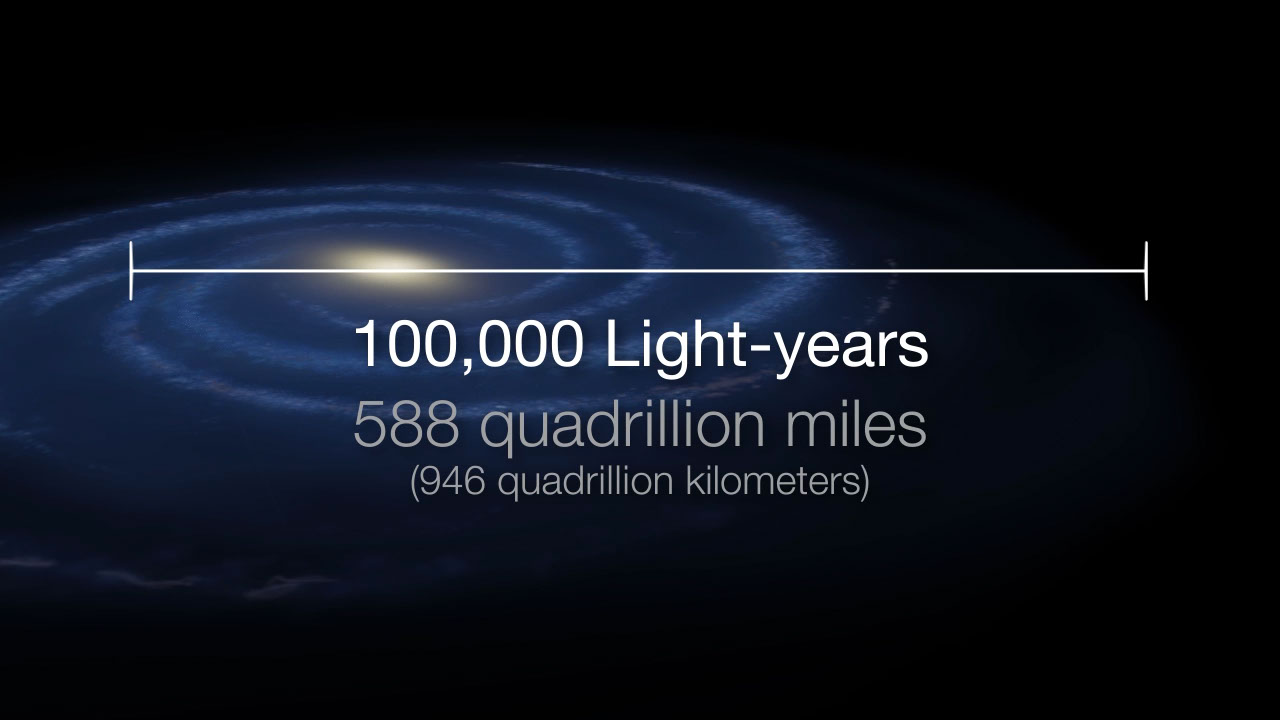
The Milky Way galaxy spans an incredible 100,000 light-years across and is estimated to host between 100 to 400 billion stars. These measurements highlight the vastness of our galaxy and the immense distances involved in space exploration.
To convey the sheer scale of celestial distances, astronomers often rely on light-time measurements, which quantify how far light travels in specific time intervals. Light travels at approximately 186,000 miles per second (300,000 kilometers per second). In one minute, light can cover roughly 11.16 million miles (17.96 million kilometers), making it possible for light to circle the Earth over 448 times within that timeframe.
The staggering distances between celestial bodies further illustrate the complexity of our universe. For instance, sunlight takes about 8.3 minutes to reach Earth and around 43.2 minutes to arrive at Jupiter, which is approximately 484 million miles (779 million kilometers) away. In one hour, light can travel about 671 million miles (1.08 billion kilometers).
To emphasize the challenge of interstellar travel, Proxima Centauri b, the nearest known exoplanet, is located 4.2 light-years away, equivalent to around 5.8 trillion miles (9.3 trillion kilometers). Even at the speed of light, a journey to the edge of our solar system, specifically to the Oort Cloud, would take approximately 1.87 years.
One of the most distant exoplanets observed within the Milky Way is SWEEPS-11 b. Traveling at light speed, it would take around 28,000 years to reach. If one were to traverse this distance at a speed of 60 mph (97 kph), it would take about 310 billion years.
For those fascinated by the cosmos, NASA provides additional resources detailing the scope of our Milky Way galaxy and the wonders beyond. Further information can be accessed through NASA’s web content on the size of the universe.
