




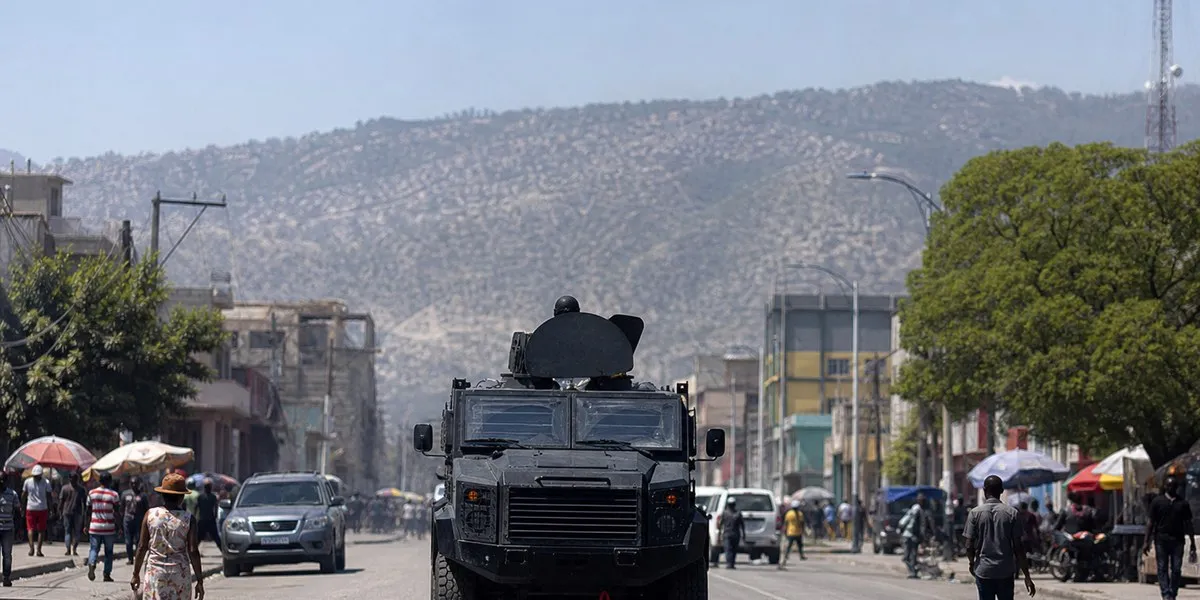
Haiti’s Prime Minister Alix Didier Fils-Aimé expressed gratitude towards El Salvador’s military for their involvement in efforts to combat gang violence in Haiti. El Salvador’s President Nayib Bukele reported that a joint task force had successfully dismantled the Lanmo San Jou house along with the headquarters of the 400 Mawozo gang.
In a video shared on the social media platform X, Bukele showcased helicopters conducting operations over a vast area; however, the video’s authenticity is yet to be verified. Fils-Aimé stated that both Haiti and El Salvador, in collaboration with the UN-backed Gang Suppression Force, aim to reclaim control over territory and restore state authority.
Salvadoran Military Deployment
Salvadoran military personnel have been present in Haiti since early 2025, primarily tasked with countering gang influence. Last month, Bukele deployed over 2,000 military personnel and special forces to the country, with the specific mission of locating four Salvadoran nationals who were ambushed on October 18 and remain missing.
Concerns have been raised about the coordination among various security forces and the extent of their authority. Jake Johnston, an expert on Haiti from the Washington-based Center for Economic and Policy Research, highlighted the legitimacy of El Salvador’s military presence as a key issue.
Escalating Violence
A recent UN report detailed severe violence in Haiti, noting incidents of territorial confrontations and sexual violence, particularly in the capital, Port-au-Prince, and the Artibonite and South-East departments. The report documented at least 1,167 fatalities and 459 injuries in the country from July to September 2026.
The UN indicated that more than half of the documented violence stemmed from security forces’ operations against gangs, which sometimes employed aerial support from a private military company utilizing drones. Expert Romain Le Cour Grandmaison pointed out that conditions in Haiti differ significantly from those in El Salvador, emphasizing the country’s judicial paralysis and the challenges posed by armed groups that function more like militias than traditional gangs.
The situation in Haiti remains critical as both the government and international allies work to address persistent gang violence and restore civilian safety.
