




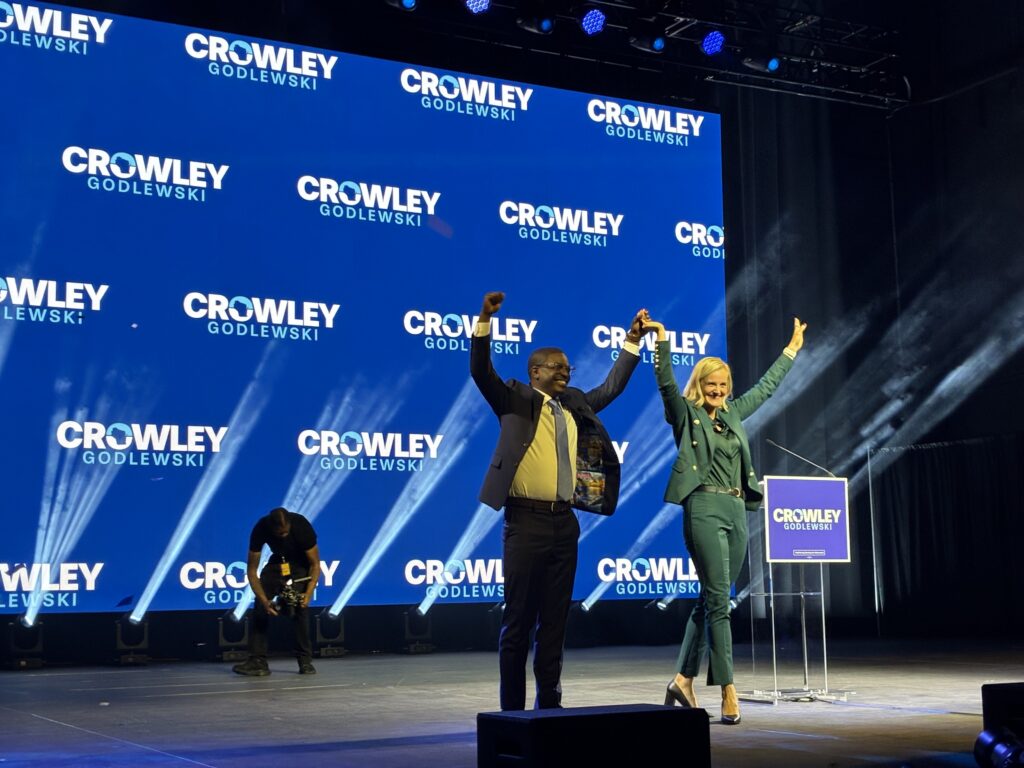
A new chapter in Wisconsin politics has commenced after the midterm elections resulted in Democratic control of both chambers of the state Legislature, with David Crowley elected as the new governor. His victory signifies a significant shift in the state’s political landscape, as Democrats aim to build on recent electoral momentum following the defeat of Republican incumbents in various states nationwide.
Political analysts believe that the way Crowley and the Democratic majority govern will determine their longevity in power over the coming years. Both parties view this electoral outcome as a rejection of former President Donald Trump and a challenge to the legacy of former Governor Scott Walker, whose 2011 gerrymander has been criticized for entrenching Republican power in Wisconsin.
“This election was both a repudiation of Trump and an endorsement of the leadership qualities that David Crowley embodies,” said Sachin Chheda, a Democratic strategist. In his victory speech, Crowley expressed his commitment to govern in a manner that encompasses the needs of all Wisconsinites, emphasizing unity: “We are not defined by rural and urban. We are one people, one Wisconsin.”
Chheda further noted that Crowley is viewed as a collaborator among Republicans, citing his work on bipartisan initiatives such as Wisconsin Act 12, which enhanced funding for local governments. Milwaukee County Supervisor Steve Taylor, one of the few Republicans on the county board, praised Crowley as an effective leader, adding, “I’ve worked well with him.”
However, Taylor pointed out that Crowley’s previous governing style was limited by Republican dominance in the state Legislature. With full Democratic control now, he urged observers to monitor how Crowley will navigate this new landscape without such constraints.
Polling data has indicated that Wisconsin voters prioritized affordability issues, including inflation and health care costs, during the recent elections. Chheda highlighted that many Democratic campaign promises resonate with a broad spectrum of voters, as they address universally accepted concerns like health care and childcare accessibility.
Despite this, Taylor cautioned against interpreting the electoral results as a blanket endorsement of Democratic policies. He noted, “People made it clear what they wanted: affordability. It was not about far-left policies.” Crowley’s recent success in traditionally Republican areas indicates a shifting sentiment among voters who have begun to reject national party affiliations.
While Crowley has committed to bridging the urban-rural divide, his opponent, U.S. Rep. Tom Tiffany, attempted to exploit it during the campaign. Crowley’s predecessor, Walker, was deemed a divisive figure in state governance. The new governor’s approach contrasts sharply, as he seeks to unify divergent community interests.
In the aftermath of the elections, Crowley has yet to specify his immediate policy goals but has signaled intention toward addressing affordability. Legislative Democrats have announced proposals aimed at reducing prescription drug costs and modifying how Wisconsin allocates its Electoral College votes.
Crowley has expressed support for new congressional maps drawn by Democrats, diverging from previous Republican strategies. The push for legislative change includes reversing Act 10, a controversial law that diminished collective bargaining rights for public sector unions, which many believe has long-term effects on public service careers.
Democrats are also considering raising Wisconsin’s minimum wage to $20, a commitment Crowley made during his campaign in response to economic challenges facing residents. As the new legislative session approaches, the focus will likely remain on measures that address the growing concerns of economic power disparity and living costs among constituents.
