




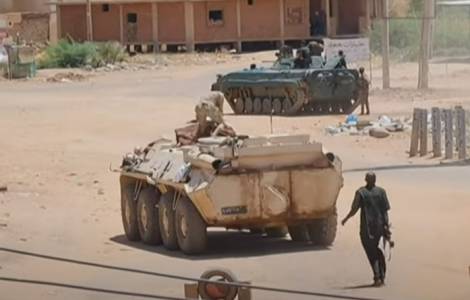
Khartoum, Sudan – The Bishops of Sudan and South Sudan have called for an immediate end to hostilities and a restoration of peace in Sudan. Their appeal was made public in a concluding statement from their Plenary Assembly, held in Juba from November 7 to 14. They urged the African Union, the United Nations, IGAD (Intergovernmental Authority on Development), the Holy See, and international communities to enhance diplomatic efforts aimed at achieving a ceasefire and promoting inclusive dialogue.
The conflict in Sudan, which began on April 15, 2023, involves the Sudanese Armed Forces (SAF), led by General Abdel Fattah al-Burhan, and the Rapid Support Forces (RSF), a paramilitary group under the command of Mohamed Hamdan Dagalo. The fighting erupted amid a power struggle and disagreements over the integration of the RSF into the national army.
In their statement, the bishops also expressed concern over threats to Christian communities, clergy, and church institutions in Sudan, although they did not specify any particular incidents. Since the start of 2023, over 2,230 civilians have reportedly lost their lives due to the ongoing conflict, according to the United Nations Human Rights Office. They noted that drone strikes have accounted for about three-quarters of these casualties, characterizing such attacks as a “defining feature” of the war.
The conflict is currently active on multiple fronts. The primary battleground is in the Kordofan region, particularly around El Obeid, where recent advances by the SAF have driven the RSF from the city’s outskirts. Another significant front has emerged in Blue Nile State, where RSF forces are reportedly using Ethiopian territory to launch assaults against the SAF. Fighting is also ongoing in the Nuba Mountains, close to Dilling and Kadugli, as well as in other areas including North Darfur and the northern desert regions, where clashes are disrupting supply routes.
The SAF is attempting to disrupt the RSF’s supply chains, which are reported to be receiving equipment and resources from various nations, including the United Arab Emirates, through routes in Libya, Chad, South Sudan, and Ethiopia. Meanwhile, the SAF has garnered support from countries such as Turkey, Qatar, Egypt, Saudi Arabia, Eritrea, and Pakistan, with some nations providing military equipment and financial backing.
Notably, Russia has increased its support for the SAF while previously backing the RSF through the Wagner private military company. The response from Western countries remains divided, influenced by their relationships with the UAE, while India and China have also shown varied positions.
The urgent situation in Sudan continues to develop as international calls for resolution and peacebuilding efforts intensify.
