




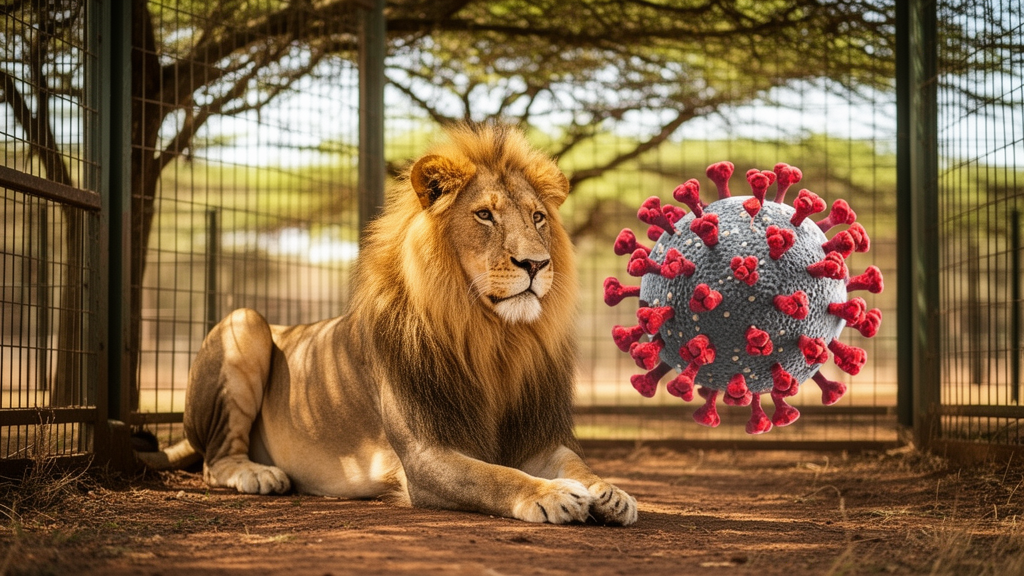
A recent study conducted across four provinces in South Africa has revealed ongoing risks of reverse zoonotic transmission of SARS-CoV-2 from humans to both captive and free-ranging wildlife. The investigation, part of a multi-year One Health research initiative, monitored animal populations from 2021 to 2025 and identified active viral infections and evidence of exposure in various captive carnivore species.
The research evaluated 92 animals located in Gauteng, Limpopo, Western Cape, and Mpumalanga. These animals were selected based on clinical respiratory symptoms, unexplained deaths, or as part of opportunistic sampling in species known to be highly susceptible to coronavirus. The team collected respiratory samples to detect viral RNA and serum samples to assess antibody responses to SARS-CoV-2. Along with testing for SARS-CoV-2, samples were screened for other infectious agents, including different coronaviruses, influenza A virus, and paramyxoviruses, to identify any co-infections.
The molecular diagnostic testing revealed SARS-CoV-2 RNA in four of the 92 animals, indicating a detection rate of 4.3 percent. The cases included three lions sampled in Gauteng in 2021 and an exotic jaguar at a private zoological facility in Limpopo in 2023. The infected jaguar experienced severe respiratory and systemic issues, leading to its death, which underscores the vulnerability of certain exotic species to coronavirus in captivity.
Serological tests indicated that viral exposure among captive populations was more widespread than suggested by molecular findings alone. Testing on 45 animals identified SARS-CoV-2 antibodies in six individuals, resulting in a seropositivity rate of 13.3 percent. The seropositive animals included three lions, one lynx, one puma, and one mongoose. While the lynx and puma were asymptomatic, the mongoose showed respiratory symptoms following close contact with humans at a wildlife reserve.
To explore the transmission pathway and potential human sources of infection, the research team conducted contact tracing of facility personnel. During this process, one veterinary student tested positive for SARS-CoV-2 RNA after interacting with the affected animals. Genomic sequencing of the virus from the jaguar classified the strain as Omicron sublineage BA.2.
The researchers concluded that both captive wildlife and those in proximity to humans face a persistent threat of reverse zoonosis in the aftermath of the pandemic. The severe case observed in the jaguar highlights the need for continuous monitoring at the interfaces between humans and animals. The study stresses the importance of ongoing One Health surveillance to detect new viral spillovers and mitigate risks to vulnerable wildlife populations.
