




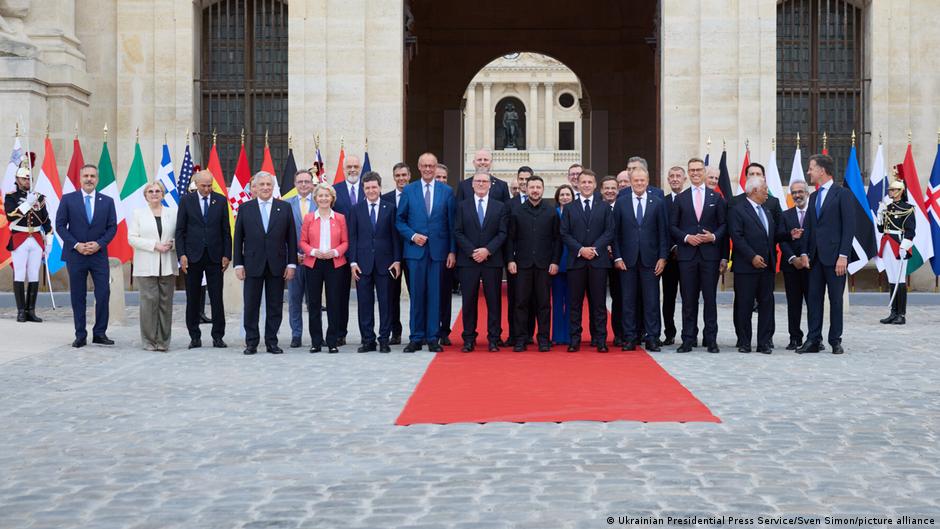
Leaders from around 20 European countries are set to converge in Berlin on November 19 to discuss the future of Ukraine, which has been enduring a Russian military assault since February 2022. As winter approaches, the focus on Ukraine’s ongoing challenges remains critical, and extensive security measures are being deployed in Berlin in anticipation of the high-profile meeting.
While it is uncertain whether Ukrainian President Volodymyr Zelenskyy will attend, reports indicate that key U.S. negotiators Steve Witkoff and Jared Kushner are expected to be present. This gathering is part of the “Coalition of the Willing,” a coalition of 36 nations committed to supporting Ukraine amidst the conflict.
The coalition aims not only to provide immediate military and financial support to Ukraine but also to explore long-term security guarantees and potential ceasefire monitoring within the country. This initiative has its roots in discussions held in London in March 2025 and is now focused on the upcoming Berlin meeting.
Stefan Meister from the German Council on Foreign Relations expressed skepticism about the coalition’s effectiveness, stating that Europe still lacks a comprehensive proposal detailing security guarantees, troop deployments, and specific measures to secure a ceasefire. He commented, “The fundamental problem is that Europe has yet to put forward a proposal.”
Despite these challenges, some observers believe that there may be new opportunities to advance towards peace. Recent talks in Abu Dhabi involving representatives from Russia, Ukraine, and the U.S. yielded an agreement for a prisoner exchange, which some view as a positive development.
German Chancellor Friedrich Merz emphasized Germany’s role in the negotiations, stating, “For the first time, concrete peace talks are expected to take place in the coming weeks with Europe represented.” His remarks came after an EU summit in Dublin, where it was clarified that the E3 countries—Germany, France, and the UK—along with Poland and Italy, would collectively represent Europe in discussions.
However, questions remain regarding whether Germany, as the lead nation, could effectively speak on behalf of Europe. Meister noted that the ongoing debate reflects internal pressures within Europe, particularly with upcoming elections in France and Poland, which may influence support for Ukraine.
German government spokesperson Sebastian Hille downplayed the focus on individual representation, insisting that the conversation should center on uniting efforts for peace. He added that achieving peace in Ukraine requires patience and sustained efforts.
Public support for aid to Ukraine appears to be fluctuating in Germany. A recent ARD DeutschlandTrend survey indicated that while 52% of eligible voters still support military assistance, 42% believe that such aid has gone too far—representing the highest opposition level recorded since the war’s onset. Furthermore, a WDR study found that 54% of respondents favor continued support for Ukraine, while nearly 29% would prefer to pursue closer ties with Russia, despite its aggressions.
