




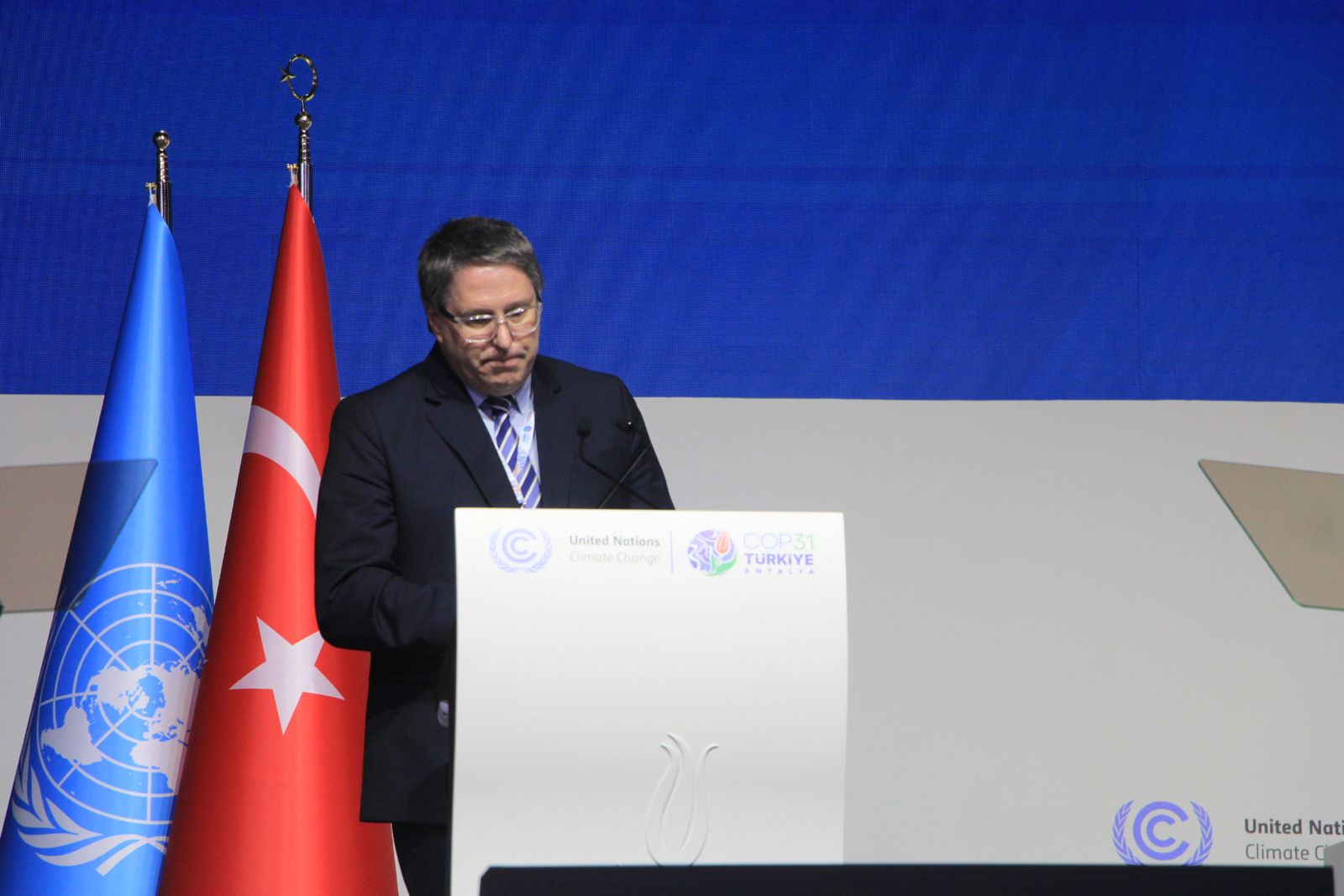
South Africa requires over $15.6 billion (R250 billion) in climate finance to implement adaptation measures between 2026 and 2035, according to Environment Minister David Maynier. This estimate was presented during COP31 in Antalya, Türkiye, where discussions focus on increasing support for developing countries facing climate-related challenges such as floods, droughts, and heatwaves.
Maynier stated, “In accordance with our second Biennial Transparency Report, which we will submit this year, South Africa needs investments and provision of climate finance of over R250 billion, about $15.6 billion, to fully implement adaptation actions between 2026 and 2035.” This financial requirement averages more than $1.5 billion per year over the coming decade; however, Maynier noted that expenditures are likely to fluctuate significantly from year to year.
The planned investments will address various sectors, including water management, agriculture, public health, infrastructure, energy, mining, and coastal protection. The adaptation financing needed is part of a larger estimate, with South Africa requiring approximately R3.7 trillion (about $213 billion) to fully respond to climate change and move toward a lower-carbon economy.
While South Africa has reported around $14.36 billion in commitments aligned with its carbon neutrality goals, it is important to distinguish between funding sources. Many of these commitments come in the form of loans or private investments, which do not provide the immediate capital needed for pressing adaptation efforts. Maynier expressed that adaptation cannot be solely reliant on loans, particularly for projects that do not yield immediate revenue and can increase pressure on public debt.
In addition, Maynier emphasized the widening gap in adaptation finance, advocating for a tripling of resources by 2035. The country seeks predictable contributions from multilateral climate funds and aims to establish mechanisms that will allow the Adaptation Fund to align with the Paris Agreement.
While implementing its Climate Change Act and National Adaptation Strategy, South Africa is also developing adaptation plans across various sectors. Key challenges include securing funds to turn these plans into actionable projects capable of withstanding worsening climate impacts.
The adverse effects of climate change, such as deteriorating roads and water shortages, have direct implications for households and businesses, raising costs in transport, insurance, and labor productivity. As coal still provides about 75% of the country’s electricity, transitioning to renewable energy sources while ensuring grid reliability remains a critical priority.
South Africa’s Just Energy Transition Investment Plan outlines funding needs of R1.48 trillion from 2023 to 2027, indicating that climate policy must extend beyond energy replacement to include essential adaptations in agriculture, health services, and infrastructure.
The broader implications of South Africa’s climate financing needs are evident across the African continent, where disparities in financing reveal significant gaps between required adaptation funding of nearly $70 billion annually, compared to approximately $14 billion currently received. Maynier’s announcement at COP31 highlights an urgent call for international commitments to ensure accessible and affordable capital for climate adaptation efforts.
