




Credit: Dark Energy Survey/DOE/FNAL/DECam/CTIO/NOIRLab/NSF/AURA
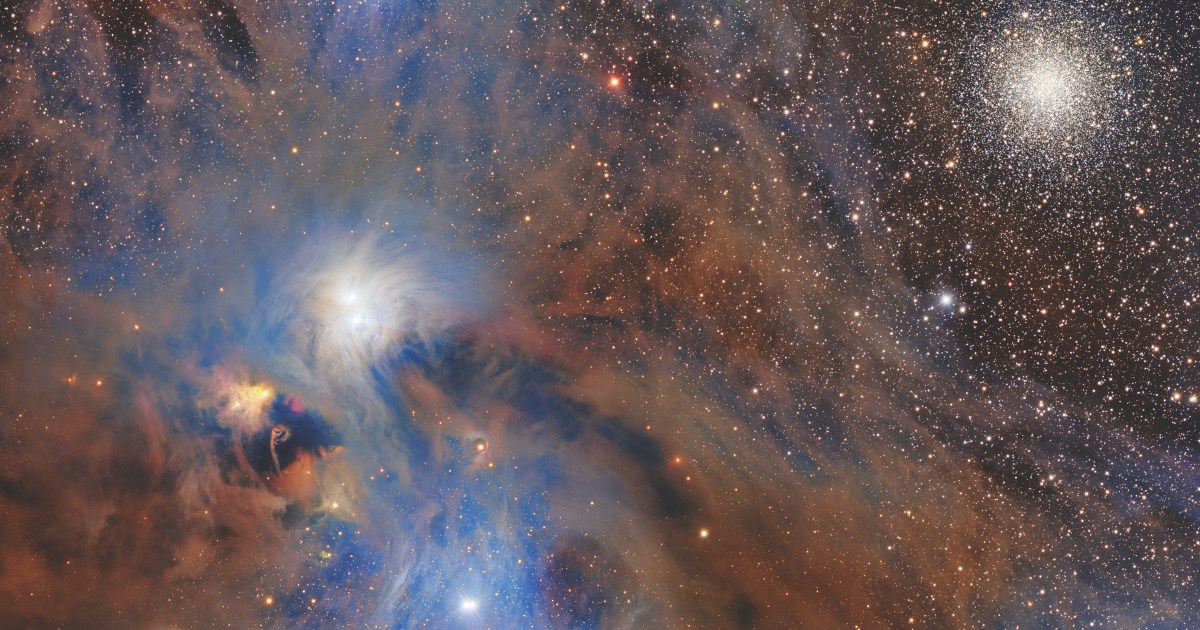
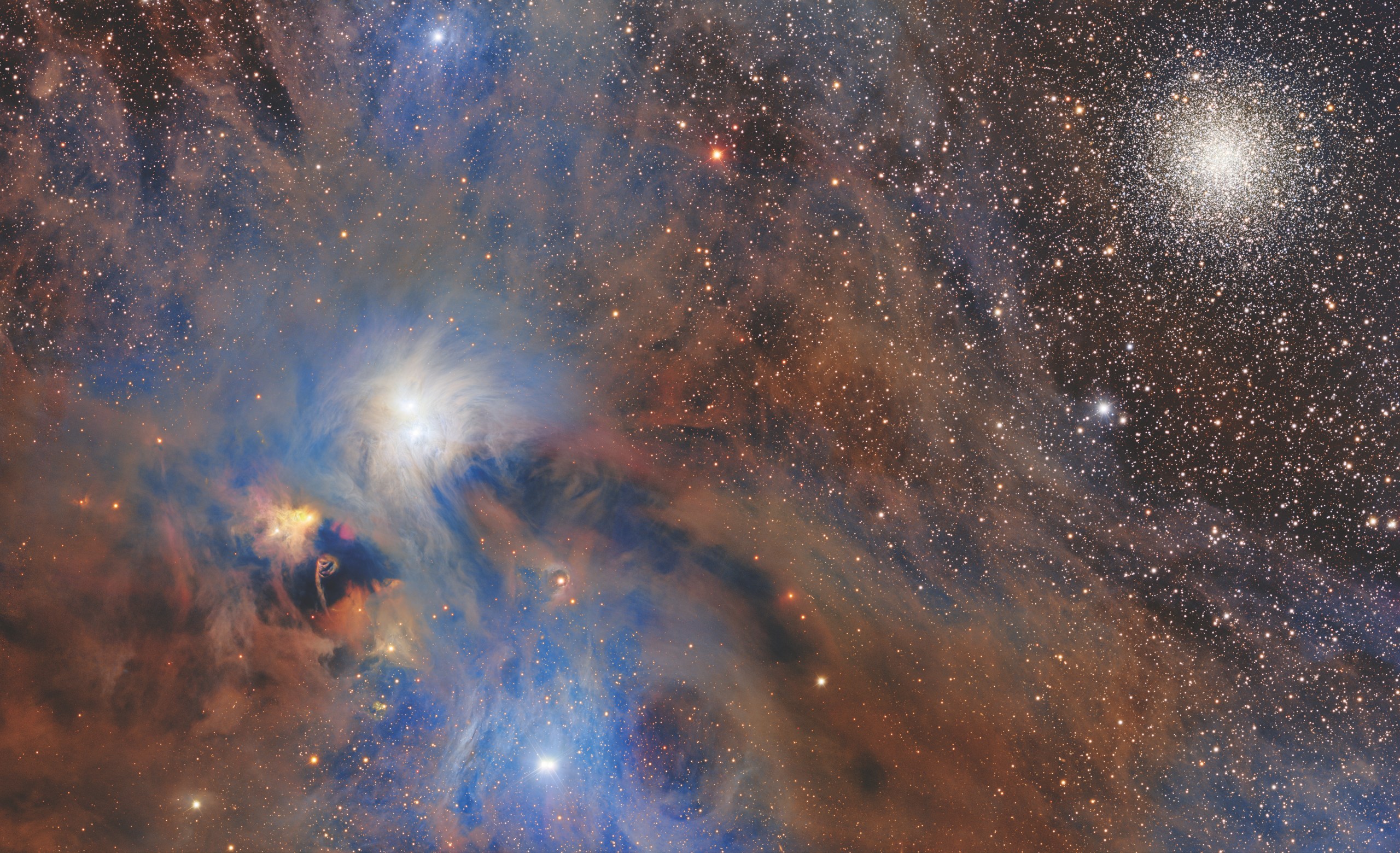
The Corona Australis Molecular Cloud, a vibrant region of star formation, stands in stark contrast to the Chandelier globular cluster, one of the oldest stellar collections visible in the southern sky. This cosmic pairing illustrates the diverse stages of stellar evolution.
Located at the northern edge of Corona Australis, the molecular cloud glows with gas and dark dust, providing a glimpse into the dynamic process of star formation. Especially noteworthy is R Coronae Australis, a variable star that can be spotted amidst the dense material. This cloud is situated approximately 430 light-years from Earth, making it one of the nearest active star-forming regions, rich enough to potentially give rise to thousands of new stars.
In contrast, the Chandelier Cluster, cataloged as NGC 6723 and located in the upper right of the image, contains hundreds of thousands of stars but is much older, at about 28,000 light-years from our planet. This cluster resides in the southern constellation of Sagittarius and presents a different view of stellar life, showcasing the final stage of star development.
The juxtaposition of the young, gas-rich environment of the Corona Australis Molecular Cloud and the dense, established cluster of NGC 6723 serves as a reminder of the ongoing processes that shape the universe.
Richard Talcott is a former senior editor and current contributing editor of Astronomy.
