




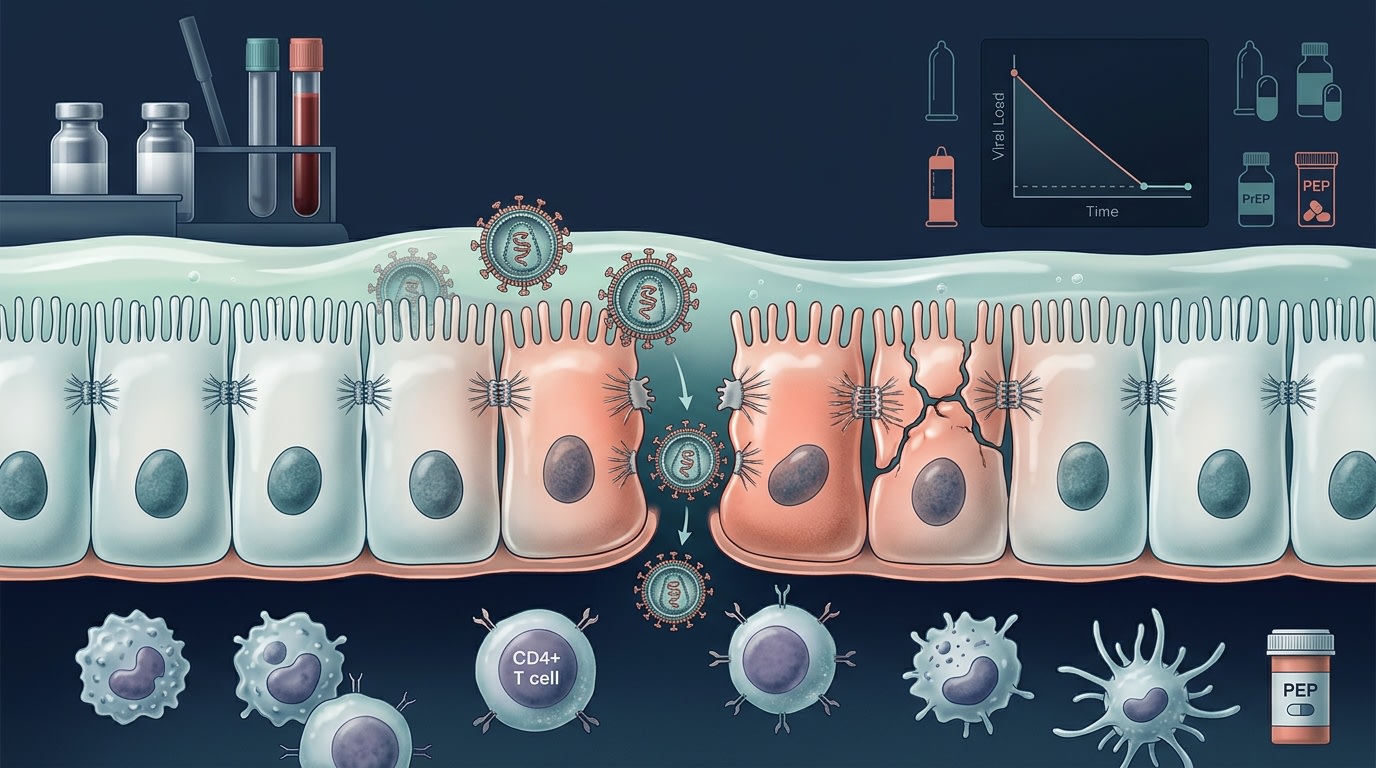
After a potentially risky sexual encounter, many individuals inspect their bodies for visible signs of injury, believing that if there are no cuts or scratches, they are safe from HIV exposure. However, this assumption does not accurately reflect the complexities of how HIV can enter the body.
Human tissues, particularly within the vagina, cervix, and rectum, contain intricate protective structures that allow for viral interaction even in the absence of visible wounds. According to research, the virus can reach deeper tissues and susceptible cells without any apparent injury. Factors such as the amount of virus present and the biological environment also play critical roles in the risk of infection.
A significant study published in 2013 by a team at Northwestern University demonstrated that HIV particles could penetrate epithelial barriers in human cervical tissue, challenging the notion that these tissues function solely as intact surfaces. The study showed that up to 90% of viral particles that penetrated the tissue did so through intercellular spaces, rather than through physical injuries.
The researchers noted that while many viral particles remained close to the surface, the condition of cellular junctions influenced penetration. Disrupted junctions allowed more particles to infiltrate, indicating that the epithelial integrity plays a role in transmission risk.
Further complicating the understanding of HIV transmission, a study in Rakai, Uganda, found significant variations in infection rates based on the stage of infection of the HIV-positive partner. The research suggested that during the early phase after seroconversion, transmission rates were notably higher compared to later stages of infection. Thus, an individual might appear unharmed yet still be exposed to infectious fluids.
Different sexual exposure routes also present varying risks. A 2014 systematic review revealed that receptive anal intercourse carries the highest risk for HIV transmission, while oral sex presents a much lower risk. The differences in tissue structure and immune cell presence explain these variations in risk.
In 2007, a randomized trial involving circumcision in HIV-negative men demonstrated a 51% reduction in HIV acquisition, providing evidence that the biological environment of genital tissues plays a significant role in transmission dynamics. The presence of sexually transmitted infections, such as herpes, has also been linked to increased susceptibility to HIV due to ongoing inflammation and immune cell recruitment in the genital area.
Recent findings emphasize the impact of effective antiretroviral treatment. The 2019 PARTNER2 study showed that HIV-positive individuals who maintained an undetectable viral load did not transmit the virus to their partners, reinforcing the concept that successful treatment can eliminate transmission risk.
For individuals concerned about possible HIV exposure, medical professionals recommend not relying on visible injuries as an indicator of risk. Post-exposure prophylaxis (PEP) should be sought as soon as possible, ideally within 72 hours. Regular STI screenings and preventive measures such as PrEP and condom use are crucial for reducing overall risk.
In summary, the understanding of HIV transmission has evolved, highlighting the importance of microscopic conditions, viral loads, and individual tissue characteristics. A comprehensive medical assessment following potential exposure is essential for determining risk and appropriate response.
