




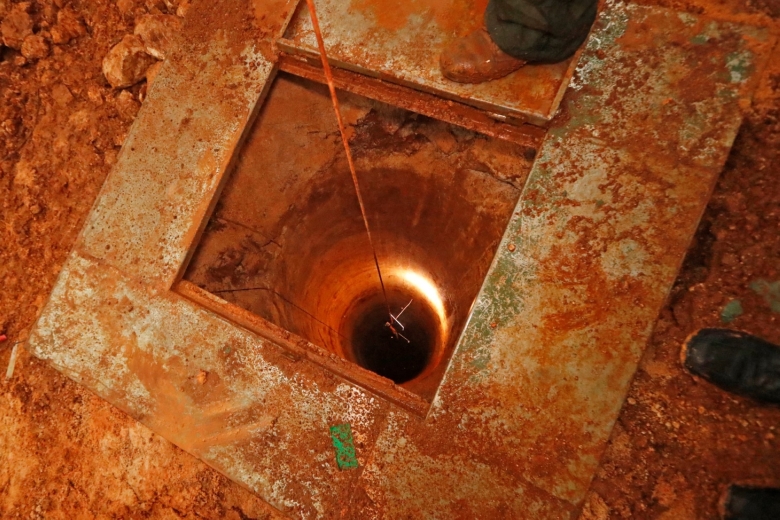
On October 7, 2023, Hamas executed a significant breach of Israel’s extensive underground defenses by launching attacks from above. The group employed drones to disable sensors and remote weapon systems, while explosives and bulldozers created nearly 30 gaps in the perimeter, rendering Israel’s billion-dollar subterranean security infrastructure ineffective.
Although the tunnels themselves were not penetrated, the Israeli defenses surrounding them failed. This situation highlights the ongoing struggle within Israel regarding tunnel warfare, as the nation has previously made efforts to counteract cross-border tunnels. Operations like Protective Edge in Gaza (2014) and Northern Shield in Lebanon (2018-19) have successfully reduced Hamas and Hezbollah’s ability to utilize offensive tunnels. However, the current conflict has seen the emergence of a complex system involving extensive networks of tunnels, bunkers, command posts, and factories.
As a result, the Israeli military has shifted its focus from specialized anti-tunnel units, such as the Yahalom engineers, to a broader strategy that involves multiple military units engaging in anti-tunnel operations. Despite innovative techniques and tools developed to locate and neutralize these tunnels, Hamas’s capabilities in this area remain a significant hurdle, with reports indicating incomplete success three years into ongoing hostilities.
In a report released on October 14, the Israeli military stated that its 99th Division has successfully neutralized approximately eight kilometers of tunnels over four months in northern Gaza. This task has been ongoing, with various divisions alternating in the mission to eliminate tunnel threats.
In Lebanon, Israel reported substantial progress in neutralizing Hezbollah’s underground operations. In September, Israeli forces claimed to have destroyed about 5.4 kilometers of Hezbollah tunnels on the Ali Taher ridge, using over 1,100 tons of explosives in coordinated operations above and below ground.
The effectiveness of these demolitions has been scrutinized, raising questions about whether the resources expended justify the operational successes. In past operations, such as Operation Protective Edge in 2014, Israel took stock of 32 attack tunnels, with several crossing into its territory. Military analyses afterward indicated a recognition of the strategic threat but noted that adequate preparations for an operational response had fallen short. More than half of the tunnels identified for destruction were not fully neutralized.
In response, Israel invested heavily in technology and infrastructure, developing a barrier costing approximately 3.5 billion shekels, which includes multiple layers of concrete, sensors, and a security fence. This barrier aims to prevent the incursions that have previously threatened Israeli security.
Moreover, Israel expanded the Yahalom Combat Engineering Corps and established advanced detection technologies. However, challenges persist, as underground warfare demands a multifaceted approach that combines the expertise of specialized units with broader military coordination.
The complexity of tunnel warfare forces the Israeli military to rethink traditional strategies. The operational burden to clear and secure tunnels is extensive, necessitating significant resources and planning. Financially, the imbalance between Hamas’s lower investment in tunnel construction compared to Israel’s substantial expenditures raises further concerns. While Hamas is estimated to spend about $40 million annually on tunnels, Israel’s costs reach into billions when accounting for both barriers and detection systems.
As the conflict continues, the implications of urban warfare are becoming increasingly pronounced, particularly with respect to humanitarian impacts and legal considerations arising from military operations in densely populated areas. The need to balance effective military action with civilian safety and international standards remains a critical concern for Israeli authorities moving forward.
