




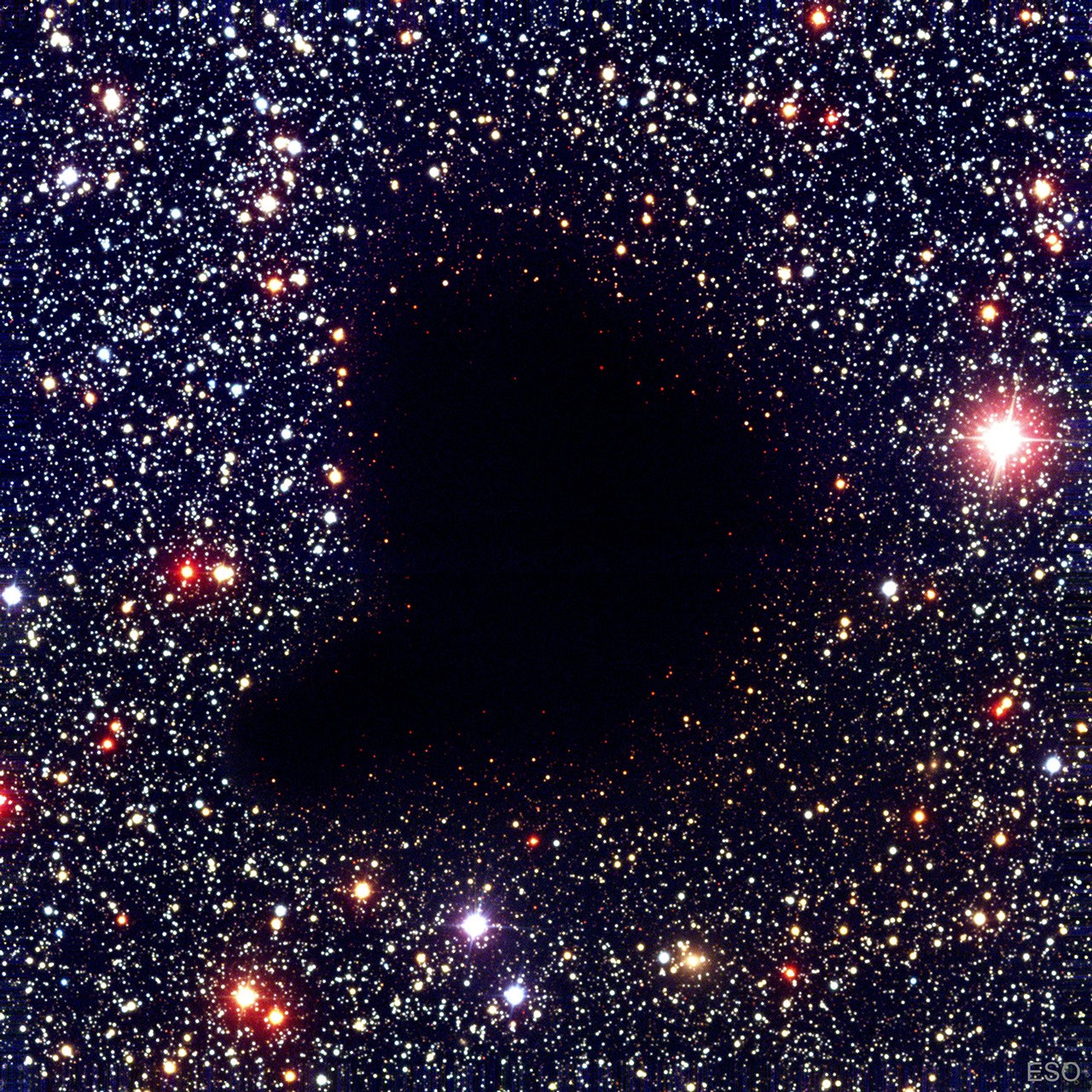
Explanation: Astronomers have identified Barnard 68, a notable dark molecular cloud located in the constellation Ophiuchus, as an area devoid of visible stars. Previously perceived as a hole in the sky, this cloud absorbs nearly all light emitted by background stars due to its high concentrations of dust and molecular gas.
Measuring approximately 500 light-years away and half a light-year across, Barnard 68 is characterized by its extremely cold and isolated environment, making it one of the coldest regions in the universe. The absence of visible stars at its center suggests its relative proximity.
Although the exact mechanisms behind the formation of molecular clouds like Barnard 68 are not fully understood, they are considered key locations for the birth of new stars. Recent observations indicate that Barnard 68 itself is likely on the verge of collapsing in a process that could lead to the creation of a new star system.
For further study, it is possible to observe through the cloud using infrared light, which can penetrate the dense material that obscures visible wavelengths.
Tomorrow’s Picture: open space
