




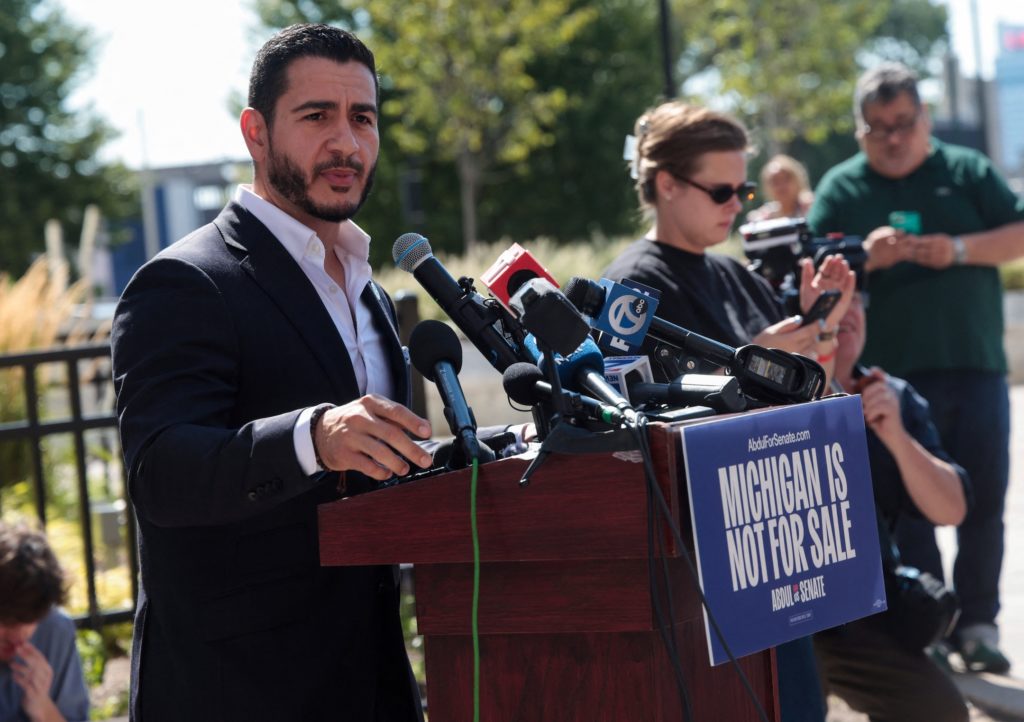
Abdul El-Sayed has secured the Democratic nomination for the Michigan Senate seat, defeating moderate Haley Stevens in a primary that highlighted internal party divisions and drew significant financial backing for both candidates. This primary became one of the costliest in the nation, with more than $60 million spent by outside groups primarily supporting Stevens.
El-Sayed’s Campaign and Victory
Throughout his campaign, El-Sayed emphasized the overwhelming outside spending as a major concern, positioning it as a threat to local democratic processes. In his victory speech, he asserted that grassroots support can overcome substantial financial advantages. He encouraged voters to engage in dialogue about key issues like rising costs of living, asserting that personal connections are essential in building a movement.
The upcoming general election will see El-Sayed face Republican nominee Mike Rogers, setting the stage for a potentially competitive match in a state often viewed as a swing area. Democratic strategist Lis Smith noted that El-Sayed’s success may reflect general dissatisfaction within the Democratic base towards traditional establishment candidates, as many voters felt that past approaches were inadequate in addressing contemporary issues.
Smith remarked on the broader implications of El-Sayed’s win, suggesting that it signals a changing sentiment among Democrats. The electorate appears to be rallying around candidates that challenge the status quo, particularly after the frustrations stemming from the previous electoral cycle.
One of the defining issues in El-Sayed’s campaign was his stance on U.S. policy towards Israel, which resonated with party members who are increasingly questioning long-held positions on foreign aid. His observations regarding influential lobbying groups, such as AIPAC, were seen as symbolic attacks on established power structures, further emphasizing his message of independence from corporate interests.
However, as El-Sayed prepares for the general election, strategists emphasize the importance of broadening his appeal to independents and moderate voters. Smith noted that while progressive victories are on the rise, the Democratic Party is navigating a complex identity crisis, needing to reconcile differing ideologies within its ranks.
Key questions remain regarding how El-Sayed will adjust his messaging to accommodate a wider range of voters in Michigan, a state characterized by its political diversity. Analysts are watching closely to see how he will pivot from a progressive platform to a more inclusive campaign aimed at securing a broader coalition.
Why It Matters
El-Sayed’s nomination reflects significant shifts within the Democratic Party as it grapples with ideological divides and the role of outside money in politics. His success suggests that voters are eager for change, a sentiment that could have major implications for upcoming elections in a critical swing state like Michigan.
