




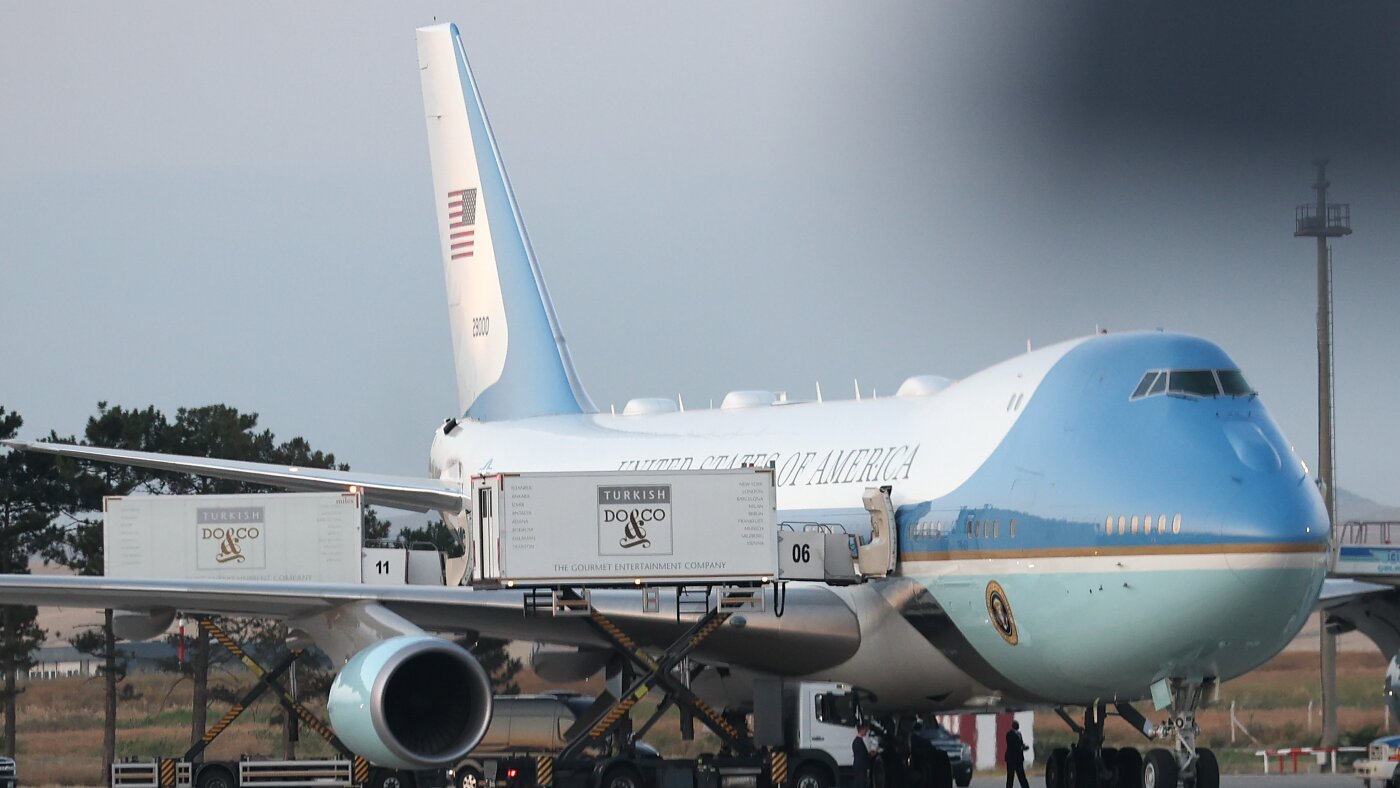
Security Measures Shift as Trump Secretly Departed NATO Summit
On July 08, 2026, President Donald Trump was reportedly involved in an unusual security operation following the NATO summit in Ankara, Turkey. According to sources, this move was necessitated by an assassination threat from Iran, prompting significant changes to the standard protocol for presidential travel.
Details of the Departure
Upon concluding the summit, President Trump was initially seen boarding Air Force One, a routine sight often captured by media outlets. However, reports indicate that he was subsequently transported in an airport catering truck to a smaller military aircraft. This smaller plane was used for his actual departure, contrary to official announcements that he was flying on Air Force One.
This operation has raised concerns regarding safety measures and transparency in handling presidential security. A U.S. official familiar with the incident confirmed the operation was triggered by intelligence warnings related to potential Iranian threats.
While the White House has yet to comment on this specific incident, the implications of utilizing such covert measures have sparked discussion about the extent to which security protocols are adapted in response to perceived threats.
The President’s departure reflects heightened security awareness within U.S. agencies regarding potential international risks. Such protocols are typically designed to ensure the safety of the sitting president while maintaining a public narrative that adheres to expectations of presidential travel transparency.
In response to these events, experts in security and political protocol suggest that the need for heightened vigilance may continue to influence how future presidential travels are managed, both domestically and internationally.
Why It Matters
This incident underscores the complex balancing act between presidential safety and public transparency. As potential threats persist, how administrations handle security protocols may have lasting impacts on public confidence and international relations.
