




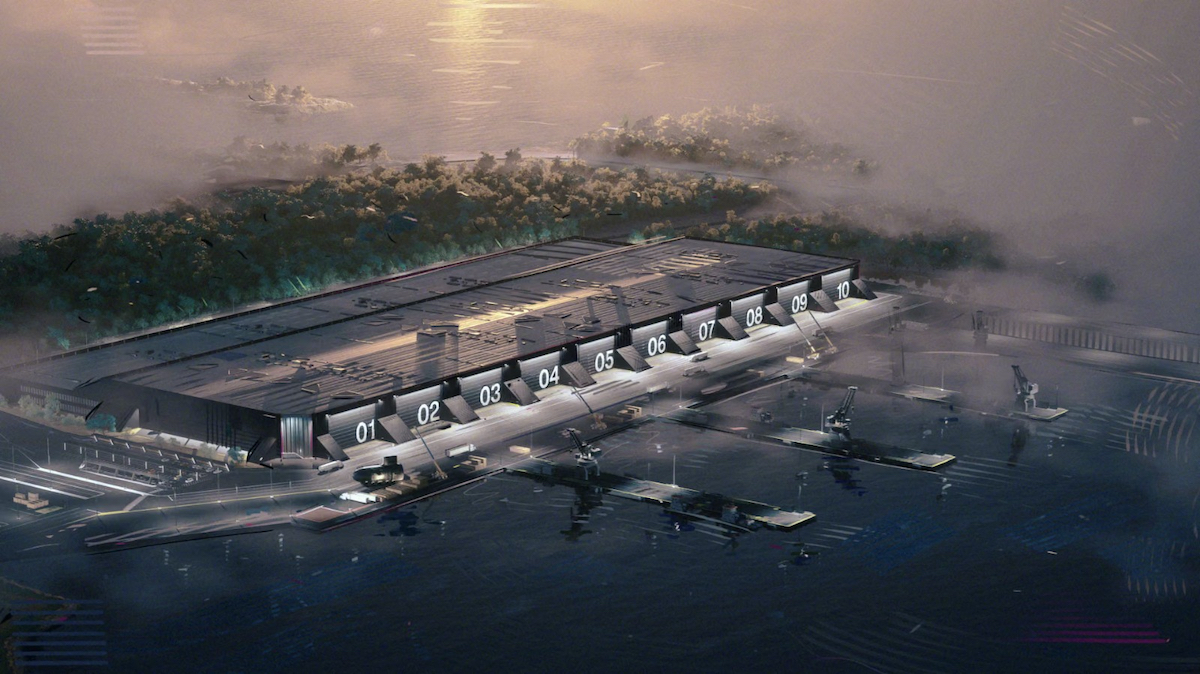
A new multibillion-dollar initiative aims to overhaul U.S. submarine manufacturing, driven by a growing concern over China’s expanding undersea capabilities. This month, defense technology firm Anduril Industries announced plans to invest $3.7 billion to establish a 2-million-square-foot “software-defined shipyard” at Sparrows Point in Baltimore County, Maryland, which will significantly enhance the U.S. Navy’s submarine production capacity, according to company and defense officials.
Anduril’s investment is part of a broader partnership with the U.S. Navy, which includes a contract worth up to $2.9 billion, contingent on specific production milestones. Together, this public-private collaboration represents a total commitment of $6.6 billion aimed at alleviating bottlenecks in the production of Virginia-class nuclear attack submarines (SSNs).
The new facility, referred to as “Arsenal-2,” will feature a 1,200-foot graving dock, direct rail access, and advanced digitized workflow tracking. It is expected to create approximately 3,100 direct manufacturing jobs and add around nine million labor hours annually, boosting the U.S. nuclear shipbuilding capacity by 15%.
This initiative comes during a time of significant challenges for traditional shipbuilders like General Dynamics Electric Boat and Huntington Ingalls Newport News Shipbuilding, which have struggled to meet the Navy’s target of producing at least two SSNs per year.
In the near term, Anduril expects to deliver critical components, such as torpedo tubes, from its certified facility in Costa Mesa, California, starting in 2028. Operations in Maryland are anticipated to commence around 2030, with longer-term plans to provide full hull modules to meet both domestic fleet demands and commitments under the AUKUS defense pact with Australia.
The urgency of this expansion is underscored by ongoing delays within the U.S. submarine construction industry. A January 2026 report from the U.S. Congressional Research Service pointed out that while the Navy aims to maintain a fleet of 66 SSNs, actual construction has averaged only 1.1 to 1.2 submarines annually since 2022 due to workforce shortages and supply chain issues.
The Navy’s goal is to increase production to two boats per year, with a long-term target of 2.33. This effort is crucial as operational requirements in the Western Pacific grow amid heightened tensions with China, especially in potential conflict scenarios involving Taiwan.
Recent assessments indicate that the U.S. Navy operated at least 11 nuclear-powered submarines in key Western Pacific regions in 2025 to maintain a strategic undersea presence against China. The significance of these submarines is amplified by their role in projecting power and deterrence in conflict scenarios.
China’s rapid expansion and modernization of its submarine fleet pose an escalating challenge. Current estimates suggest China could have approximately 70 submarines by 2027, with a focus on integrating advanced naval warfare capabilities. U.S. officials have emphasized the need for robust measures to retain an advantage in this critical area of military capability.
The construction of the Arsenal-2 facility could play a pivotal role in addressing the existing industrial deficits and ensuring that the U.S. remains competitive in undersea warfare as China continues to enhance its maritime capabilities.
