




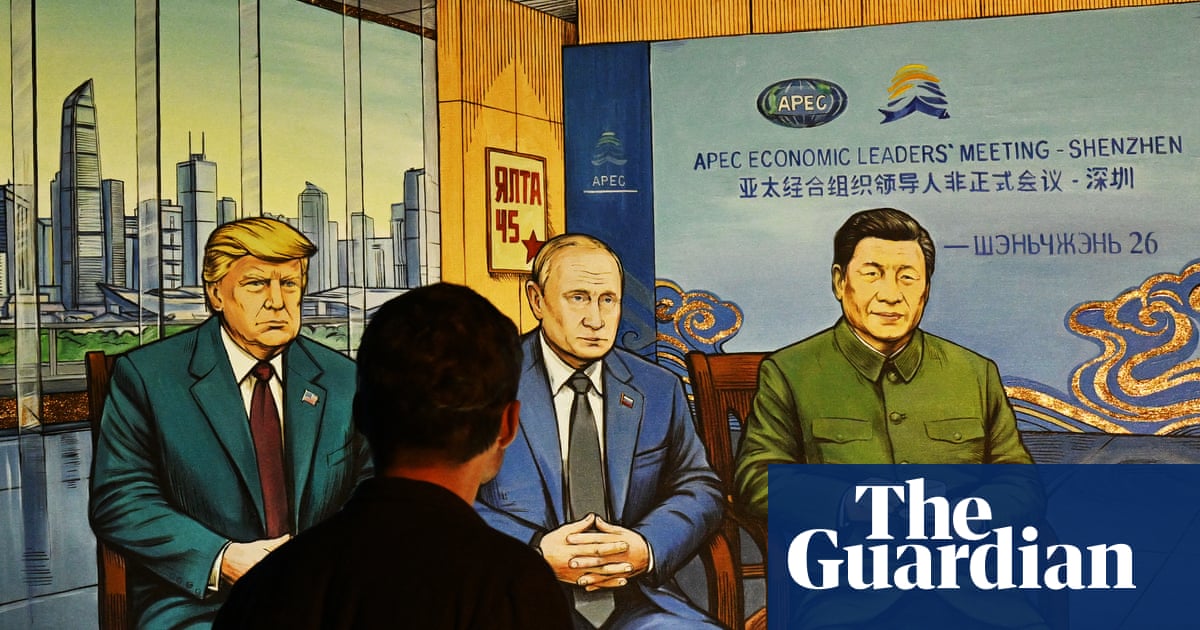
Australia has expressed support for the upcoming summit between Donald Trump, Xi Jinping, and Vladimir Putin set to take place in Shenzhen as part of the Asia-Pacific Economic Cooperation (Apec) meeting. However, European leaders have cautioned against significant concessions from the U.S. in relation to the ongoing war in Ukraine.
Ukrainian President Volodymyr Zelenskyy has voiced concerns about the summit, cautioning that it must not result in a reallocation of global influence or neglect Ukraine. Zelenskyy’s remarks come four years after Russia’s full-scale invasion of Ukraine began.
During a visit to Manila on Sunday, Australian Prime Minister Anthony Albanese acknowledged the significance of the summit and emphasized the necessity for a resolution to the war. “We think that dialogue is a good thing and we await the outcome of that dialogue,” Albanese stated.
Albanese was in the Philippines for a meeting with Quad leaders, furthering discussions with Southeast Asian representatives at the ASEAN summit. He indicated that he would be open to participating in an Apec group photo if that is what China desires.
Albanese emphasized the importance of constructive outcomes from the summit, including a push for de-escalation in global conflicts. “It’s obviously quite significant, the fact that President Trump will be at Asean as well as at Apec,” he said.
European leaders have expressed their reservations regarding the summit. German Chancellor Friedrich Merz urged the U.S. not to make any unexpected moves, stating, “Stay on Team Europe and Team Ukraine, and let us work together for a genuine peace in Ukraine.”
French President Emmanuel Macron warned against imposing an “unjust peace” on Ukraine, equating such a decision to a strategy for future conflict. He stressed that an unfavorable resolution would be “the spirit of defeat.”
Zelenskyy has cautioned against allowing the summit to transform into “Yalta 2, 3, 4,” a reference to historical negotiations where powers divided influence in post-war Europe.
Historian Timothy Garton Ash remarked that the summit could be seen as a “parody” of the original Yalta Conference, but analysts suggest it is unlikely that major decisions regarding Ukraine or regional tensions in Asia will occur without their respective stakeholders’ involvement.
Albanese noted that the summit would not diminish the aspirations of middle powers, such as Australia and Canada, to assert their influence on the global stage. He highlighted that Ukraine’s struggle is not solely about its sovereignty but also represents a stand for international law.
When asked about participating in an Apec leaders’ photo if Putin attends, Albanese suggested he would consider China’s stance as the hosts. However, he reaffirmed Australia’s position against Russia’s actions in Ukraine, stating, “If he’s in a room where I am, I’m sure they’ll hear my contribution.”
In related developments, Albanese finalized a new defense agreement with the Philippines, visiting the HMAS Stalwart in Manila to fortify the Philippines’ defenses amid rising tensions with China. Additional naval exercises focused on freedom of navigation are being planned to challenge Beijing’s influence over the South and East China Seas.
