




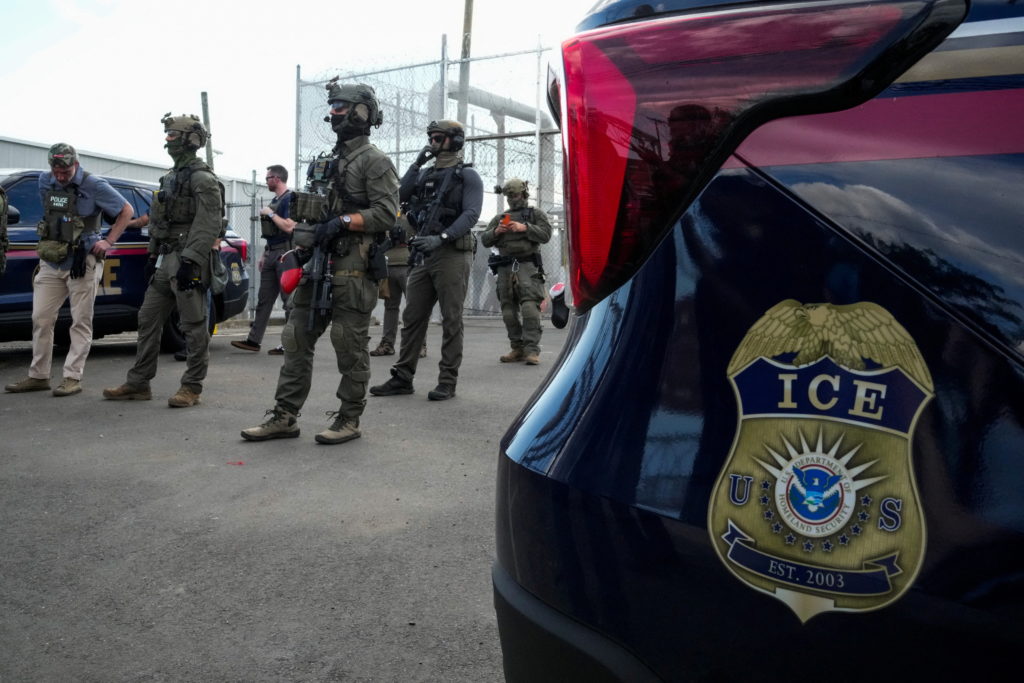
The Trump administration has detained over 50 parents and spouses of active-duty U.S. service members as part of its revised immigration policies targeting military families. This detainment effort comes amidst a rollback of protections traditionally extended to these families, according to an investigation by the Associated Press.
Detentions Raise Concerns for Military Families
Since the beginning of President Trump’s second term, more than 50 relatives of service members have been placed in detention, with at least six individuals deported and one opting for self-deportation. Currently, at least eight immediate family members remain in federal custody. These figures are likely underreported, as the government does not actively track such detentions.
Historically, immediate family members of military personnel have enjoyed some level of protection from deportation, supported by bipartisan agreement. However, the recent investigations show that these individuals are routinely arrested while they seek to adjust their legal status, which may delay military deployments and hinder the ability of service members to focus on their duties.
Army Sgt. Hedar Leonel Turcios Juarez shared concerns about balancing his military responsibilities with the stress of his wife’s detention, which occurred in front of their child. Various family members have echoed similar sentiments, highlighting the emotional and operational difficulties faced by military families when a loved one is detained.
Experts warn that these policies could jeopardize military readiness, particularly as the U.S. remains engaged in conflicts abroad. The Department of Homeland Security (DHS) does not presently compile data on these specific detentions, leading to gaps in public understanding and oversight.
Recent detentions have sparked a series of interventions and public outcries, prompting responses from officials, including interventions by Homeland Security Secretary Markwayne Mullin to secure the release of detained spouses. In some cases, military members have been forced to delay deployments or take administrative leave to care for children left without parental support.
The policy shift marks a stark contrast to previous practices where family members of service members were typically shielded from immigration enforcement. Analysts have noted that this change could have significant implications for both the morale and operational readiness of service personnel.
While recruiters continue to promote immigration benefits to attract recruits, military policymakers appear to grapple with the ramifications of enforcement actions against troops’ family members. Current policies threaten to negate these benefits and deepen the already complex realities faced by service members balancing their commitment to the military with familial responsibilities.
Why It Matters
The detentions of military spouses and parents raise critical questions about the intersection of immigration enforcement and national security. By undermining the support systems that are vital to service members, the current policy could not only affect the well-being of families but also challenge military effectiveness during critical operations.