




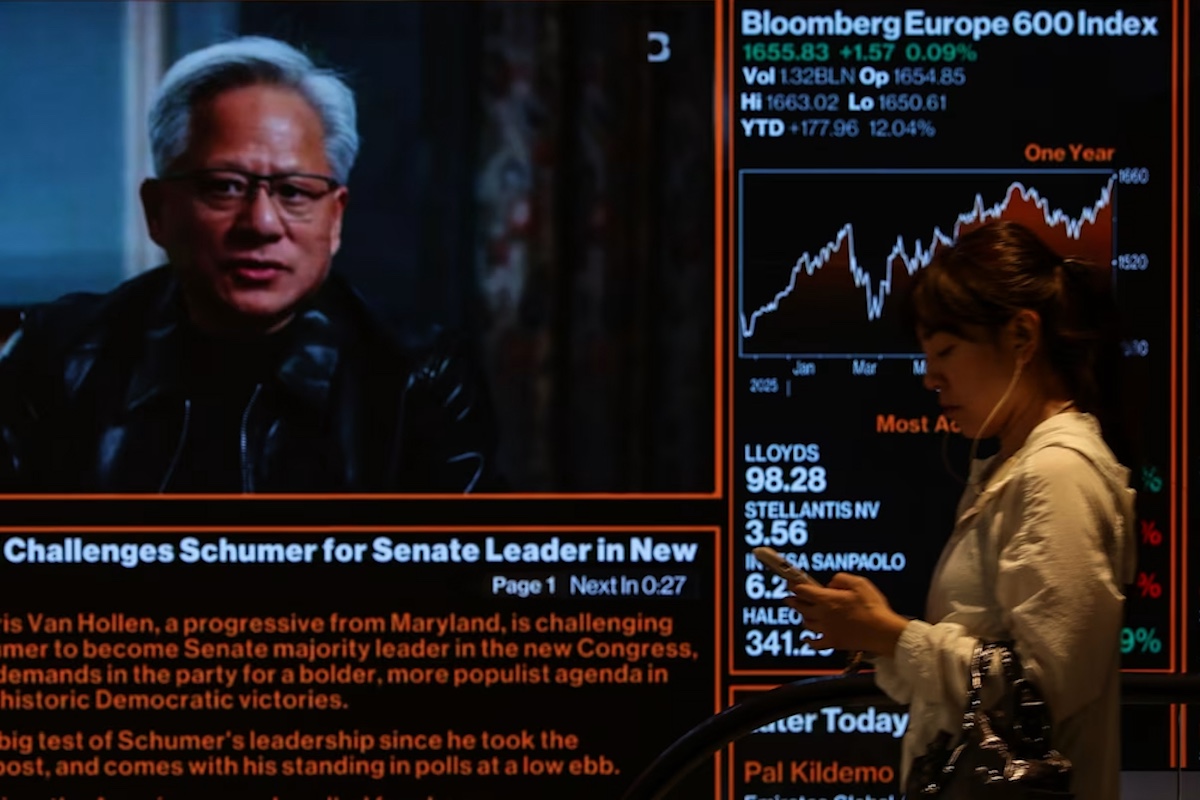
Global markets experienced a notable rebound following significant interventions by Asian governments and a shift in leadership at Nvidia. After a severe selloff in the artificial intelligence sector erased trillions in valuation, Korea, Taiwan, and China enacted measures to stabilize their financial markets, while Jensen Huang’s reinstatement as CEO of Nvidia contributed to a sharp increase in U.S. stocks.
In South Korea, government officials met to address the crisis, resulting in the creation of a stabilization fund aimed at supporting the Kospi index. Finance Minister Lee Hyoung Il stated, “We have made clear the government’s commitment to stabilizing the market. We expect this to help improve investor sentiment.”
This intervention marks the first use of a stabilization fund since the global financial crisis of 2008. The fund is accompanied by a temporary relaxation of daily share-buyback limits for publicly traded companies. In a smaller scale effort in 2020, the fund targeted approximately $7.95 billion.
Meanwhile, Taiwan’s government imposed a blanket ban on short selling to combat what has been described as the worst week for its tech-heavy market since 1991. The government also pledged $15 billion from its National Financial Stabilization Fund for share purchases, encouraging investors to maintain calm amidst uncertainty.
China has been proactive too, with state-backed funds pouring significant sums into the Shanghai market. The country’s exchanges are also lowering minimum margin requirements for leveraged trading from 100% to 80%, a reversal of prior measures designed to restrict leverage.
Market analysts point to rising concerns over financial stability in the region, despite strong demand for AI products sustaining manufacturing and export growth. Adam Onoszko of Oxford Economics noted, “Rising financial risks threaten to blunt the transition,” while others like Peter Kim of KB Financial Group mentioned a reevaluation of the AI market amid shifting portfolio strategies.
Meanwhile, Jensen Huang’s return to Nvidia saw the company’s shares soar by 32%, which contributed to a broader rally on Wall Street. The S&P 500 climbed 4.7%, the Nasdaq increased by 6.5%, and the Dow Jones Industrial Average rose by 3%. Analysts suggest that Huang’s reinstatement was a key factor in restoring confidence among investors.
MSCI Inc. reported a 3.8% increase in Asia Pacific equities, ending an eight-day losing streak. Despite the positive response, many analysts warn that the path forward may be challenging, citing ongoing concerns about inflation and the implications of U.S. economic policies.
As Asian markets react to both local government interventions and U.S. developments involving Nvidia, the potential for further volatility remains. Policymakers in the region are acutely aware that while immediate measures may alleviate pressure, underlying issues could persist.
