




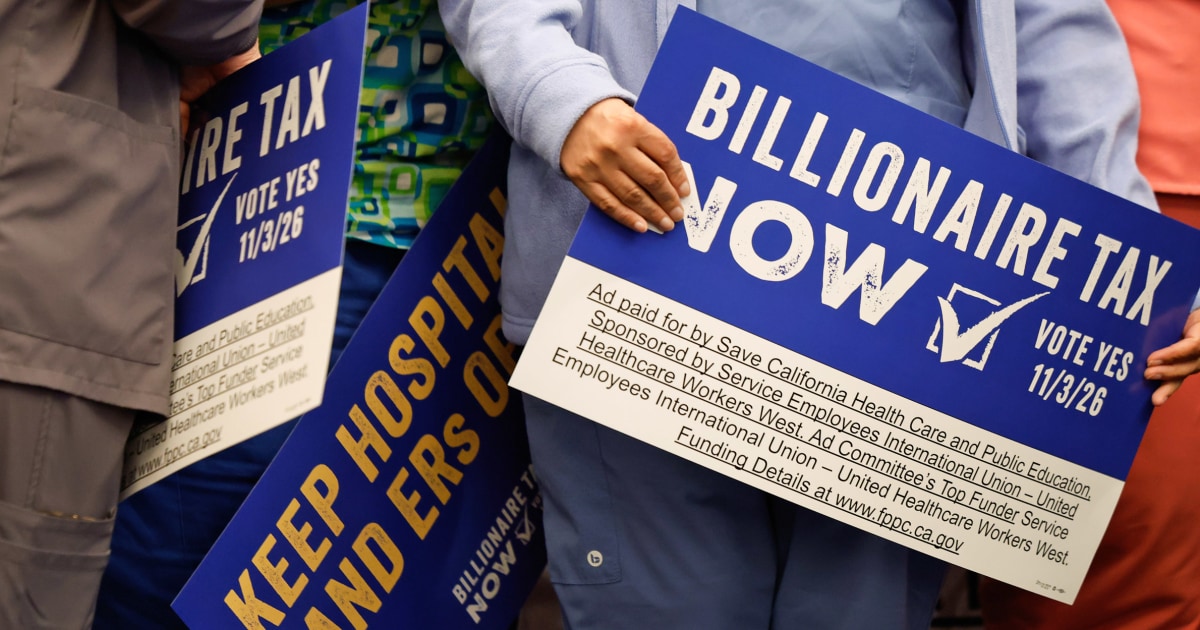
California is poised for a pivotal decision this November as voters consider a proposed one-time 5% tax on the state’s billionaires, known as “Proposition 40”. This measure has attracted significant financial backing, already amassing approximately $100 million in campaign spending and highlighting stark divisions within the Democratic Party.
A Look at the Billionaire Tax Proposal
In the recent all-party primary, California Democrats managed to avoid a significant intra-party conflict for the governor’s race, with former Health Secretary Xavier Becerra emerging as the leading candidate against Republican Steve Hilton. However, the billionaire tax proposal represents a deeper ideological divide among Democrats in the state, which may have national implications as the party gears up for the 2028 presidential election.
The billionaire tax, driven by the Service Employees International Union (SEIU) – United Healthcare Workers West, faces strong opposition from notable tech industry figures, including Google co-founder Sergey Brin. Becerra and term-limited Governor Gavin Newsom oppose the measure, while progressive figures like Tom Steyer and Representative Ro Khanna advocate for it.
Further complicating the issue, several influential California Democrats, including former Vice President Kamala Harris, former House Speaker Nancy Pelosi, and Senators Adam Schiff and Alex Padilla, have not publicly taken a clear stance on the ballot measure, reflecting a broader hesitation within the party.
A recent survey by NBCUniversal Local/Telemundo Station Group revealed that while 48% of likely voters support the billionaire tax, a majority remains elusive, with only 38% opposing it and 14% undecided. Among Democrats, support rises to 67%, indicating strong backing within the party. However, concerns about potential wealth flight from California persist, with 59% of respondents expressing indifference to that possibility.
If approved, the billionaire tax would mark a significant victory for the progressive wing of the Democratic Party, potentially emboldening candidates like Khanna, who aim to channel grassroots support for wealth taxation into the national dialogue leading up to the presidential primaries.
Why It Matters
The outcome of Proposition 40 could serve as a bellwether for the direction of the Democratic Party in California and the nation as a whole. A successful campaign for the billionaire tax would underscore a populist trend within the party, highlighting the growing discontent with income inequality and setting the stage for future electoral dynamics. Conversely, failure could spark concerns about the party’s alignment with its progressive base and its ability to mobilize voters ahead of the 2028 elections.
