




China has unveiled its first dedicated policy roadmap aimed at accelerating technology-driven commerce. The new guidelines, introduced in a release by the Ministry of Commerce, are designed to harness emerging technologies like artificial intelligence (AI), big data, and digital twins to reshape commercial practices and enhance consumer experiences.
Yuan Xiaoming, assistant minister of commerce, stated that the comprehensive guidelines align with China’s evolving economic landscape. He emphasized that technological innovation is now central to every aspect of the commerce chain, promoting a deeper integration of technology and business operations. The guidelines are characterized by being new, comprehensive, and practical.
The term “new” highlights the focus on technological advancements to address evolving consumer behaviors. As living standards rise, consumers increasingly prioritize product quality and their shopping experience. According to the Ministry of Commerce, sales of smart glasses surged 110 percent year-on-year during the first nine months of this year, illustrating the growing role of technology in driving consumption.
“Comprehensive” emphasizes the need for progress on both supply and demand sides, incorporating technology throughout the entire commerce chain. This approach extends from product development and manufacturing to logistics and the final consumer experience. The guidelines aim to enhance traditional sectors such as retail and catering while also encouraging new business models like commercial AI agents and green consumption.
The “practical” element focuses on addressing immediate challenges in commerce with actionable policies. For instance, the guidelines promote flexible manufacturing and on-demand production to align goods supply with consumer demand. They also suggest accelerating the digital transformation of services in sectors like healthcare and education, fostering innovations such as smart education and cultural tourism.
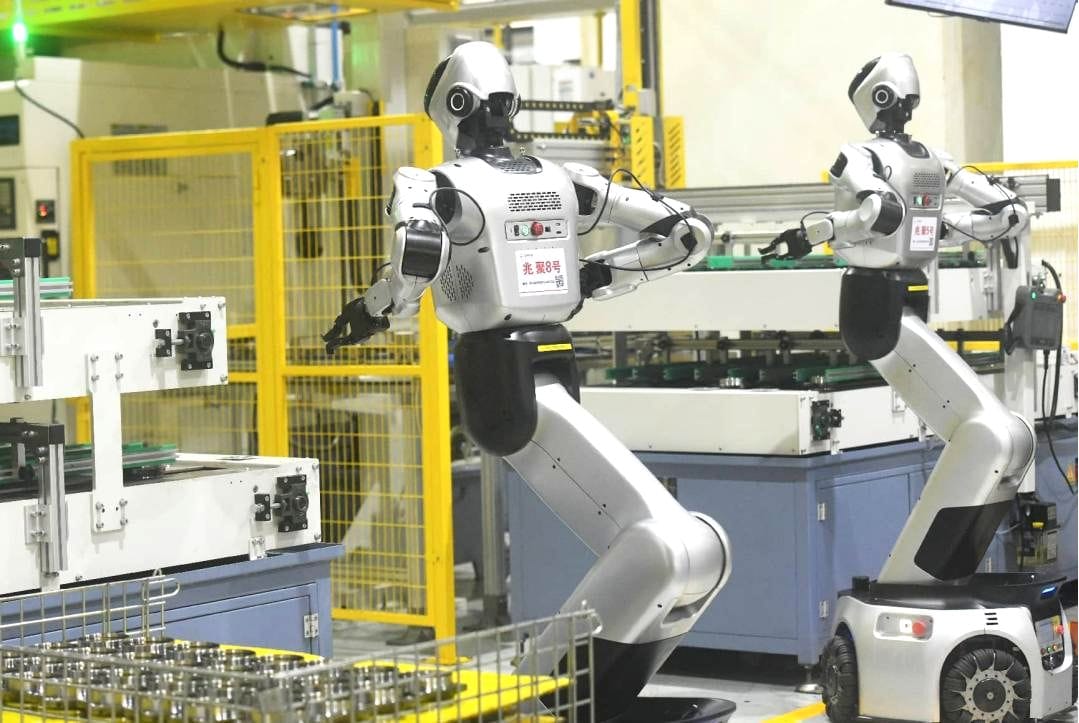
Furthermore, the guidelines support initiatives like “AI + Manufacturing,” which aims to expand China’s core AI industry, projected to exceed 1.2 trillion yuan (approximately $179.69 billion) by 2025. Intelligent products, including AI smartphones and connected vehicles, are becoming ubiquitous; recent data indicates shipments of smart devices surpassed 100 million units in the first half of this year.
As part of these efforts, the Ministry of Culture and Tourism is launching pilot applications of AI in cultural sectors, with 14 projects approved to employ advanced technologies in museums and tourist attractions. The goal is to transform hidden artifacts and historical narratives into engaging cultural experiences.
The Ministry of Commerce plans to collaborate with various government departments to ensure effective implementation of these guidelines. By engaging businesses across the sector, from large enterprises to small and medium-sized companies, the initiative seeks to create an environment where technology-driven commerce can thrive and deliver tangible benefits.
