




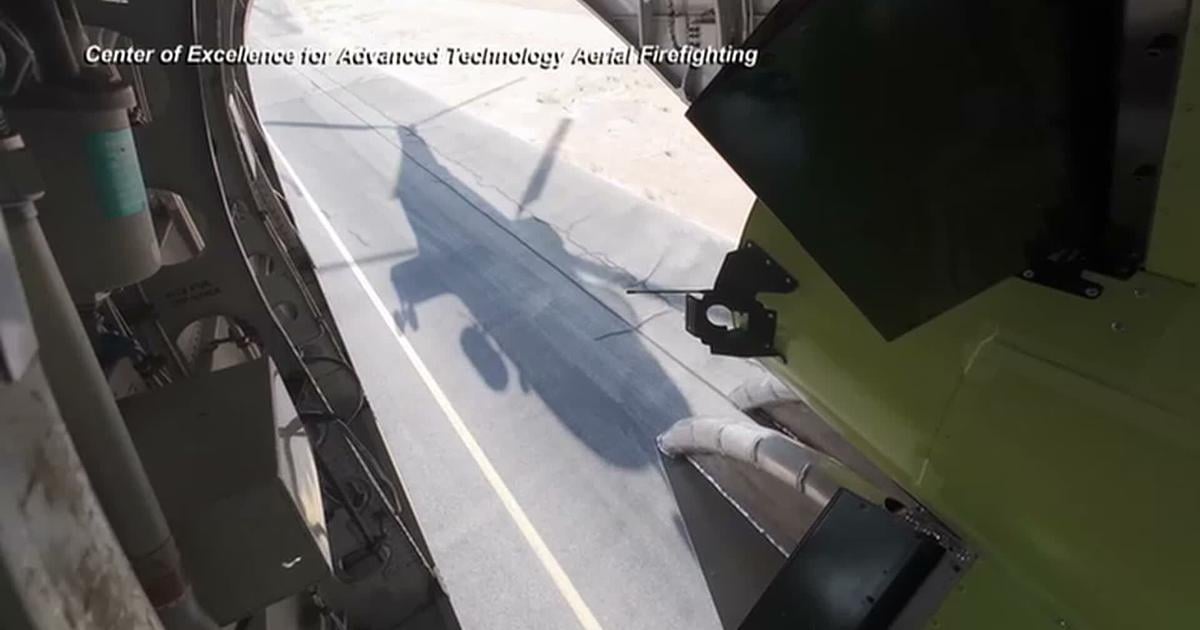
A new wildfire technology is under testing in Colorado, aiming to provide firefighters with an alternative method for combating hard-to-reach fires. The Precision Guided Suppression Unit (PGSU) allows planes and helicopters to precisely deliver 110 gallons of water from high altitudes—up to 12,000 feet—prior to releasing the water in a concentrated burst directly at the target.
Developed by the public safety and disaster response company Prime Minute, the PGSU is described by Ben Miller, Director of the Colorado Center of Excellence for Advanced Technology Aerial Firefighting, as resembling “a giant trash can with fins and a brain.” The device is designed to drop from the air and explode just before reaching the ground, ensuring that water is directed specifically at the fire, effectively targeting a 35-foot radius.
Miller emphasized that the PGSU is not intended to replace firefighters but to complement their efforts. He stated, “On the front side… firefighters are determining where this goes… and on the back side… I think these go in, they do their job, and eventually firefighters gain that ground.” The aim is to make firefighting operations more efficient, ideally reducing the number of personnel needed on the ground.
Wildfires can expand rapidly under certain conditions, making aerial firefighting challenging due to high winds, smoke, and darkness. Miller noted that the PGSU could provide a means of accessing areas that are otherwise difficult to reach, contributing to better firefighting outcomes. “The more tools in the toolbox that we have… the better the outcomes will be,” he said.
The technology is being tested through controlled drops at High Lonesome Ranch near Grand Junction, a site familiar with wildfire destruction due to the burn scar from the 2020 Pine Gulch Fire, one of Colorado’s largest wildfires. General Manager Travis Brooks expressed optimism about the technology, indicating that it might help in preventing larger fire threats. “I would cheer them on. I think they’re… gonna be able to attack it really well,” he stated.
While still in the testing phase, Miller mentioned that a more advanced testing stage could occur in 2027, potentially involving scheduled fires to assess the system’s performance. He acknowledged that there is currently no clear cost for implementing the technology widely but indicated that it shows promise for future deployment.
