




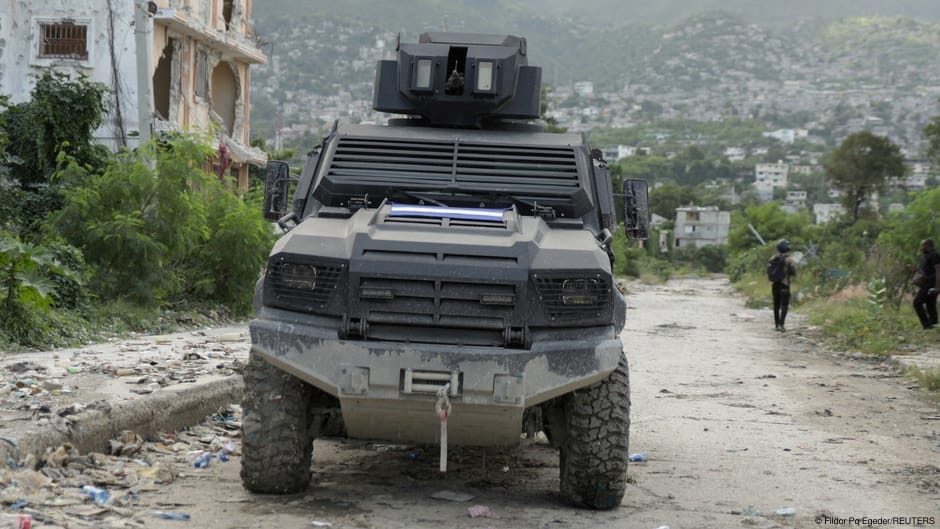
Three Salvadoran soldiers died in an explosives accident in Haiti, the Salvadoran military announced on Friday. This incident marks the first confirmed fatalities since a contingent of 2,000 Salvadoran troops was sent to Haiti in October to assist with escalating gang violence.
According to the military, one soldier succumbed to his injuries while being treated in the Dominican Republic after being airlifted there. Another soldier sustained injuries but is reported to be out of danger. The specifics of the location and the type of explosives involved in the incident have not been disclosed.
In its statement, the Salvadoran military extended condolences to the families of the deceased soldiers. “We extend our deepest condolences and solidarity to the families of the three deceased,” the statement read.
The deployment of Salvadoran troops to Haiti was initiated by President Nayib Bukele, following the abduction of four Salvadoran airmen on October 18. The airmen were members of the United Nations-backed Gang Suppression Force (GSF), which was targeted in a gang ambush in Port-au-Prince. While the primary mission was to secure the release of the airmen, the scope of the troops’ operations appears to have expanded to combating armed gangs in the region.
In a related development, Haiti’s Minister of Security and Justice, Patrick Pelissier, recently visited El Salvador to finalize an agreement for the construction of three new prisons in Haiti. This partnership aims to address the severe overcrowding in Haitian prisons, which have been under strain due to gang-related violence and past mass releases of inmates.
The construction will involve a Salvadoran firm collaborating with a Haitian company. Pelissier emphasized the necessity of improving the prison system, noting that Haiti’s prisons are often infamous for their conditions. On his visit to the Terrorism Confinement Center (CECOT) in El Salvador, he remarked on the harsh realities of incarceration there, stating, “Once you enter, there is no hope of ever seeing the outside world again.”
The Salvadoran government has been noted for its strict approach to crime, exemplified by the incarceration of over 90,000 individuals under a state of emergency established in 2022, a measure that has raised concerns about human rights. The humanitarian situation in Haiti remains precarious, as the country continues to grapple with widespread violence from criminal gangs.
