




The Dominican Republic expelled at least nine Cuban diplomats on April 13, coinciding with the 100th anniversary of Fidel Castro’s birth. Cuban officials reported the expulsion included ten diplomats. The announcement was made during a three-hour “political-cultural gala” at the Autonomous University of Santo Domingo, which attracted over 2,000 attendees.
Following the action, journalist Pablo McKinney expressed his concerns, stating he felt as if the Dominican Republic was acting as a “pawn” of another country. Leaders from several smaller left-leaning Dominican political parties were critical of the government’s decision, including Minou Tavárez Mirabal of the Democratic Option and Guillermo Moreno of the Alliance for the Country.
The expelled diplomats returned to Havana five days later. Cuban Deputy Minister of Foreign Affairs Josefina Vidal noted that Dominican authorities failed to provide a justification for their decision, implying that external pressures influenced the action. The timing of the expulsions has been interpreted as catering to U.S. interests, particularly given prior diplomatic interactions.
Dominican Government’s Alignments with U.S.
The expulsion aligns with recent actions taken by the Dominican government that appear to reinforce its relationship with the Trump administration. In October 2025, during the U.N. General Assembly, the Dominican Republic abstained from its usual support of a resolution to end the U.S. blockade against Cuba. Additionally, Dominican officials permitted U.S. military aircraft to operate from two of its airports in recent months.
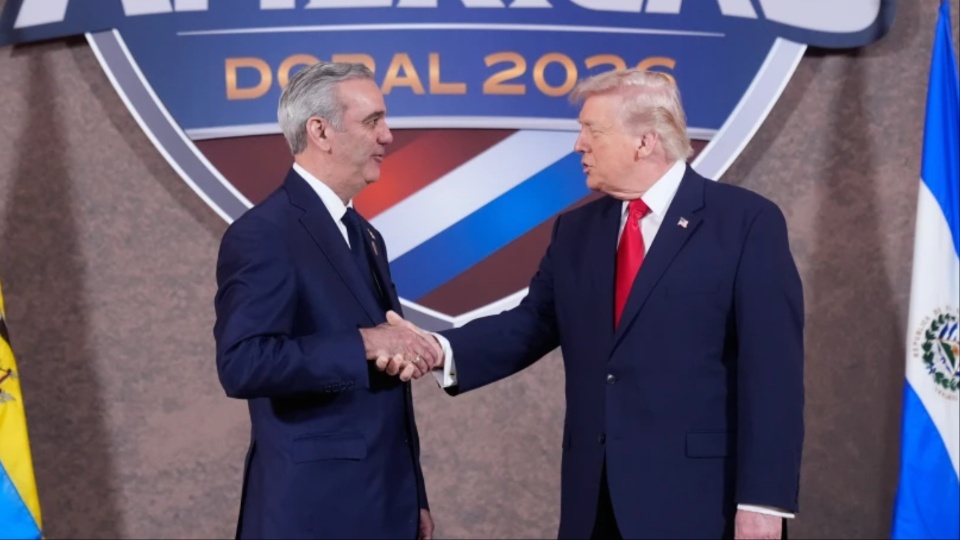
Recently, President Luis Abinader canceled the scheduled 10th Summit of the Americas, which was set to take place in late 2025, following U.S. pressure to exclude Cuba, Nicaragua, and Venezuela from the event. Abinader has also allied with Panama, Costa Rica, and Ecuador to form the Alliance for Democratic Development, which promotes cooperative efforts under U.S. oversight.
The Dominican Republic’s historical ties to Cuba have often highlighted the supportive sentiments among portions of its populace. Miguel Mejía, general secretary of the United Left Movement, condemned the expulsions, stressing that they represent a departure from the longstanding tradition of bilateral relations between the two nations. He remarked that the connection between the Dominican Republic and Cuba is rooted deeply in shared history and migration patterns.
Why It Matters
The recent expulsion of Cuban diplomats from the Dominican Republic is significant as it underscores the ongoing complexities of regional relations shaped by U.S. influence. It reflects the shift in the Dominican government towards policies that align more closely with U.S. interests, particularly regarding Cuba. This decision could have ramifications for Dominican-Cuban relations and may further polarize opinions within the Dominican Republic, particularly among those who favor solidarity with Cuba.
