




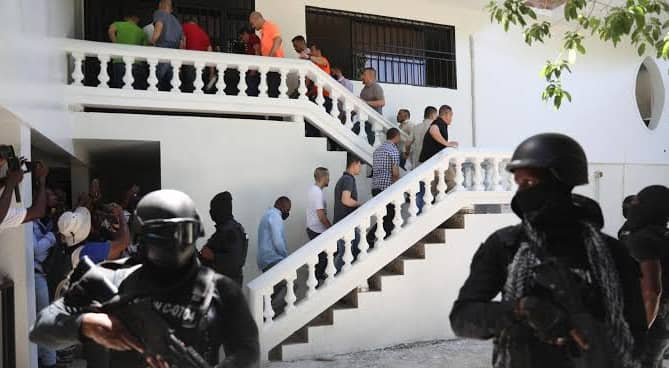
Eighteen suspects implicated in the assassination of former Haitian President Jovenel Moïse have been extradited from Haiti to the United States, where they will face federal charges. A military aircraft transported the individuals from Port-au-Prince to Florida on Sunday. This move represents a significant development in the ongoing investigation into the July 2021 assassination, which has already seen several successful prosecutions.
Legal Proceedings and Reactions
The U.S. Attorney’s Office for the Southern District of Florida is spearheading the prosecution, emphasizing that many aspects of the conspiracy, including its staging and funding, were rooted in southern Florida. The investigation is under the direction of U.S. Attorney Jason A. Reding Quiñones, appointed by former President Donald Trump, who expressed determination to hold all parties accountable through social media. “Today marks the next major phase in our pursuit of accountability for the assassination of President Jovenel Moïse,” he stated, indicating that efforts will continue to trace those who facilitated or enabled the crime.
While the identities of the 18 extradited suspects were not immediately disclosed, reports indicate that they include a former Haitian government official and numerous Colombian nationals who had previously been involved in the case. FBI Special Agent in Charge Brett Skiles confirmed that arrests were made across various locations, both in the U.S. and internationally.
The extradition has drawn criticism from Haitian rights advocates, who labeled it a “disgrace for Haiti’s justice system.” The country has been grappling with pervasive gang violence and institutional turmoil, which has severely compromised the judicial process. Pierre Esperance, executive director of the National Human Rights Defense Network, called for reforms within Haiti’s judicial system to enable it to handle complex cases effectively in the future.
The assassination of Moïse, who was shot dead at his residence, precipitated a significant power vacuum in Haiti, leading to a lack of elected national leadership. This void allowed armed gangs to expand their control, with reports indicating they now dominate approximately 90 percent of Port-au-Prince. The ensuing violence has contributed to a humanitarian crisis, displacing around 1.5 million people and resulting in thousands of gang-related fatalities.
Why It Matters
The extradition underscores the challenges facing Haiti in its quest for justice and stability, as the country continues to confront rampant gang control and institutional collapse. The situation highlights the complexities of pursuing legal accountability in transnational criminal cases, especially when local systems are perceived as compromised by systemic corruption and violence.
