




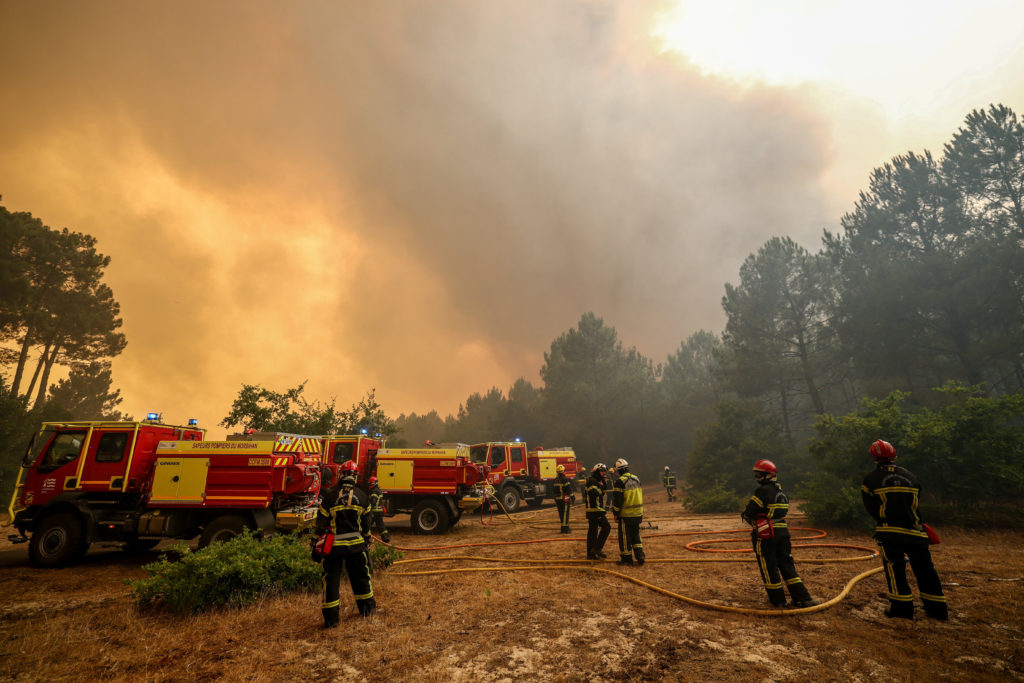
A wildfire in southwest France has given rise to the country’s first recorded pyrocumulonimbus cloud, a phenomenon that has led to increased fire activity in the region. This cloud formed on July 22 near Saumos after the wildfire generated a powerful smoke column that escalated into a thunderstorm, producing lightning that ignited new fires beyond the initial blaze, as reported by French officials.
An Unprecedented Fire Phenomenon
This wildfire has already consumed over 420 square kilometers (162 square miles) of forests and scrubland, damaging or destroying more than 240 homes and prompting the evacuation of approximately 220,000 people in the Gironde area. The departmental fire and rescue service confirmed that the pyrocumulonimbus cloud developed around 6:20 p.m. on July 24, just two days after the fire began.
The phenomenon, known as pyroCb, is relatively rare in Europe and has primarily been observed in regions like North America and Australia during extreme wildfires. According to France’s national firefighters federation, this incident marks the first documentation of a pyroCb within the country.
The formation of such a cloud requires specific atmospheric conditions, including very hot, dry air near the surface with cooler air aloft. As heat and smoke surge from the flames, this combination allows for the growth of a storm cloud, which develops its own weather patterns. The pyrocumulonimbus can generate violent winds that disrupt fire behavior, making predictions difficult.
Theodore M. Giannaros, a fire meteorologist at the National Observatory of Athens, noted that while some regions experience these clouds frequently, they remain uncommon in Europe. Increased temperatures and changing climate conditions could provide more opportunities for such events to occur, although long-term data are needed to identify a definitive trend.
These thunderclouds exacerbate wildfires by creating wind patterns that can shift flames in unpredictable directions. This feedback loop complicates firefighting efforts, as fresh outbreaks of fire may emerge unexpectedly, potentially hindering escape routes for residents and firefighters.
While pyroCumulonimbus clouds have been recorded in other countries, including a notable instance in Portugal during the 2017 fire season, this occurrence in France underscores the increasing threat posed by climate change. The European Union’s Copernicus Climate Change Service indicates that Europe is warming at an accelerated rate, with more frequent and severe heatwaves contributing to an environment capable of fueling extreme wildfires.
Why It Matters
This wildfire event highlights the urgent challenges posed by climate change and the complexities of wildfire management. As Europe continues to face rising temperatures and increased fire risks, understanding phenomena like pyroCumulonimbus clouds may be crucial for effective disaster response and prevention strategies.
