




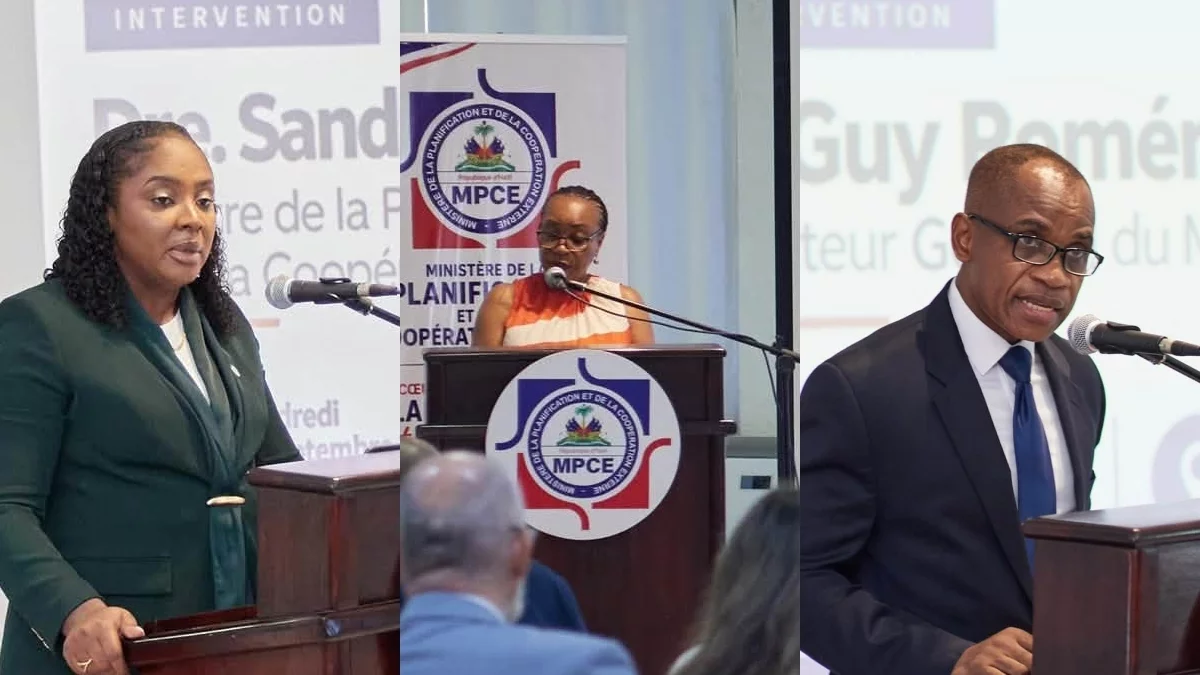
On September 18, 2026, the Ministry of Planning and External Cooperation (MPCE) launched a critical Portfolio Review of externally funded programs and projects for the fiscal year of 2025–2026. This review aims to enhance oversight and coordination among various development initiatives in Haiti.
Focus on Strategic Coordination
During the launch, Minister of Planning Sandra Paulemon highlighted the review’s importance as a platform for dialogue, accountability, and informed decision-making. She emphasized three essential principles: national ownership, efficiency and results, and mutual accountability. Minister Paulemon advocated for development funding that aligns with Haiti’s national objectives, stating that the country should lead in defining and evaluating interventions critical to its development.
Moreover, she urged enhanced coordination among international partners, particularly in sectors where multiple stakeholders operate. “We must avoid duplication, identify complementarities, and ensure that available resources are directed toward priority needs,” she stated, while also noting the significance of reinvigorating the External Aid Management Module.
Fritz Gérald Louis, representing the Minister of Economy and Finance, underscored the necessity of effective resource management to support development initiatives. He called for better integration of planning, resource mobilization, budget programming, and project implementation.
The MPCE Director General, Guy Roméro Latry, articulated the Portfolio Review’s role as a tool for monitoring and coordinating projects funded by external sources. He stressed the need for a unified vision among national institutions and partners to track project progress, outcomes, and the challenges faced during execution.
Yvrose Guerrier, Director of the External Cooperation Directorate, presented data showing that the active donor portfolio encompasses a total of 364.75 billion Gourdes, with disbursements reaching 141.29 billion Gourdes, representing 38.74% of the total. She reported that the review would analyze the effectiveness of these projects, highlight bottlenecks, and assess their alignment with national priorities.
Nicole Boni Kouassi, the UN Resident Coordinator, emphasized the review’s potential as a collaborative platform for ongoing discussions among national authorities, financial partners, and implementing organizations regarding progress and challenges. Annalisa Lombardo, President of the Inter-Organization Liaison Framework, reaffirmed CLIO’s dedication to fostering dialogue between Haitian institutions and their international partners.
Luca Trinchieri, Team Leader from the European Union’s office in Haiti, communicated his organization’s commitment to collaborating with Haiti and supporting the review’s objectives. The MPCE expects that the findings from this review will facilitate the identification of effective measures to address any identified constraints.
Why It Matters
The Portfolio Review is a crucial step in ensuring that externally funded programs in Haiti are aligned with the nation’s development plan, thereby enhancing resource efficiency and fostering greater accountability among stakeholders involved in development efforts.
