




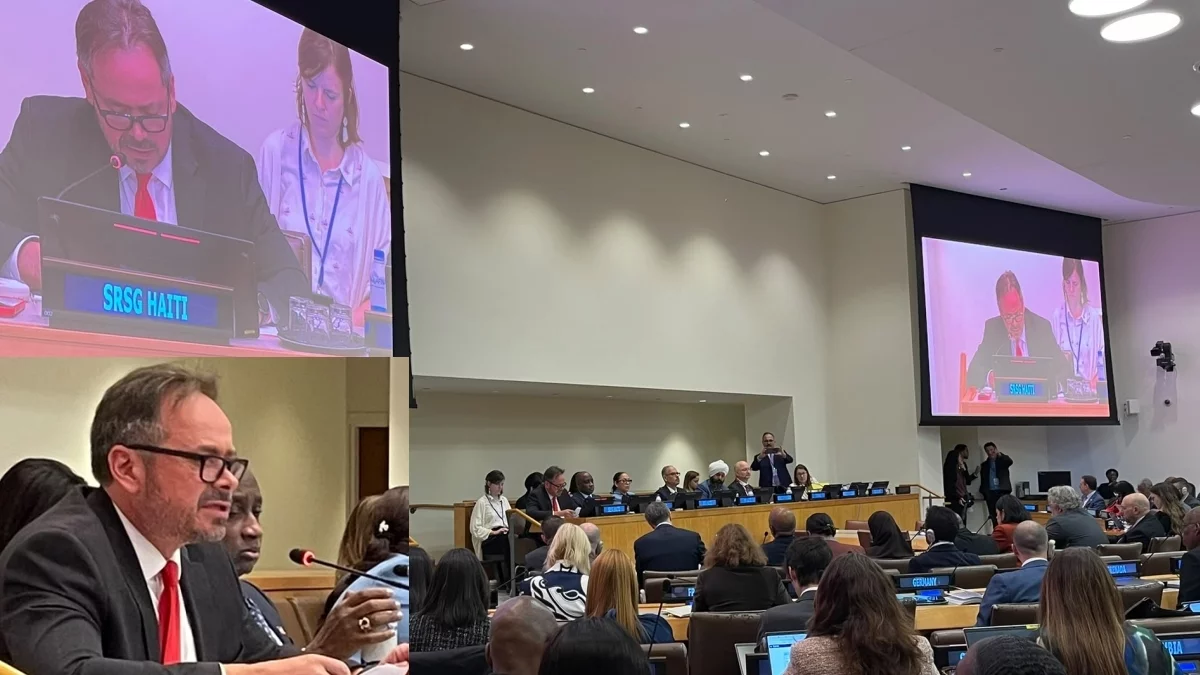
Focus on Lasting Security and Stability in Haiti
On September 24, 2026, Carlos Ruiz Massieu, the Special Representative of the Secretary-General of the United Nations, addressed the Economic and Social Council’s (ECOSOC) Ad Hoc Advisory Group on Haiti. His remarks centered on the necessity of translating current security progress into sustainable stability in the country.
Key Strategies for Stabilization
During his speech, Massieu emphasized that the renewal of the Gang Suppression Force’s mandate is critical as international support remains vital for its effective deployment. He noted that while the mandate’s renewal is essential, it is equally important for the Gang Suppression Force to achieve full operational capacity as soon as possible. Haitian authorities are simultaneously tasked with reinforcing their own security forces.
Massieu highlighted the importance of coordinating efforts across national and international actors to ensure that stability translates into lasting change for the Haitian populace. He explained that restoring basic services, including police presence, educational institutions, and economic activities, is crucial in newly secured areas to prevent gang resurgence.
The Special Representative pointed out that successfully addressing gang violence involves efforts beyond just maintaining security. This includes disarmament, dismantlement, and reintegration (DDR) programs, which he described as essential in creating pathways for disengagement from gangs, especially for minors. He stressed the need for these initiatives to proceed concurrently with security operations to be most effective.
Furthermore, Massieu underlined the importance of integrating justice into the security framework, ensuring that communities affected by violence have clear distinctions between disengagement avenues and paths to impunity. He noted that the establishment of specialized judicial units is necessary for addressing serious crimes effectively.
Looking ahead, Massieu warned that the electoral process in Haiti, currently underway, depends on establishing minimum security conditions. Strategic objectives such as reopening roads and restoring the state presence must be prioritized to enable a freer political environment. Maintaining momentum toward elections is key to fostering confidence in the political process.
In conclusion, Massieu asserted that progress on security, DDR, justice, and elections needs to be interlinked. The UN’s mandate in Haiti focuses on creating a comprehensive and integrated response, and it relies on sustained international coordination and support. He urged the Ad Hoc Advisory Group to mobilize resources towards this mutual objective and emphasized the need to seize the current opportunity for progress.
Why It Matters
The stability of Haiti is critically linked to international support and the development of effective local institutions. As efforts to combat gang violence, promote justice, and oversee elections take shape, the coherence of these strategies will be essential for establishing long-term peace and governance in the country. Understanding this integrated approach is vital for both Haitian leaders and international partners to create a sustainable future for Haiti.
