




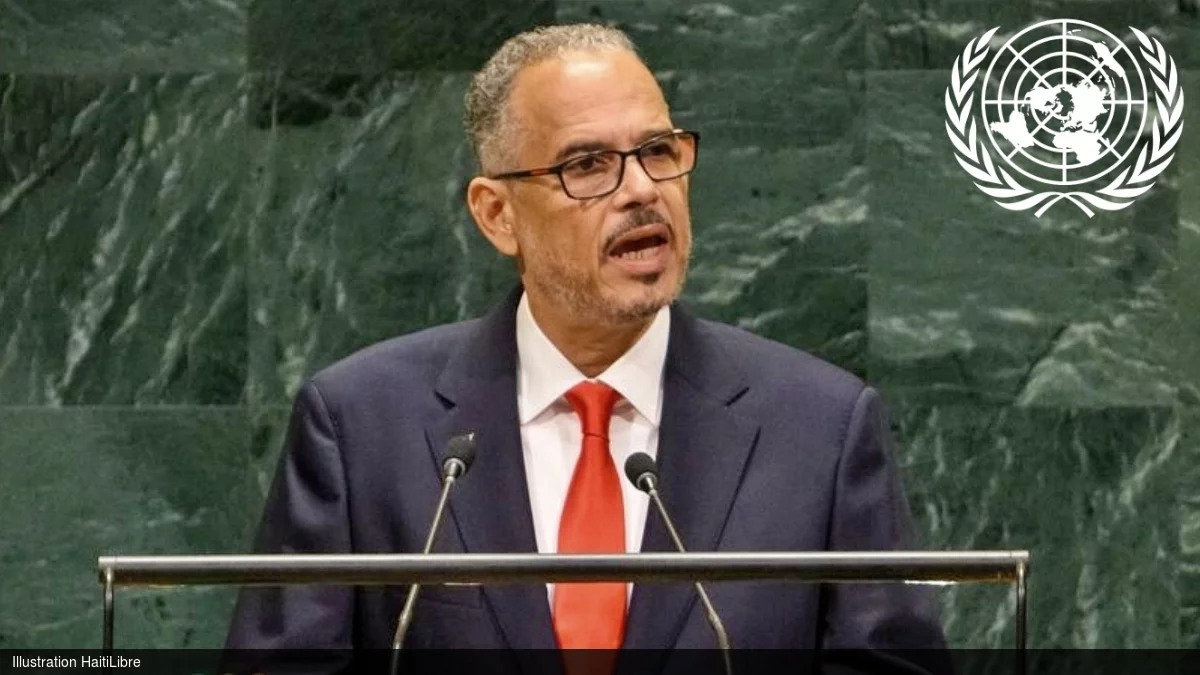
Haiti’s Prime Minister Alix Didier Fils-Aimé addressed the 81st session of the United Nations General Assembly on September 25, 2026, emphasizing the need for greater international support while advocating for Haiti’s self-reliance in security and governance. He articulated a commitment to empowering Haitian state institutions to restore control over the country’s destiny, stating, “Haiti is not asking the world to save it. The Caribbean island is asking Haiti to help it save itself.”
### Challenges Amidst Gratitude and Ambition
Fils-Aimé expressed appreciation for the support provided by various international partners, including the United States, Canada, France, the European Union, and other regional organizations. He urged the full deployment of the United Nations-approved Gang Suppression Force (GSF), which was established to address the issue of rampant gang violence that has plagued Port-au-Prince and other regions.
Despite operations aimed at curbing gang control in the capital, Fils-Aimé acknowledged that current measures have not significantly diminished gang power, with violence spreading to previously untouched areas. He noted that while some gangs are being pressured in Port-au-Prince, there are concerns that violence is merely shifting to locations where state presence is minimal.
To address these challenges, the Prime Minister highlighted a strategic focus on strengthening Haitian security forces. Over 2,000 police officers have completed training, with plans to double that number soon. Additionally, he stated that the army has grown by 1,500 recruits, with an aim to train an additional 15,000 soldiers in the next three years. Fils-Aimé stressed the importance of a self-sufficient security framework for Haiti’s long-term stability.
However, he emphasized that the GSF’s mandate, approved in September 2025, needs the additional support in terms of personnel and resources, as the current strength of the force falls short of its target of 5,500 members.
The Prime Minister also pointed to the need to dismantle networks that smuggle weapons into Haiti, fueling gang violence. He reminded the international community that the weapons causing harm in Haiti are not locally produced.
Fils-Aimé outlined a political agenda that includes organizing the first national elections since 2016, scheduled for December 13, 2026, contingent on the stabilization of the security situation. He stated that the current transitional governance will conclude with a return to the ballot box, supported by measures to enhance the country’s judicial framework.
Moreover, he expressed a desire to transition the economy from reliance on aid to investments, noting that around 6.4 million Haitians currently require humanitarian assistance, with nearly 1.5 million displaced.
### Why It Matters
Fils-Aimé’s address underscores Haiti’s complex landscape of emerging from prolonged instability while aiming for a sustainable future. The Prime Minister’s emphasis on self-reliance in security and governance reflects a critical turning point for Haiti, as the country grapples with a transition from aid dependency to a focus on investment and partnerships. The call for international support and commitment to restoring order highlights the urgent need for collaborative strategies to address the dire humanitarian and security challenges facing the nation.
