




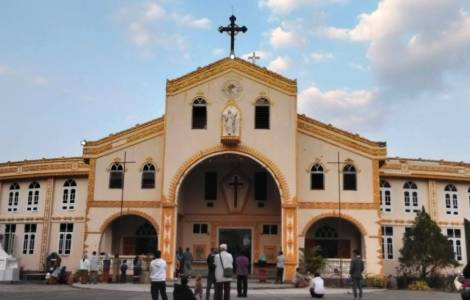
In Loikaw, Myanmar, the Catholic community is experiencing a resurgence in faith despite the ongoing civil conflict that has displaced thousands. Fr. Marko Phe Bya, Vicar General of the Diocese of Loikaw and pastor of Christ the King Cathedral, reported that attendance has increased to approximately 500 worshippers at Sunday Mass, a significant return after a period of turmoil caused by military occupation.
Fr. Marko noted that the church’s pastoral activities began to revive after he returned in September 2025. Previously, in November 2023, the military seized the cathedral and the diocesan pastoral center, displacing clergy and parishioners. “In 2023, we were all forced to leave our pastoral center because the soldiers drove us out,” he explained. Upon his return, he found the cathedral damaged but the church’s essential records, like baptismal books, had been safeguarded.
The ongoing war, sparked by the military coup in February 2021, has left many areas around the city of Loikaw largely deserted. Initially, only about 100 parishioners returned when Fr. Marko resumed his duties, but the community has gradually come together again. During significant celebrations, attendance can swell to 1,000 or even 2,000.
Fr. Marko described the church as a refuge for many. “People come to church to cry, to pray, and to seek comfort,” he said, highlighting the material and psychological difficulties faced by those in the community. Food scarcity and insecurity due to ongoing airstrikes compound the challenges as many return to the city with limited job prospects.
The Diocese of Loikaw, established in 1989, serves approximately 90,000 Catholics across 40 parishes. Currently, over 300,000 people in the diocese have been displaced, with around 40,000 being Catholics living in makeshift camps or fleeing to remote areas.
Church leaders emphasize the importance of continuing to serve the displaced. Priests are active in visiting camps and villages to lead Mass and provide support. “Whenever our people flee, we accompany them,” Fr. Marko stated, emphasizing the church’s commitment to maintaining connections even in dire circumstances.
Pastoral efforts are intertwined with humanitarian assistance, with the Church seeking donors to cover basic necessities like food, education, and healthcare for the displaced. Fr. Marko shared that many families struggle for survival as they attempt to resume agricultural work amidst the threat of violence.
The risks for church members remain high, as evidenced by recent arrests of priests and the detention of Sister Benedetta, who was apprehended on suspicions of opposition ties and remains in prison. This situation has galvanized the community’s solidarity, with prayers and support being offered for those in danger.
Despite the adversities, Fr. Marko expressed optimism about the resilience and faith of the Loikaw community. He articulated a collective hope for peace and reconciliation, which remains fragile amid enduring conflict. “The future is in God’s hands,” he concluded, reaffirming the Church’s role in promoting dialogue and healing in these challenging times.
