




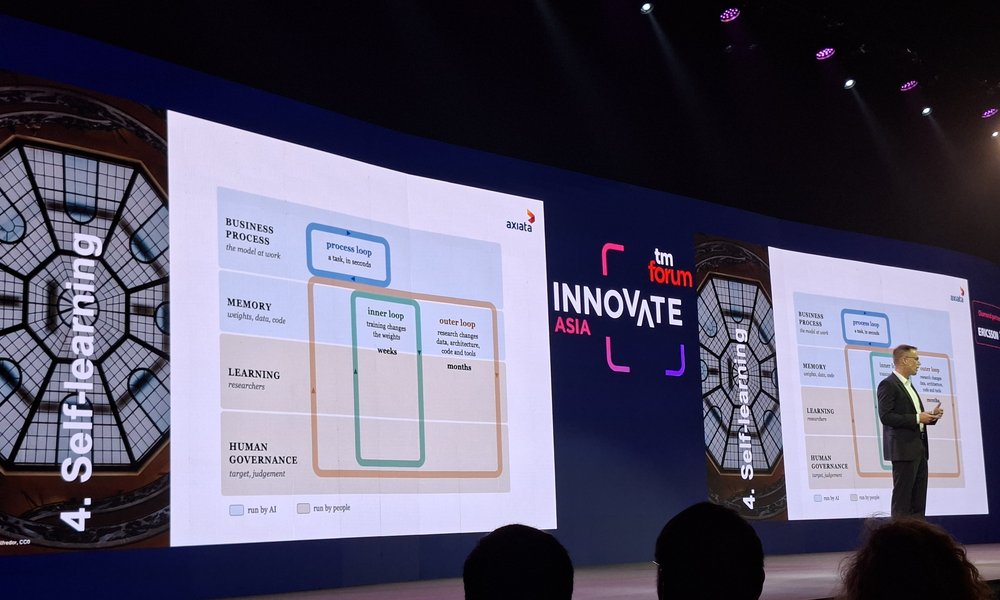
A shift in software production costs could significantly alter the dynamic between telecommunications companies and their software vendors, according to Rainer Deutschmann, Chief Strategy and Transformation Officer at Axiata Group Berhad. Deutschmann delivered a keynote speech on the opening day of TM Forum’s Innovate Asia, where he presented his views on the evolving landscape of software development.
During his address, Deutschmann asserted, “Software, I would argue, is becoming free.” He attributed this trend to several factors, including improved computing power, increased investment in artificial intelligence, enhanced efficiency of algorithms, and advancements in self-recursive AI learning.
Deutschmann explained that knowledge essential for software creation will become integral to the development model. He envisioned a future where the process involves providing a “seed” or intent to coding agents that autonomously generate, test, and refine software as needed. “Software is becoming essentially a response to a query,” he said, noting that programs could be created and discarded in real-time based on specific requirements.
This capacity for rapid development and dismantling of applications could enable telcos to eliminate legacy software systems, along with the costs tied to upgrades and integration. “I would predict there’s not going to be any legacy because you regrow,” Deutschmann stated.
He pointed out that for telecommunications providers, the decision to either ‘grow’ or purchase software carries significant implications. Deutschmann highlighted the potential for telcos to differentiate themselves through the harnessing of “proprietary data” and the effectiveness of their models in utilizing this information. He referred to the “velocity, volume, and exclusivity” of proprietary data as a new resource that could benefit the industry. “This is the gold mine for us going forward,” he remarked.
Deutschmann further suggested that telecommunications companies should operate like AI labs, focusing on identifying and managing their most valuable assets to enhance efficiency continuously. He believes that the future will shift toward software companies providing measurable outcomes instead of simply selling code. “I would argue selling software is not going to be the future. You’re going to be selling outcomes,” he stated, proposing that this could involve utilizing cross-industry and cross-enterprise data more effectively than any single enterprise could on its own.
