




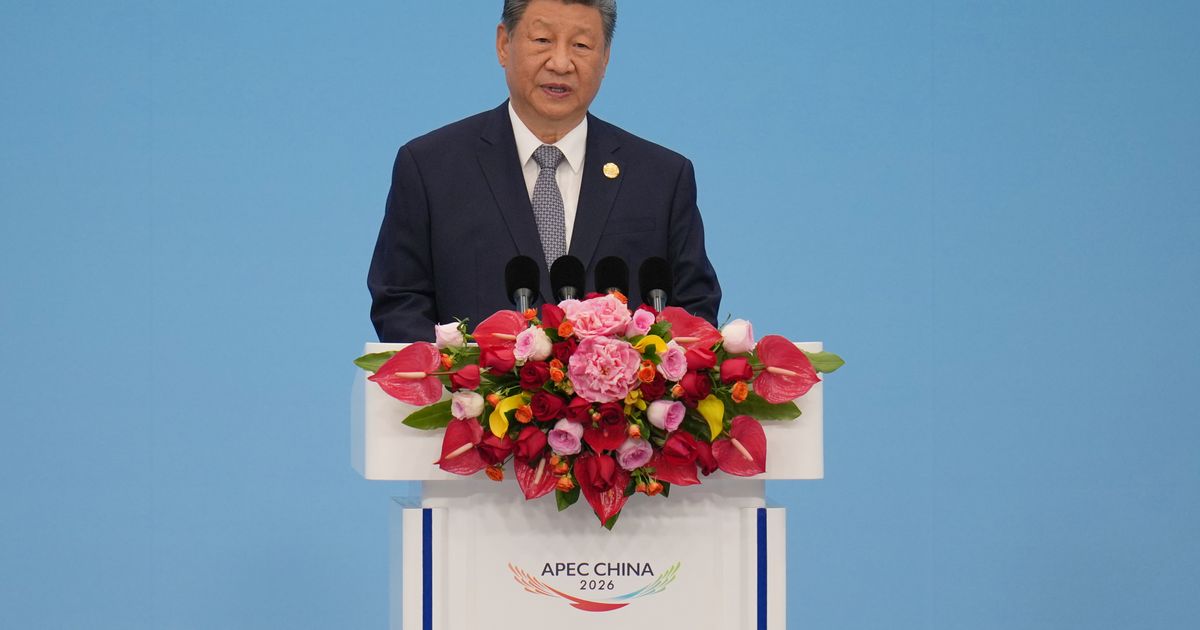
Chinese President Xi Jinping emphasized the need for open trade and equitable growth across the Asia-Pacific region during a speech to business leaders in Shenzhen on Wednesday. This address occurred as part of the annual Asia-Pacific Economic Cooperation (APEC) summit, where Xi underscored that maintaining stability and dynamism in the region is essential.
U.S. President Donald Trump is expected to join APEC leaders later in the day, arriving from the Philippines where he attended a summit of the Association of Southeast Asian Nations. Trump’s “America First” policy, which includes tariff increases, contrasts with APEC’s long-term goal of establishing a free trade zone throughout the Pacific Rim. Ongoing U.S. restrictions on high-tech exports to China, particularly relating to advanced technologies, add to tensions between the two countries.
Although Xi and other APEC leaders advocated for more open trade practices, they did not directly criticize the U.S.’s protective trade policies. Instead, Xi pledged that China would continue to reduce tariffs and increase market access while also reforming regulations and standards to improve conditions for international investors.
China’s Economic Aspirations on Display
The summit in Shenzhen highlights China’s transformation from a fishing village to a bustling center for technology and manufacturing over the past four decades. Xi remarked that China’s economic growth has been bolstered by its integration into global markets and international investments. “While pursuing its own development, China has shared opportunities with other countries and worked for common development,” he stated, pointing to the nation’s role in enhancing global economic stability.
According to George Chen, a partner at The Asia Group, Xi’s message relayed China’s intention to emerge as a key partner in global technology development, contrasting with the U.S.’s more restrictive measures. Notably, Xi refrained from mentioning specific U.S. policies or export controls during his address.
Domestically, Xi faces economic challenges, including slowing growth amid a property market downturn. Although China’s economy continues to grow at over 4%, surging exports have heightened trade tensions with various nations. The trade surplus is projected to surpass $1 trillion for a second consecutive year, further complicating international relations.
In a meeting with Xi, Canadian Prime Minister Mark Carney further emphasized the importance of equitable trade, advocating that larger economies should not impose restrictions on smaller nations. “Countries must emerge, focus on trade and investments, because that would ultimately benefit their people,” Carney stated.
Meanwhile, Russian President Vladimir Putin criticized economic sanctions during the summit, arguing that such measures are no longer effective. He expressed Russia’s interest in strengthening ties with the Asia-Pacific region, stating that more than half of Russia’s total trade involves this area. Putin announced Russia’s bid to chair APEC in 2035.
The leaders of the 21 APEC economies, which represent 60% of global economic activity, are scheduled to meet privately on Thursday. Notably, this summit will feature a trilateral meeting among Trump, Putin, and Xi, marking the first in-person gathering of these three leaders.
While APEC does not enforce binding agreements, it serves as a platform for fostering collaboration and promoting open trade, according to Malaysian Prime Minister Anwar Ibrahim. The discussions at this summit will have lasting implications for the region’s economic stability and cooperation amid rising global uncertainties.
