




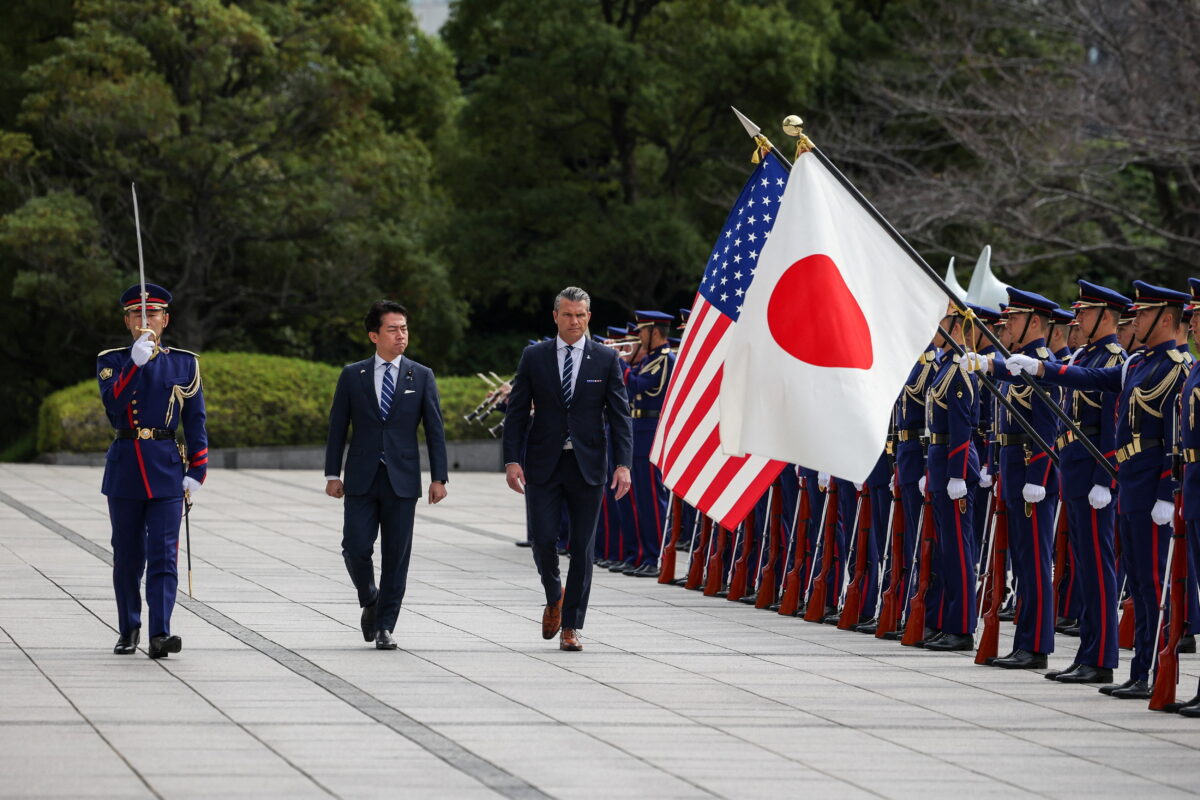
Japan is facing critical discussions regarding its nuclear capabilities amid evolving international dynamics. This scrutiny has intensified following uncertainties linked to U.S. alliances and regional security commitments, particularly with the return of President Donald Trump to office, fueling concerns about extended deterrence.
Japan’s Nuclear Debate and Regional Security Concerns
Since the inception of the North Korean nuclear crisis in 1993, Japan’s approach to nuclear issues has been closely monitored. As South Korea increasingly looks into its own nuclear options, Japan’s debate over potential nuclear capabilities is becoming more pronounced. The challenge for both nations is to navigate nuclear developments with transparency to avoid mistrust.
In South Korea, public sentiment has shifted significantly regarding nuclear deterrence. A recent survey by the Asan Institute for Policy Studies indicates that support for developing domestic nuclear weapons reached a record 76.2% in 2025, marking a 5.3% rise from the previous year. This change accompanies a decline in confidence in the U.S. commitment to defend South Korea with nuclear assets, which fell from 53% to 48.9% over the same period. Support for deploying U.S. tactical nuclear weapons in South Korea has also risen, as discussions around nuclear sharing become more prevalent.
On May 26, 2026, the South Korean government announced plans to develop nuclear-powered submarines fueled by low-enriched uranium, marking a significant pivot from earlier intentions to utilize highly enriched uranium, which the U.S. has historically restricted due to non-proliferation concerns.
In contrast, Japanese public opinion regarding nuclear armament appears more stable. A survey conducted by the University of Tokyo from 2024 to 2026 found that the percentage of people supporting a Japanese nuclear arsenal remained consistent at around 17-18%. Confidence in the U.S.-Japan alliance remains high, with 70-80% of respondents believing in U.S. military intervention if Japan faces aggression from North Korea, Russia, or China.
Domestic political changes could influence Japan’s stance on nuclear policy. Following the breakdown of the coalition between the Liberal Democratic Party (LDP) and Komeito in October 2025, the LDP formed a new alliance with the right-leaning Japan Innovation Party. The JIP’s June 2026 policy paper advocates for nuclear-propelled submarines, emphasizing that a shift in Japan’s deterrent strategies may be necessary to ensure security in the region. Additionally, the JIP has called for reassessing Japan’s foundational principles regarding nuclear weapons.
The LDP echoes this sentiment, stressing the need for enhanced military capabilities and examining new technologies, including vertical launch systems for submarines and advancements in artificial intelligence and cyber warfare.
As the Japanese government revisits its National Security Strategy, the potential for significant changes to its non-nuclear stance looms. Prime Minister Sanae Takaichi, who has previously expressed views against maintaining non-introduction principles, faces internal divisions within the security community regarding the necessity and practicality of nuclear-powered submarines.
Acknowledging the substantial costs associated with separate nuclear ambitions in Japan and South Korea, experts suggest a more integrated approach involving AUKUS partners to promote cooperative security measures. This strategy could enhance transparency and avoid the pitfalls of secretive parallel programs among regional allies.
In conclusion, as Japan contemplates its nuclear options amidst evolving geopolitical realities, the need for a cohesive and collaborative security framework remains paramount. The outcome of these debates could significantly influence the broader stability of Northeast Asia.
Why It Matters: The ongoing discussions about nuclear capabilities in Japan and South Korea are critical as they reflect shifting public opinions and political alignments that may alter regional security dynamics. Understanding these developments is essential for comprehending the future landscape of defense and deterrence in Northeast Asia.
