




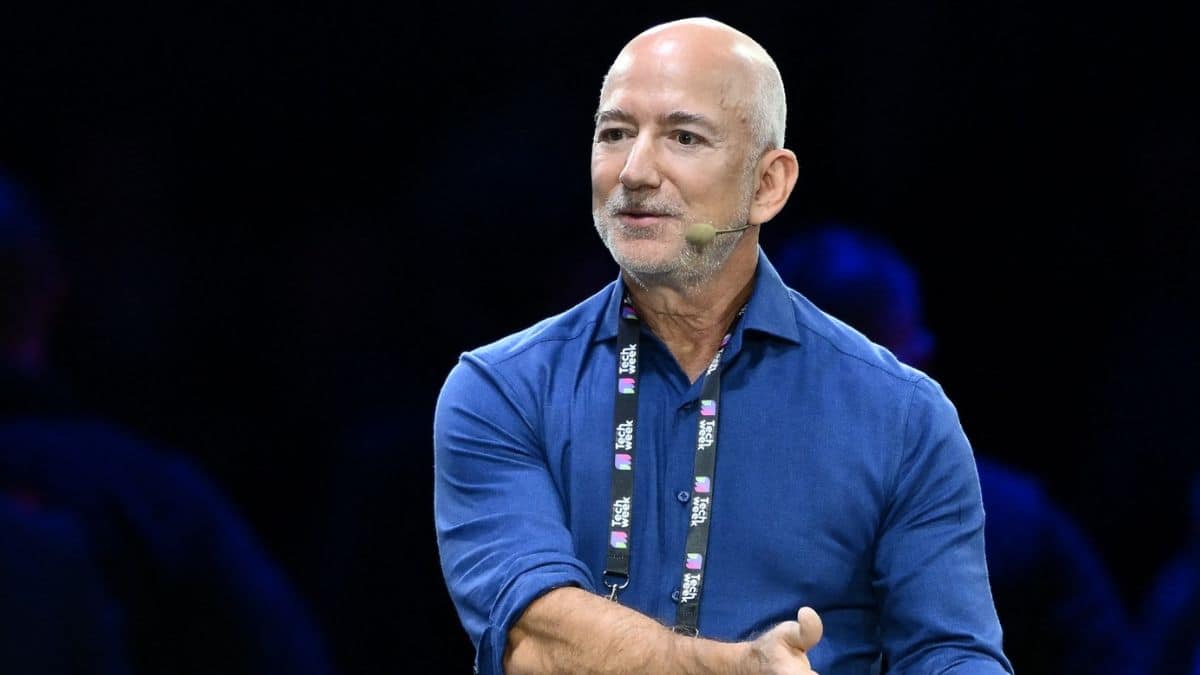
Jeff Bezos recently addressed the recent layoffs at The Washington Post, defending them as part of a management approach that has guided his decisions at Amazon for many years. This philosophy emphasizes the importance of eliminating ineffective operations while focusing on core strengths to ensure customer value drives success.
Bezos Defends Layoff Decisions and Management Philosophy
During a segment on CNBC’s Squawk Box, Bezos responded to criticisms regarding workforce reductions at the Post, a newspaper he previously referred to as a “public trust.” Critics questioned why Bezos, one of the wealthiest individuals globally, would not absorb losses at a media organization he owns. He countered that large businesses should not rely on financial subsidies to remain operational indefinitely.
Bezos argued that actual profitability is a key indicator of whether a business is offering products that consumers genuinely value. He insisted, “If people won’t pay for our product, it’s not a good enough product.” He further likened the reliance on subsidies to “poetry without rhyming,” suggesting that lack of constraints diminishes a company’s discipline and compels it to improve over time.
He emphasized that financial sustainability extends beyond just maintaining margins or boosting earnings; it also serves as a critical signal of relevance to customers. Companies that persist with weak engagement may lose sight of their audience’s true needs, potentially threatening their viability. This perspective is indicative of what Bezos refers to as a “cut fast” strategy, which guided Amazon as it grew. The company has a history of discontinuing or scaling back unsuccessful initiatives while investing in areas with stronger performance potential.
Bezos stated that a similar strategy is being implemented at The Washington Post, where managers are urged to utilize performance data to assess operational effectiveness and staffing. However, he noted that not every division of the publication is subject to the same standards; investigative journalism is protected as it is central to the core mission of the newspaper. He highlighted that, despite recent staff reductions, the Post’s newsroom remains larger than it was during significant historical reporting periods, such as the Watergate and Pentagon Papers eras.
In conclusion, Bezos pointed out that The Washington Post continues to receive accolades for its journalism, supporting his assertion that the approach of eliminating what does not work while safeguarding essential aspects can lead to building successful products that resonate with audiences.
Why It Matters: Bezos’ strategy at The Washington Post reflects broader trends within media management, focusing on financial independence and operational efficiency. This approach raises questions about the future of journalistic integrity and the sustainability of traditional news outlets in an evolving media landscape.
