




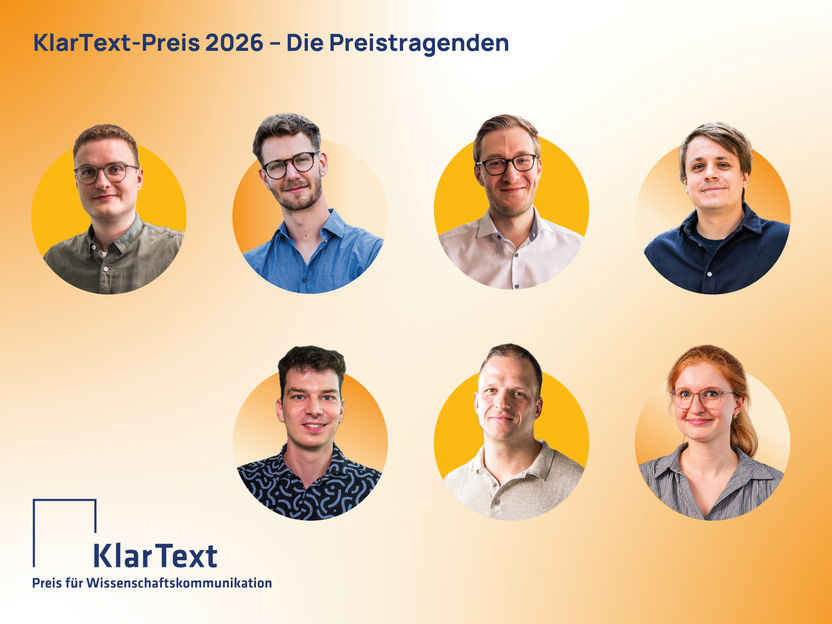
Seven early-career researchers were honored with the 2026 KlarText Prize for Science Communication on October 22 in Heidelberg, recognizing their work in making their doctoral research more accessible to the public. This award, presented by the Klaus Tschira Foundation, has been promoting effective science communication since its inception in 1997. The foundation aims to improve communication skills among young scientists and to emphasize the role of transparency in science.
“Good science communication has long been more than just a dialogue with the interested public. Even within the scientific community—for example, in multidisciplinary teams—researchers must find a common language that extends beyond their own field of expertise,” said Lilian Knobel, Executive Director for Science Communication and Education at the Klaus Tschira Foundation.
The winners of this year’s prize, listed alongside their respective universities and the focus of their research, are:
- Dr. Phil Richter (Technical University of Munich) – “Good News for Brussels Sprout Skeptics”: This article discusses the health benefits of bitter foods.
- Dr. Hannes Westphal (University of Leipzig) – “The Stamp-Sized Lab”: Focuses on “lab-on-a-chip” systems that enable affordable chemical testing.
- Dr. Daniel Racek (Ludwig Maximilian University of Munich) – “Clearing the Data Fog of War”: Explores the use of radar satellite data in assessing war damage.
- Dr. Julian Mangott (University of Innsbruck) – “Faster Paths to New Drugs with Math”: Discusses how mathematical approaches can improve drug discovery techniques.
- Dr. Meike Hettwer (Heinrich Heine University Düsseldorf) – “The Brain Under Construction”: Examines the brain’s developmental phase from childhood to adulthood and its link to mental health.
- Dr. Thomas Arne Hensel (University of Heidelberg) – “Lights Out, Action”: Presents a new method for observing the rapid shape changes of proteins.
- Dr. Felix Spiske (Freiberg University of Mining and Technology) – “The Needle in a Haystack”: Investigates detecting substances dissolved in water at low concentrations through a novel amplification method.
Approximately 250 PhD graduates entered this year’s competition, submitting works based on their doctoral theses as articles or infographics. The submissions went through a rigorous three-stage jury evaluation process involving scientists and media professionals. Each winner will receive a prize of 7,500 euros.
