




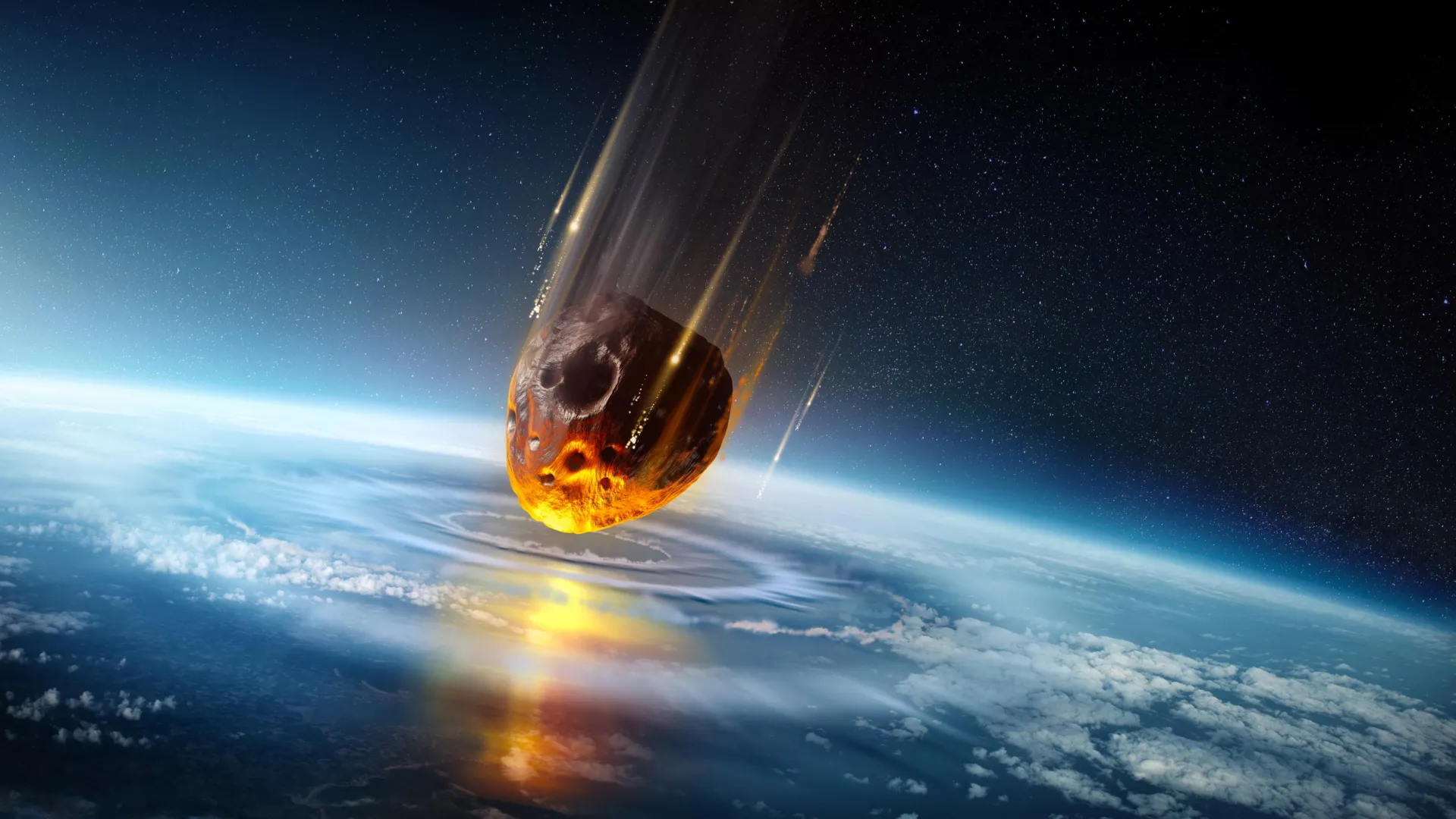
Researchers at The University of Texas at Austin have revealed that the Ames meteor impact structure in Oklahoma occurred approximately 370 million years ago, much later than previously believed. This new timeline suggests the crater is nearly 100 million years younger than past estimates, which had placed it around 467.5 million years ago during the Ordovician Meteor Event.
The Ames crater, located beneath the town of Ames, Oklahoma, has significant geological and economic relevance, primarily as a source of oil and gas. For years, it was grouped with a series of meteor impacts across North America believed to have taken place during the Ordovician period.
Lead author Elizabeth Catlos, an associate professor at UT’s Department of Earth and Planetary Sciences, stated, “No matter what technique we used, it was coming back to this younger signal.” The team’s findings were published in July in the journal Meteoritics & Planetary Science.
Previous dating of the Ames impact relied on biological evidence, particularly the discovery of conodont teeth — fossils from ancient eel-like creatures. However, Catlos explained that these fossils likely predated the asteroid impact, suggesting that they were mixed with older geological material during the event
The new zircon crystal dating indicates that the Ames impact aligns closely with the Frasnian-Famennian mass extinction event, which occurred around 372 million years ago and resulted in a significant loss of marine species on Earth.
Danny Stockli, dean of the Jackson School of Geosciences and a co-author of the study, emphasized the accuracy of zircon U-Pb dating for understanding historical geological events. Stockli noted, “These small crystals allow us to go back in time and learn about the major changes to Earth’s ancient landscapes.”
To validate that the zircon crystals were indeed affected by the meteor strike, the research team collaborated with NASA to conduct advanced imaging using techniques like cathodoluminescence and electron backscatter diffraction. These methods help identify unique changes in zircon that occur during extreme impact conditions.
This research plays a critical role in refining the understanding of mass extinction events and their potential causes. Catlos remarked that discerning whether events were driven by space impacts or geological processes, such as volcanic eruptions, is vital to comprehending Earth’s evolutionary history. “With this research, we’re basically taking a major pawn out of the Ordovician Meteor Event and dumping it into the Frasnian-Famennian event,” she stated.
The study was initiated by Andrew Parisi, a former Jackson School graduate student who passed away in 2018 while working on this project. His efforts included obtaining the Ames rock core and extracting zircon crystals for age determination.
