




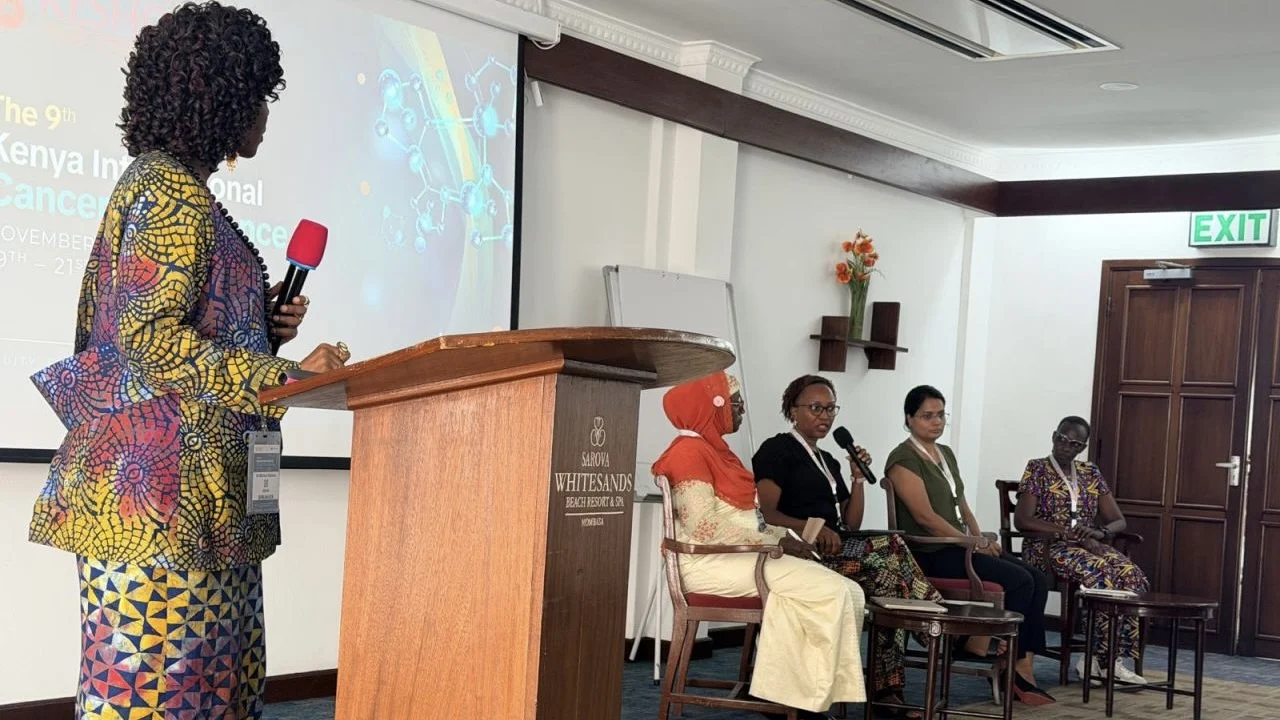
Miriam Mutebi, a Breast Surgical Oncologist, recently focused on the challenges of ovarian cancer care during a session at the Kenya International Cancer Conference (KICC2026) in Mombasa. Mutebi moderated the session for the World Ovarian Cancer Coalition, which centered on the critical question of how to transition from identifying care gaps to effectively addressing them.
During the conference, Anisha Hunja emphasized the obstacles women face when seeking cancer care, highlighting the real-world difficulties that impact access to services. Dr. Afrin Shaffi shared data from eight African countries that revealed a notable disparity between the availability of cancer services and actual access for patients.
Dr. Aisha Mustapha from Nigeria stressed that meaningful change in cancer care can be achieved through locally informed, culturally relevant strategies, rather than relying solely on complex or costly interventions. Mutebi underscored the importance of integrating ovarian cancer treatment into the larger framework of women’s health, advocating for improved referral pathways, enhanced frontline capacity, patient navigation, and more comprehensive care.
The discussions at KICC2026 yielded constructive commitments involving several organizations, including Kenya’s National Cancer Control Programme, the World Ovarian Cancer Coalition, the Kenya Society of Haematology and Oncology (KESHO), and KENCO. These commitments aim to promote accessible patient education, accredited training for frontline healthcare workers, and enhanced engagement from cancer survivors to increase community awareness.
Mutebi expressed gratitude to all speakers, patient advocates, and colleagues involved in the dialogue, emphasizing the necessity of translating discussions into tangible changes. “The measure of our success is not what we know, or even what we commit to in conference rooms. It is really what changes for the woman who will never know the meeting took place,” she stated.
