




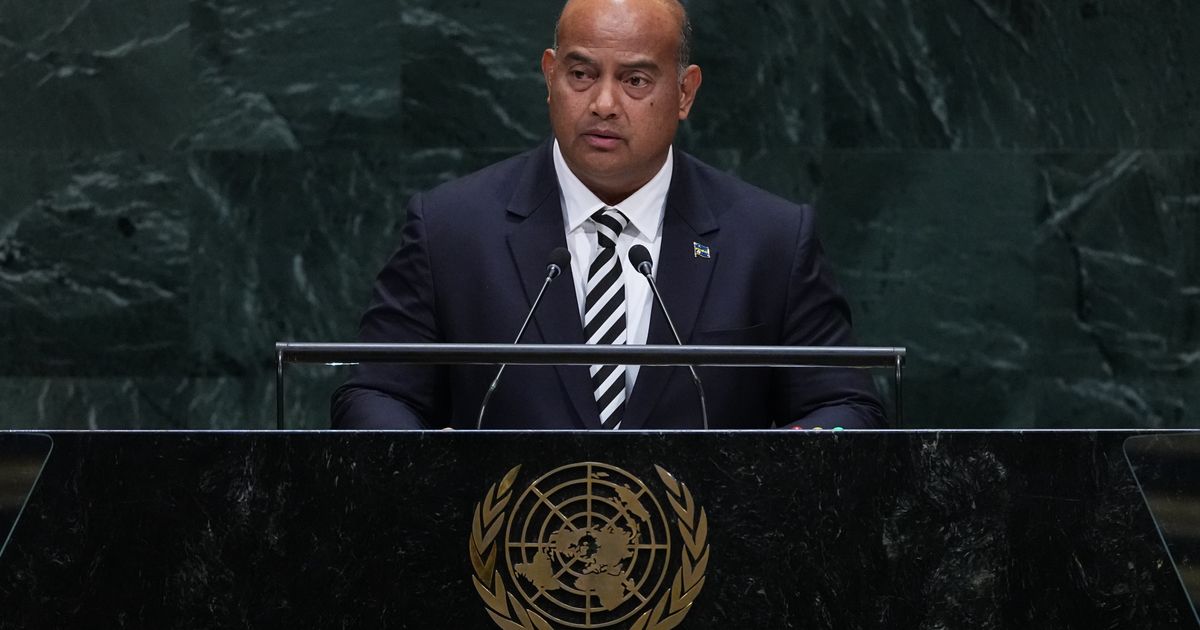
All opposition lawmakers in Nauru’s parliament have joined the government led by President David Adeang. This development marks a significant political shift in the Pacific Island nation, resulting in a 19-member parliament without any opposition for the first time since its independence in 1968. Adeang described the unification as a reflection of “unity, stability and shared purpose” among the lawmakers.
In a Facebook post on Tuesday, Adeang did not provide specific reasons for the lawmakers’ decision to align with his government but emphasized their “shared commitment” to prioritize Nauru’s interests. He indicated that a range of views and discussions would still take place within the parliament, stating, “There will still be a diversity of views and robust debate as in any strong and healthy democracy.”
The recent appointment of lawmakers Pyon Deiye and Jason Bingham Agir as deputy cabinet ministers further solidified the government’s support, leaving no political opposition in the country. This is an uncommon scenario in the South Pacific, where political debates are typically vigorous, and lawmakers frequently shift alliances. The only announcements regarding these changes have come through government-controlled social media, as all news outlets in Nauru are government-owned, limiting outside reporting capabilities.
In August, Adeang gained international attention by announcing that Nauru would officially be known as Naoero, adopting the local spelling of its name. Despite its small size and limited infrastructure, Nauru has become an area of geopolitical interest as major powers vie for influence in the region. The country’s exclusive economic zones are seen as potentially lucrative, attracting competition between China and Western countries aiming to establish stronger ties with local governments.
In 2024, Nauru resumed diplomatic relations with Beijing, having previously maintained ties with Taipei. This realignment has further solidified its position as an ally of China in the region. Meanwhile, Australia struck a significant agreement with Adeang, granting Canberra veto power over any security arrangements with China.
Adeang and his newly appointed cabinet members recently traveled to China for discussions with officials. Since becoming president in 2023 following a no-confidence motion against his predecessor, Adeang has governed without a formal party structure as most Nauruan lawmakers run as independents.
According to Freedom House’s 2026 report, while Nauru’s citizens “generally enjoy political rights and civil liberties,” the country faces ongoing challenges related to corruption. Once wealthy from phosphate exports, Nauru’s economy has suffered significantly since the decline of that industry. Currently, the nation relies heavily on foreign aid, and revenue from tuna fisheries licenses, as well as funding from Australia for hosting offshore detention facilities.
