




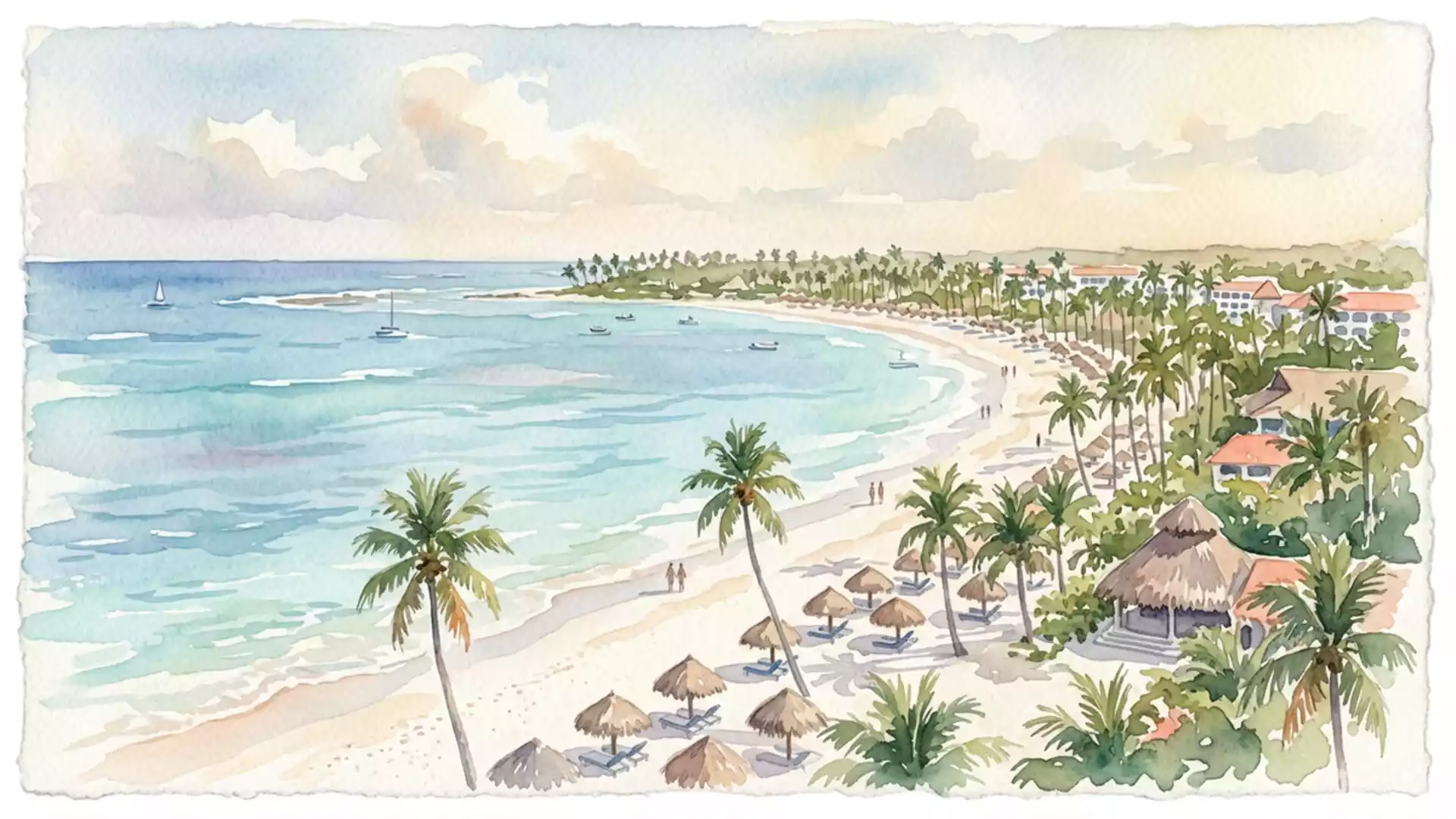
Punta Cana, located on the eastern tip of the Dominican Republic, is renowned for its picturesque coastline where the Atlantic Ocean converges with the Caribbean Sea. This popular resort area, part of La Altagracia province, stretches approximately 50 to 60 kilometers (31 to 37 miles) and features a series of pristine beaches lined with luxury accommodations.
A Resort Belt Built Along a Meeting of Seas
The Punta Cana region not only encompasses a specific village but also the wider resort corridor known for its continuous series of beach zones and hotel complexes. Within this corridor, prominent beaches such as Bávaro, Arena Gorda, Cabeza de Toro, and Uvero Alto exemplify the area’s allure, characterized by its white sand and shallow waters.
Historically, before the onset of large-scale tourism in the 1970s, the Punta Cana coastline was primarily jungle and isolated beaches, with minimal human habitation. The development of the area began in 1969 when Frank Rainieri, a Dominican entrepreneur, along with New York attorney Theodore Kheel, acquired a significant tract of land aimed at establishing a resort. The first hotel opened in 1971, laying the groundwork for the development of this tourist destination.
In 1978, the arrival of Club Med marked a pivotal moment in Punta Cana’s growth, bolstering its reputation as a center for all-inclusive vacations and attracting visitors from around the world. The establishment of Punta Cana International Airport in 1984 further facilitated the region’s growth by providing a direct transportation link for international travelers.
Beach Zones Along the Coconut Coast
Punta Cana is often referred to as La Costa del Coco, or the Coconut Coast, due to its stunning lined beaches and resort facilities. Each beach within this coastal area presents a unique atmosphere while maintaining the common traits of soft, pale sand and clear, shallow waters. Notable beaches include Macao and Juanillo, each with distinct characteristics and experiences, from expansive resort fronts to more natural, untouched coastal settings.
This extended coastline presents visitors with a variety of environments that reflect the diversity of the region, underscoring its appeal as a leading tourist destination in the Caribbean.
Why It Matters
Punta Cana’s trajectory from a remote coastal area to a major tourist hub highlights significant economic and cultural developments within the Dominican Republic. The region’s unique positioning between two seas and its sustained growth as a resort destination contribute to its ongoing attraction for travelers seeking both relaxation and adventure.
