




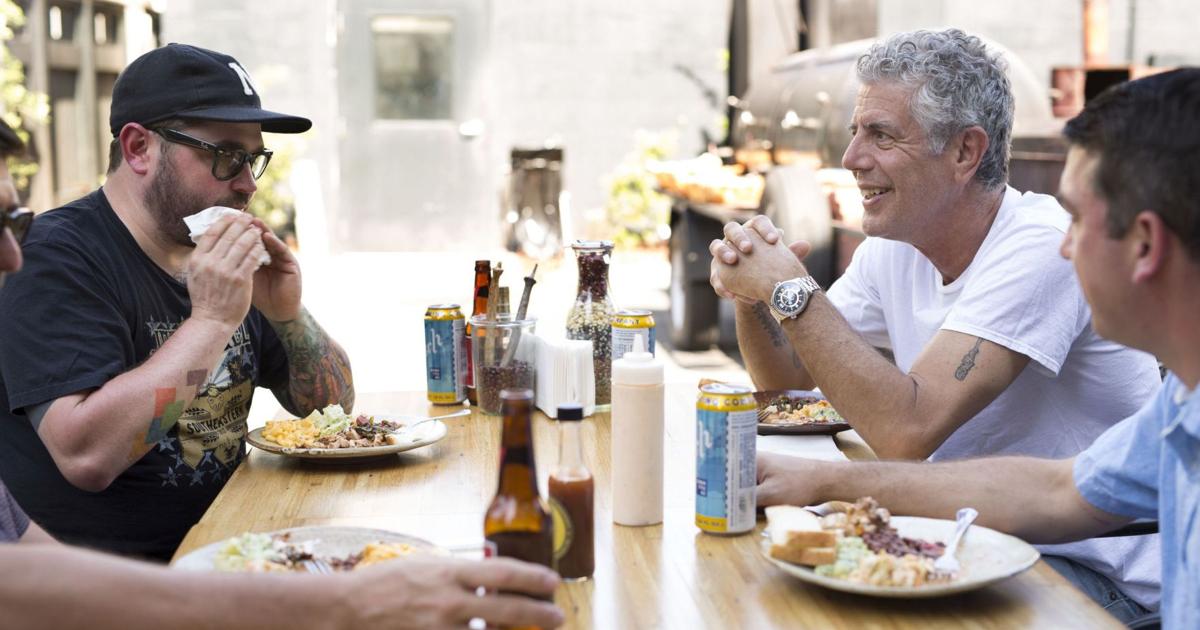
More than a decade after his passing, Anthony Bourdain’s exploration of Southern cuisine continues to resonate, particularly his iconic visit to Charleston. During a memorable episode of *Parts Unknown*, Bourdain delved into the deep-rooted influences of West African traditions on Southern cooking.
As he shared a meal that featured dishes like country ham, oyster pie, and shrimp and grits, Bourdain engaged in a conversation about the dedication Charleston chefs have to preserving culinary legacies. “People take pride in cooking their mother’s or their aunt’s recipes, and the standard of food is high,” remarked Bill Murray, who appeared alongside Bourdain.
Bourdain traveled to Mosquito Beach on James Island, where he posed the question of who holds the responsibility for Southern cooking’s heritage. “The flavors, textures and foodways of West Africa are all over Southern cooking,” he noted, highlighting the significant impact of these historical influences.
During his visit, Bourdain spoke with Chef BJ Dennis and Ashley Green, a Mosquito Beach native, over a plate of Gullah-style blue crabs. Green emphasized that the flavors that define Southern cuisine emerged from the culinary traditions of enslaved Africans. “You can change the location of the people, but you cannot change who they are and the information they came with and their traditions,” she stated. Dennis echoed this sentiment, reaffirming the importance of Gullah food as one of America’s earliest cuisines.
At FIG restaurant on Meeting Street, Bourdain was introduced to Glenn Roberts, founder of Anson Mills. Roberts provided insight into heirloom varieties of rice, peas, and corn that survived the Civil War era due to the efforts of enslaved people who safeguarded these seeds. He remarked on the “overlay of pain and oppression” found within Southern cuisine, while also recognizing the compelling aspects that connect to one’s heritage.
As Anthony Bourdain’s legacy continues, his exploration of Southern cooking in Charleston serves as a poignant reminder of the region’s complex culinary history and the deep connections it holds.
