




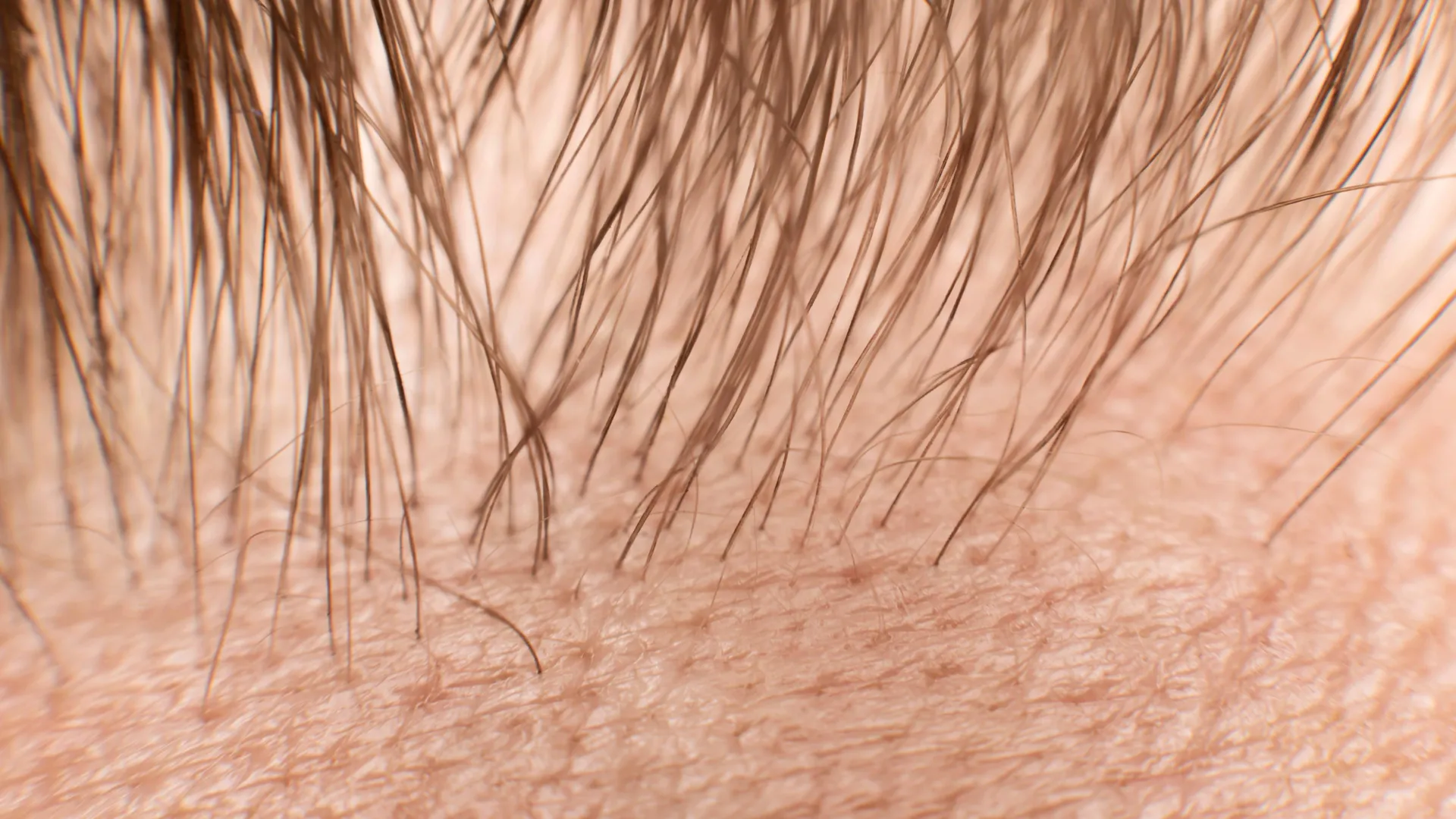
Researchers at the University of Geneva (UNIGE) have made significant strides in understanding how hair follicles develop their distinct patterns in mammals. By analyzing how cells respond to chemical signals, the team devised a model that successfully replicated hair follicle formations in two mammalian species, according to findings published in the journal PNAS.
The study sheds light on the biological mechanisms behind hair, feathers, and scales, which originate from structures known as placodes during embryonic development. For decades, scientists have sought to understand how these early formations contribute to the diverse arrangements observed across various animal species.
Challenging Established Theories
In laboratory mice (Mus musculus), the commonly accepted theory related to hair follicle arrangement has been the expansion-induction model. This theory posits that as new placodes form, they emit chemicals that inhibit the growth of additional placodes in their vicinity. As the skin expands, certain areas become distant enough from existing placodes to allow new ones to develop, creating a complete pattern.
Despite its popularity, the expansion-induction theory has not been experimentally validated as a comprehensive explanation for the variety of follicle patterns found among different species.
To explore alternative mechanisms, Athanasia Tzika, a Senior Lecturer, and Michel Milinkovitch, a Professor in the Department of Genetics and Evolution at UNIGE, investigated the process of chemotaxis. This involves cells moving in response to varying concentrations of chemicals, a mechanism that also directs white blood cells during immune responses.
The researchers constructed a mathematical model to simulate how mobile cells in the dermis interact with an attracting chemical signal from the epidermis, the skin’s outer layer. Their simulation reflected the embryonic skin’s growth and aimed to verify if these interactions could lead to placode formation.
The results were promising. The model successfully recreated the developmental patterns of hair follicles in laboratory mice, demonstrating the same sequence of development previously explained by the expansion-induction model. This finding implies that complex systems may not be necessary for follicle development.
As researchers Muhamet Ibrahimi and Ebrahim Jahanbakhsh noted, “Our findings show that the observed patterns do not require a complex system telling each placode where to form. Instead, placodes emerge spontaneously from local interactions between cells and chemical signals.”
To further validate their model, the team investigated hair follicle arrangements in the spiny mouse (Acomys dimidiatus), which exhibits a distinct follicle pattern that the expansion-induction model cannot explain. By adapting their simulations to account for the spiny mouse’s unique biochemical properties and skin growth, they found that the same cell-chemical interaction process could recreate its orderly follicle patterns.
This suggests that diverse hair structures in the animal kingdom may arise from a common set of biological rules. Variations in cellular interactions and responses can lead to dramatically different patterns without needing unique developmental blueprints for each species. Tzika concluded that “simple cellular interactions can generate the remarkable diversity of tissue architectures observed throughout evolution.”
These findings may open new avenues for research into cellular development processes across different species, emphasizing the remarkable adaptability of biological patterns. Further studies are expected to explore the implications of these discoveries in developmental biology.
