




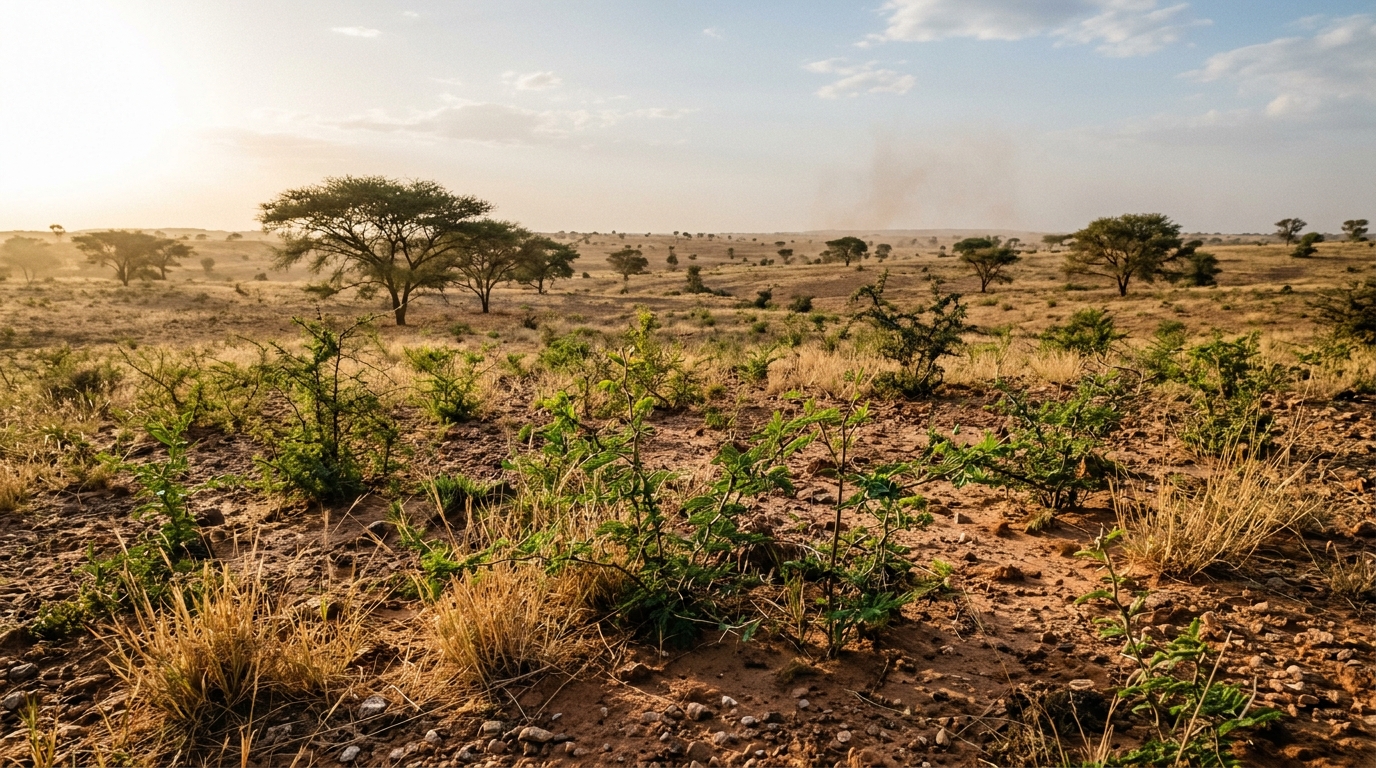
A recent study published in June 2026 in Discover Life examined the structure, diversity, and regeneration status of fodder tree stands in two major pastoral regions of the Sudano-Sahelian zone: Senegal’s Ferlo silvopastoral zone and Burkina Faso’s Mankarga rangelands. Led by researcher Idrissa Sawadogo and his team, the study aims to provide essential baseline data that can aid in sustainable rangeland management and biodiversity conservation.
The study focused on two distinct ecological zones. The Ferlo silvopastoral area spans approximately 101,609 square kilometers in northern Senegal and features a Sahelian climate, characterized by a prolonged dry season from November to June and a shorter rainy period from July to October. In comparison, the Mankarga rangelands in southern Burkina Faso cover about 62.7 square kilometers, also experiencing a long dry season from October to May and a rainy season from June to September. Both regions are vital for livestock production and local livelihoods, dominated by annual herbaceous species interspersed with trees and shrubs.
Researchers employed a systematic sampling approach during the dry season in November and December 2023. They established 106 plots in the Ferlo rangelands and 119 plots in the Mankarga area, adopting a stratified design based on major vegetation types such as wooded savanna and gallery forest. Each plot varied in size, with 1,000 square meters designated for savannas and 500 square meters for gallery forests. All fodder tree species with a diameter of at least 5 centimeters were surveyed, with data collected on their diameter, height, and regeneration status.
The floristic analysis revealed notable differences in species composition and diversity between the rangelands. A total of 89 fodder tree species were identified in the Ferlo area, while 80 species were recorded in Mankarga. The families Fabaceae and Combretaceae were predominant in both zones, a trend common in Sahelian ecosystems due to their resilience against water stress and disturbances. The average species richness was higher in Ferlo at 10.28 species per plot compared to 9.61 in Mankarga.
Diversity indices indicated significant variation between the rangelands and among different vegetation types. In Ferlo, the highest Shannon diversity index values were found in gallery forests and wooded savannas, suggesting moderate species diversity despite human pressures. Conversely, the Mankarga rangelands exhibited a lower diversity, highlighting potential ecological stress from overgrazing and agricultural expansion, among other factors.
In terms of structural analysis, fodder tree density was greater in Ferlo, with an average of 295.74 individuals per hectare compared to 260.18 per hectare in Mankarga. The study also noted variations in tree diameter, with larger mean values recorded in Ferlo’s wooded savannas. The distribution of diameter classes followed a reverse-J shape, indicating higher frequencies in smaller diameter trees.
The assessment of regeneration status raised concerns, particularly in Mankarga. The Ferlo rangelands recorded 1,678 seedlings and saplings, with 41.75 percent of species showing good regeneration. Meanwhile, Mankarga reported only 1,045 seedlings, of which 71.09 percent exhibited fair regeneration, signaling potential issues with uncontrolled grazing and vegetation exploitation.
Researchers noted the scarcity of large-diameter trees in both rangelands, primarily due to selective cutting for fuelwood and construction. This lack of mature trees could hinder the long-term survival of key species and impact forage quality.
The researchers acknowledged certain limitations in their study, including the snapshot nature of their data collection and the absence of detailed grazing pressure measurements. However, the findings underscore the necessity for improved rangeland management strategies, particularly in regulating grazing pressures and protecting biodiversity-rich areas like gallery forests.
The study serves as a foundational assessment of the ecological dynamics in Sahelian rangelands and highlights the urgent need for coordinated conservation actions. Researchers emphasize protecting these critical ecosystems to sustain livestock nutrition and promote biodiversity.
The research team included Idrissa Sawadogo, Faustine Akossoua Kouassi, Innocent Charles Emmanuel Traoré, Charles Lamoussa Sanou, and Philippe Bayen. Their findings are documented in Discover Life, volume 56, article number 19, in 2026, providing a basis for future investigations into the sustainability of these vital rangelands.
