




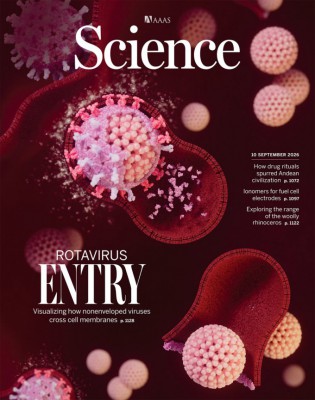
A recent study published in the journal Science explores the mechanisms by which rotavirus, a leading cause of severe gastroenteritis in infants, invades host cells. Researchers at Harvard Medical School have employed advanced imaging techniques to gain insight into the behavior of this non-enveloped virus.
Research Findings on Rotavirus Penetration
Rotavirus is known for causing significant health issues, particularly in young children, characterized by symptoms such as severe vomiting and diarrhea. Its classification as a non-enveloped virus means that it lacks a lipid membrane, which distinguishes it from enveloped viruses that can typically merge their membranes with host cells to facilitate entry.
The research team, led by postdoctoral fellow Marilina de Soto, published their findings on September 10. They utilized cryo-electron tomography, a cutting-edge three-dimensional imaging technique that captures biological samples frozen at cryogenic temperatures. This method allows the observation of structures at a resolution of less than one nanometer.
During their study, the researchers visualized how the surface proteins of the rotavirus attach to the host cell membrane. This initial interaction prompts the cell membrane to engulf the virus, forming an endosome—a small, sac-like structure that transports the virus into the cell.
Once inside the endosome, the rotavirus sheds its outer protein coat. The surface proteins then facilitate the creation of pores in the endosomal membrane, allowing the viral core particle to escape into the cytoplasm. Once in the cytoplasm, the viral particle utilizes its internal enzymes to begin synthesizing messenger RNA, initiating the infection and replication process.
The research team remarked that cryo-electron tomography enabled them to observe the complete entry process of rotavirus, detailing the mechanisms at play during each phase of cell invasion.
These findings enhance the understanding of rotavirus biology and its method of cell entry, potentially informing future therapeutic strategies to combat infections caused by this virus.
Why It Matters
The study contributes valuable insights into the mechanisms of rotavirus infection, which is critical for developing effective treatments and preventive measures. Understanding how non-enveloped viruses enter cells can inform broader research into viral infectivity and may aid in tackling other viral pathogens that similarly lack lipid envelopes.
