




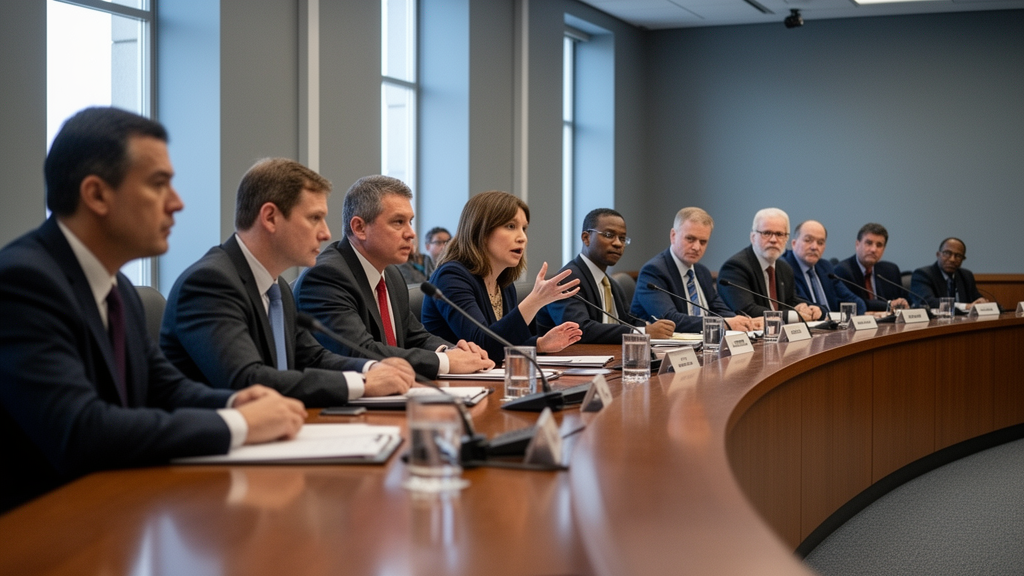
A recent review published in BMC Global and Public Health has outlined the dynamics of scientist and policymaker interactions during public health emergencies. Led by Sophie Meyer from the University of Bern, the study examines 87 global studies, revealing that formal Scientific Advisory Committees (SACs) overwhelmingly dominated the discourse surrounding public health policy during crises like the COVID-19 pandemic.
The research team conducted a comprehensive search across seven databases starting in April 2022, with updates into 2026. After screening over 8,000 articles, they included 87 studies detailing the interactions between researchers and policymakers in emergency situations. The analytical framework used qualitative content analysis to assess the data.
The focus on COVID-19 was particularly pronounced: 82 of the 87 studies—approximately 95%—were centered on the pandemic, while only five examined other infectious outbreaks such as Ebola and H1N1. The authors attribute this concentration to the significant amount of recent research surrounding COVID-19 and its implications for their findings. All six World Health Organization regions were represented in the included studies, covering 70 countries, yet the data heavily favored the UK and Canada.
Formal advisory structures were central to the interactions documented, with 45% of the reviewed studies revealing that these systems were established prior to the emergence of crises. In Canada, a robust system of scientific advisory bodies developed through prior experiences with diseases like SARS and H1N1 was noted. Various SACs were initiated during the COVID-19 pandemic, often in response to global health calls for preparedness.
However, the study also identified significant roles played by informal advisory practices. It highlighted concerns about the selection process of committee members; in some instances, members were chosen by policymakers based on political alignment, which occurred in countries like Australia and Belgium. Informal communication channels were also common, complicating the clarity of information flow between researchers and decision-makers.
A minority of committees operated without formal structures, including an independent group in the UK and an informal platform in Austria that sought to maintain policy innovation away from political influence. Despite their contributions, such informal groups faced challenges from an overarching reliance on established communication routes.
The review pointed out recurring issues faced by both formal and informal arrangements, including communication barriers stemming from a lack of understanding of scientific methods among policymakers, which sometimes led to the misuse of complex data. Political filtering of scientific advice was documented across various regions, limiting its effective implementation in policy-making.
To address these challenges, the authors recommend clearer delineation of roles between SACs and government bodies, improved communication channels, and proactive institutional support for advisory committees. They advocate for a diverse representation in SACs, extending beyond the biomedical and natural sciences to encompass social and behavioral sciences, as well as input from communities affected by health policies.
While the review provides detailed insights, it also recognizes its limitations, noting the predominance of studies from high-income countries and suggesting a need for further research in low- and middle-income settings. The authors call for additional examination of informal interactions and encourage investigations into non-infectious public health emergencies in future studies.
