




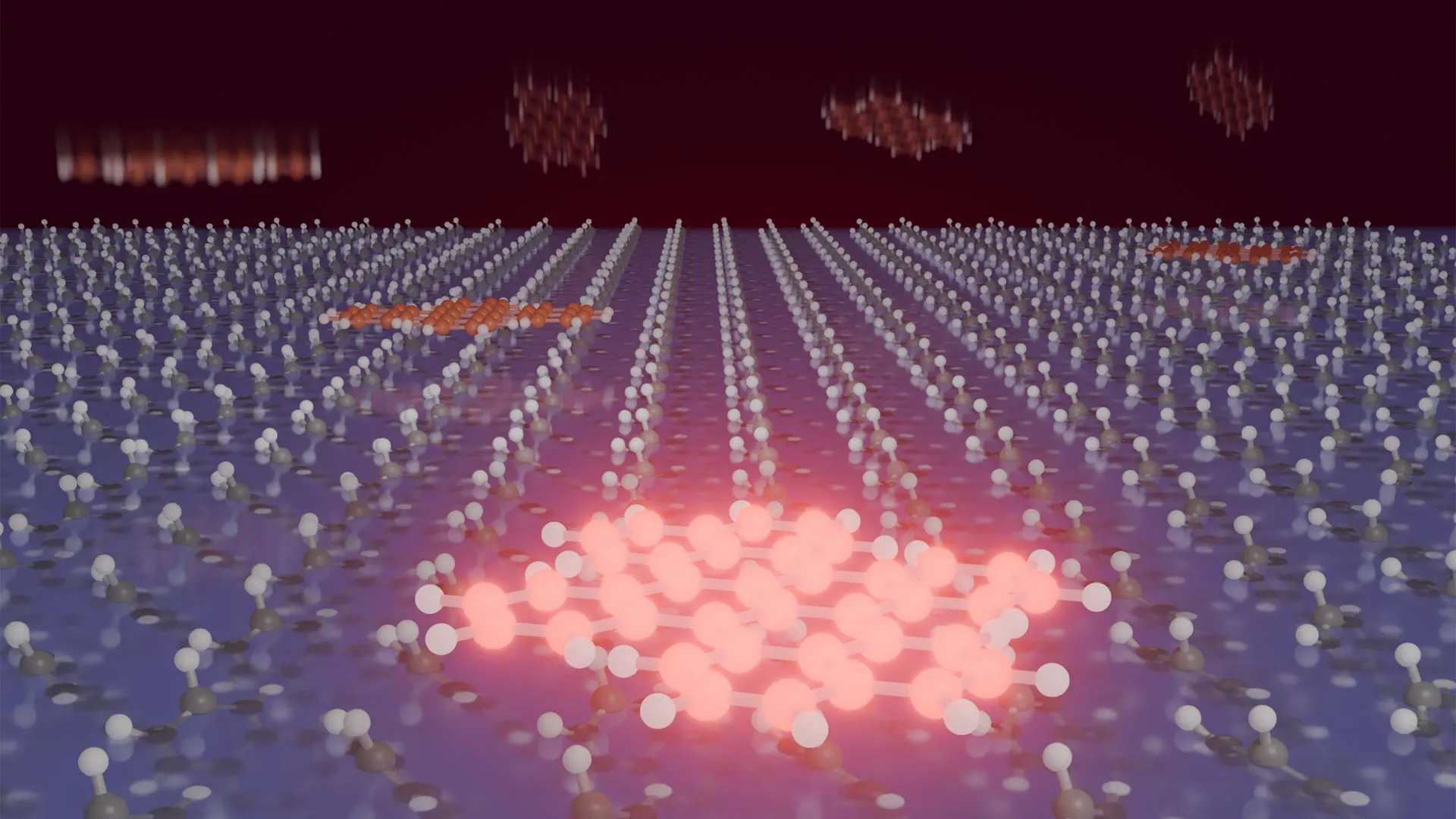
Scientists at the Max Planck Institute for the Science of Light (MPL) have made a significant advancement in quantum physics by developing a method to study individual molecules on a surface with unprecedented precision. This groundbreaking research demonstrates for the first time that molecules attached to a surface can achieve the ultimate quantum limit of optical coherence, addressing a long-standing challenge in molecular quantum research.
The findings, published in the journal Science, could open new avenues for understanding how molecules interact with surfaces and may contribute to the development of advanced quantum technologies, according to MPL’s research team.
Many emerging quantum technologies rely on the interaction of light with extremely small objects, such as atoms and molecules, collectively known as quantum emitters. These systems can produce single photons, store quantum information, and establish quantum connections over distances, key components in the future of quantum computing and secure communication.
Traditionally, to study a single quantum emitter, researchers have stabilized the particles by confining them in vacuums or embedding them within solid materials. However, positioning these emitters directly on a surface offers new possibilities for interaction through techniques like scanning tunneling microscopy (STM) and atomic force microscopy (AFM), which can reach atomic precision.
Despite this potential, scientists have faced challenges in maintaining the cleanliness and stability of surfaces necessary for quantum experiments. Contaminants can accumulate, disrupting the sensitive quantum behavior of nearby molecules. MPL researchers have now devised a solution to overcome this barrier.
Under the guidance of Prof. Vahid Sandoghdar, director of MPL’s Nano-Optics Division, the team developed a novel cleaning technique utilizing the natural evaporation property of organic crystals. The researchers placed a small crystal in a vacuum chamber at extremely low temperatures, allowing the upper layers of the crystal to evaporate gradually, thereby removing contaminants and leaving a clean surface.
Once the crystal was cooled to near absolute zero, the team halted further sublimation to preserve the pristine surface. Subsequently, they used a specialized oven to deposit molecules onto the cold crystal, setting the stage for their investigations.
The resulting environment allowed scientists to assess whether the deposited molecules retained their delicate quantum properties. Dr. Alexey Shkarin, part of the MPL team, noted that coherence times are crucial in evaluating the quality of quantum emitters, as they indicate how long these emitters can maintain their quantum characteristics.
In their experiments, researchers found that the molecules on the clean crystal surface consistently met the theoretical Fourier limit for coherence time, demonstrating a stable environment capable of preserving quantum coherence for its maximum possible duration—a first for molecules attached to a surface.
The breakthrough also enabled the team to explore how the crystal surface affects the orientation and energy levels of the resting molecules. Their experiments indicated that surface interactions could influence molecular shapes and vibrations, offering insights into molecular behavior while presenting new opportunities for controlling quantum systems.
Moving forward, Sandoghdar emphasized the goal of integrating this technique with AFM and STM methods to achieve nanometer-scale control over individual quantum emitters. This combination could unlock new insights into molecular interactions and facilitate the engineering of novel quantum states of matter, potentially leading advancements in molecular quantum technologies.
