




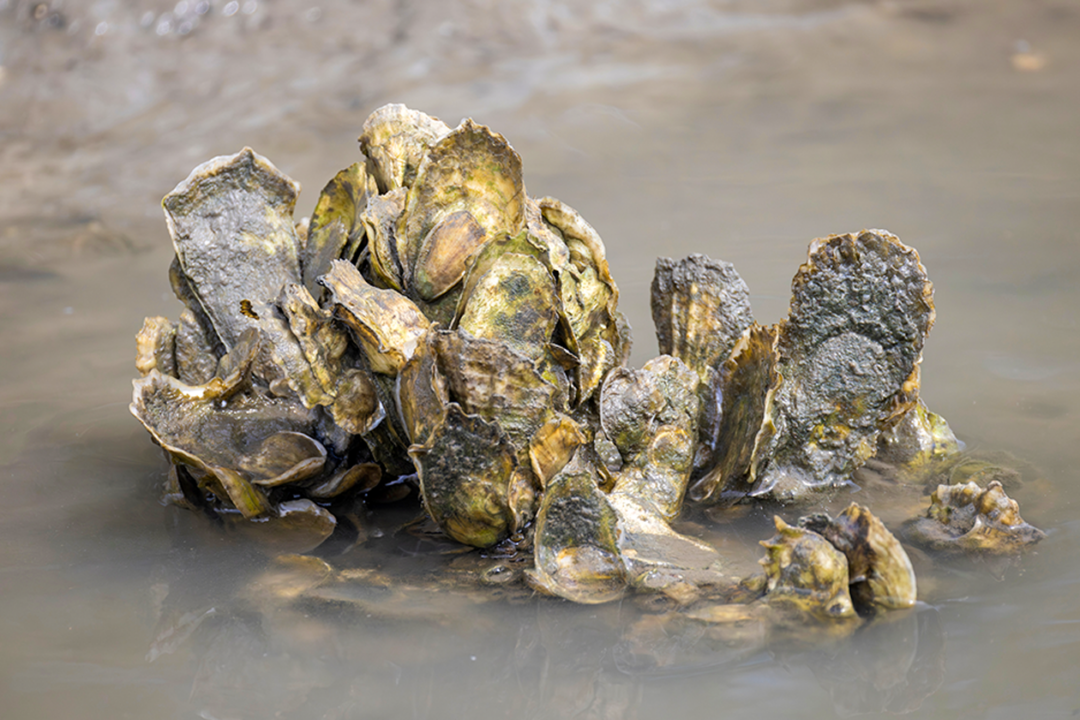
Scientists at William & Mary’s Virginia Institute of Marine Science (VIMS) are leading initiatives to restore oyster populations in the Chesapeake Bay by employing innovative reef designs, advanced monitoring technologies, and computer modeling. Their research aims to enhance ecosystem renewal and bolster both marine life and local economies across Virginia’s waterways.
Working with the U.S. Army Corps of Engineers (USACE) Norfolk District, VIMS researchers are analyzing the impact of artificial reefs, which have been designed to support oyster populations as well as other marine species. These efforts are part of a broader restoration project, including a $100 million initiative for reef construction in Tangier and Pocomoke Sounds.
Enhancing Reef Effectiveness
For nearly 20 years, VIMS has partnered with USACE to monitor and assist in oyster restoration efforts. A key focus of these projects is the Lynnhaven River Basin, where over 28,000 artificial reef balls have been deployed across eight acres. Unlike traditional reefs made from oyster shells, these dome-shaped concrete structures feature holes and crevices that allow oyster larvae to settle effectively.
“Anything but oyster shell is an alternative reef structure,” said Rochelle Seitz, a professor at VIMS. The height of these reefs has also been a crucial factor in their success, as conventional designs were often too low, leading to sediment accumulation. Rom Lipcius, another professor at VIMS, noted that the increased height of the reef balls has contributed significantly to their effectiveness.
Since restoration efforts began, the estimated oyster population in the area has risen from approximately six million to 60 million, demonstrating the potential of these alternative reef structures.
Research is also ongoing at Naval Weapons Station Yorktown (NWSY), where hybrid living shorelines are being studied. Different configurations of concrete and granite reefs are being tested to determine the most effective and cost-efficient structures for promoting oyster growth.
According to M.S. graduate student Elena Hoang, three-dimensional (3D) scanning technology is a key tool in assessing reef performance. At NWSY, she employs this technology to evaluate how reef geometry influences the growth and survival of juvenile oysters without disrupting intact ecosystems.
Hoang’s research reflects a move towards non-invasive monitoring methods, providing insights into the success of restoration efforts while allowing for public engagement through visually appealing models.
Additionally, a particle-tracking model developed by Professor Jian Shen is being used to analyze the movement of oyster larvae across the Chesapeake Bay. This model helps identify critical locations for restoration by simulating various environmental conditions that affect larval settlement.
Broader Ecological Impact
The restoration of oyster populations has broader environmental benefits, transforming barren bottom habitats into rich ecosystems. In Lynnhaven Bay, researchers have documented a 250-fold increase in secondary production—organisms that inhabit reefs—benefiting species such as worms, clams, and crabs while also creating vital nurseries for fish like black sea bass.
Local fishers have noticed substantial improvements in water quality, with some reporting a resurgence of visibility in local waters. “We haven’t been able to see nine, ten feet down in the water like this since we were children,” recalled Russell Burke, a collaborator from Christopher Newport University.
As the project progresses, VIMS researchers are applying their findings to other waterways. They aim to evaluate connectivity among oyster populations through metapopulation modeling, which will inform the USACE’s future restoration initiatives. The goal is to establish a network of reefs that not only enhances existing populations but also supports sustainable harvesting practices.
The upcoming “stepping-stone” reef project at Tangier Island is anticipated to become the largest linked oyster sanctuary-harvest ground globally, with significant funding allocated for its development. This collaborative approach highlights the importance of VIMS research in shaping restoration strategies that benefit Virginia’s oyster populations, marine ecosystems, and coastal communities.
