




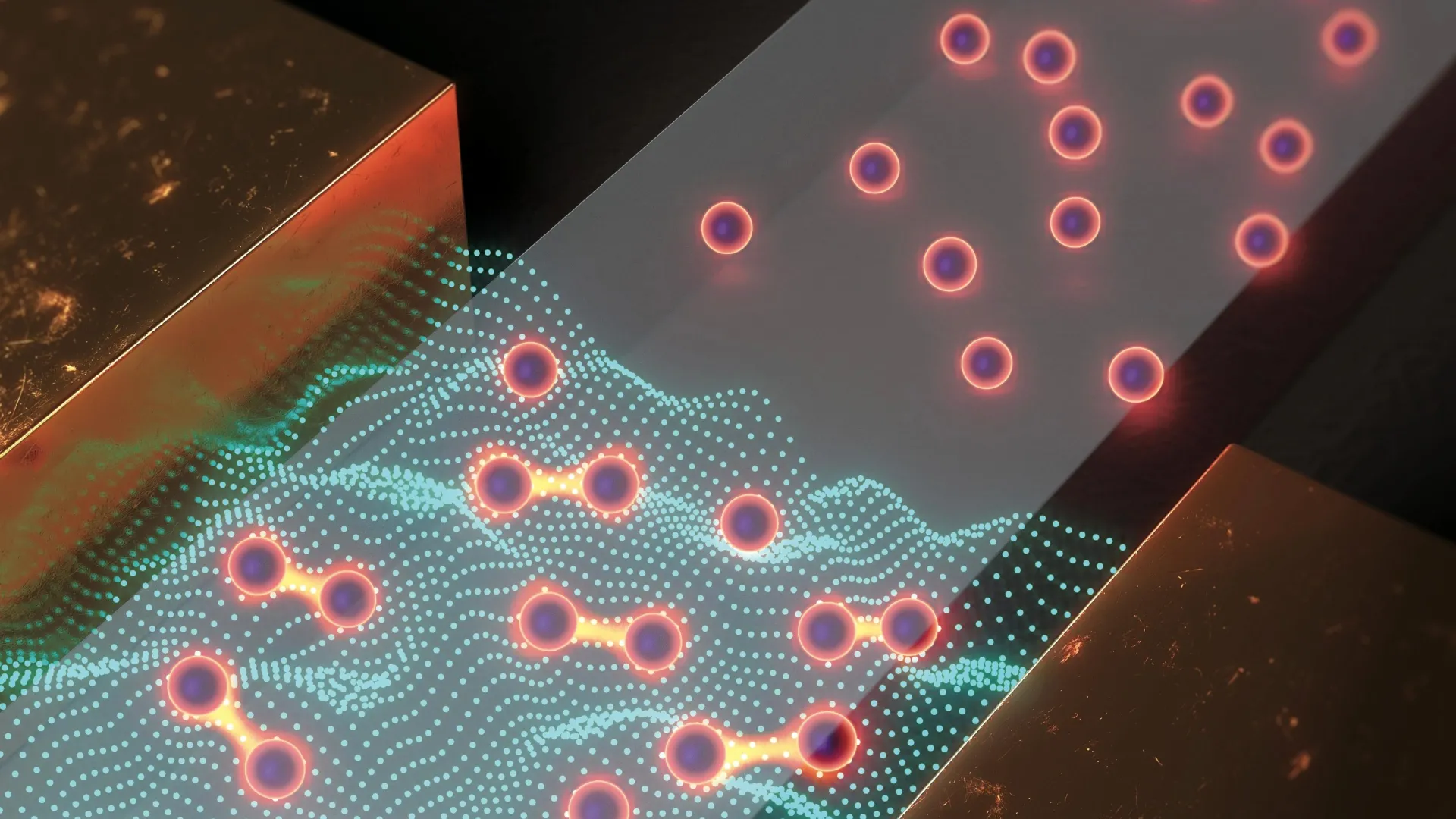
Researchers from the University of Science and Technology of China have made significant advancements in the field of superconductivity by demonstrating that quantum fluctuations in a vacuum can enhance this state of matter. This groundbreaking study, published in a scientific journal, has opened new avenues for controlling unusual matter states.
Breakthrough in Superconductivity Research
The research was led by Professors Changgan Zeng and Guanghui Cheng, consisting of collaboration with several academics, including Professor Qingdong Jiang from Shanghai Jiao Tong University and Professor Frank Wilczek from the Massachusetts Institute of Technology. Their team investigated how vacuum fluctuations, previously considered negligible, could impact condensed matter systems.
Contrary to everyday understanding, a vacuum is not completely devoid of activity. Instead, quantum physics reveals that even in its lowest energy state, vacuum experiences continuous fluctuations wherein virtual particles appear and vanish constantly. These effects have been substantiated by phenomena such as the Lamb shift and the Casimir effect.
Previously, Zeng and Cheng’s teams explored how vacuum fluctuations could be manipulated using magnetic fields to switch the Casimir force. This prior investigation led to the inquiry of whether these fluctuations could also be harnessed to control macroscopic quantum states.
To explore this, Jiang’s group theorized the concept of “vacuumronics,” where designed vacuum environments could be utilized to influence electronic and photonic behaviors. Their theoretical framework facilitated the understanding of how superconductivity could be enhanced in experimental settings.
To validate their hypothesis, the researchers placed the superconductor niobium diselenide (NbSe2) in a terahertz split-ring resonator, or dark cavity, allowing the superconducting material to interact with the modified electromagnetic environment. The studies revealed that this arrangement significantly increased the superconducting critical temperature — the threshold below which the material transitions into a superconducting state.
Notably, they found that the critical temperature could rise by as much as 5.4% in a six-layer NbSe2 configuration. Other properties, including critical current and critical magnetic field, also showed marked improvement close to the superconducting transition. To ensure these findings were not results of conventional material changes, the team conducted control experiments adjusting various parameters without revealing alternative explanations for the enhancements observed.
In their further theoretical exploration, Jiang and Wilczek proposed a model suggesting that the superconducting state exchanges virtual photons with the dark cavity, which stabilizes superconductivity and enhances its effectiveness. This interaction demonstrated peak superconductivity enhancement aligned with specific energy characteristics of the cavity environment.
The implications of this research suggest a shift in the conceptualization of the vacuum from a passive backdrop for phenomena to an active agent capable of influencing matter. By reshaping vacuum conditions without introducing external energy sources, researchers believe this method could pave the way for innovative control mechanisms in superconductors and other quantum materials.
Why It Matters
This research marks a significant milestone in material science, potentially leading to advanced applications in superconductivity and quantum technology. By manipulating vacuum fluctuations, scientists may develop new methods for enhancing the performance characteristics of various quantum materials, which could have extensive implications for future technological advancements.
